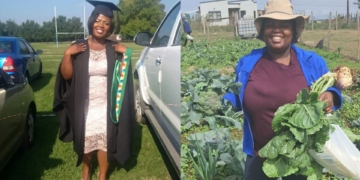
A labourer, employed on a Western Cape farm for seven years, says growing uncertainty over the future of foreign nationals has left many living in fear for their livelihoods.
This, as pressure builds in the agricultural sector amid an ultimatum by anti-immigration groups threatening to bring the country to its knees if undocumented foreigners do not leave by Tuesday, 30 June.
Uncertainty and fear among foreign workers
The worker spoke to Food For Mzansi’s Lisakanya Venna on condition of anonymity for safety reasons to protect her identity and employment. Across the country, protests by organisations such as March and March and Operation Dudula have repeatedly involved looting, property destruction, forced evictions, vigilante assaults, and fatalities.
“We are not happy because we have done a lot in agriculture. We came here to find work, and now we are being told to go back to our country, but there is no work there,” the worker said.
While she has the necessary documentation to remain in South Africa, several of her colleagues do not and may be forced to return to their home countries. She added that she has no plans to leave the country despite great uncertainty about the future.
The worker also alleges that her employer does not yet have the required permits to employ foreign nationals – a challenge she believes leaves employees vulnerable. She does add, however, that her employer is in the process of registering to ensure compliance so that employees can continue working without disruption.
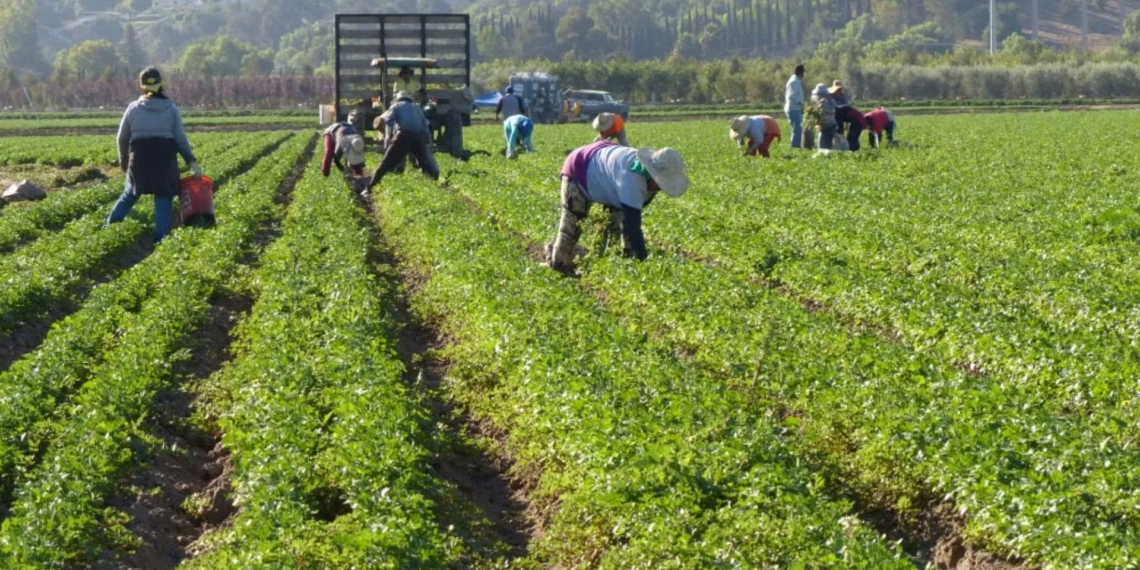
In South Africa, the agricultural sector relies heavily on foreign nationals, often employed below minimum wage. These workers are commonly found in labour-heavy production systems such as table grapes, citrus, apples, berries, wine grapes, and vegetable farming, where seasonal harvesting and packing demand thousands of hands at peak times.
Farmers depend on foreign labour
Ahead of the 30 June 2026 ultimatum, the government has repeatedly called for calm and deployed law enforcement agencies to the streets, but this has brought little comfort to those who are simply doing their jobs and are in the country legally.
Meanwhile, a Gauteng crop farmer, who also asked not to be named, tells Food For Mzansi’s Tiisetso Manoko that she employs a Malawian national on his farm. She argues that many South Africans are unwilling to work on farms, leaving farmers like her dependent on foreign labour to keep operations running.
She says, “I fully agree that those of us who hire foreign nationals need to let them go back home to register, yes, and have proper documents. However, in their home countries, getting those documents costs at least R30 000 to do so.”
African countries such as Nigeria, Malawi, and Ghana have already repatriated thousands of their citizens who had fled South Africa amid ongoing uncertainty, with thousands more still awaiting assistance from their governments.
“I think I will take advantage of this free transport, so that he goes home and I will pay for a passport while he is there,” the farmer added.
Related stories
- Labour crackdown: Farmers face rising risks over illegal workers
- CGE: Women farmworkers still trapped in systemic exploitation
- When farmworkers find their voice, work finds its dignity
- ‘Severe blow’: Industry hit hard by unchanged wheat tariff
The issues are bigger
Aimée-Noël Mbiyozo, senior research consultant on migration at the Institute for Security Studies Africa, told Food For Mzansi’s Vateka Halile that African migrants are extremely scared of being targeted and harmed, irrespective of their documentation status.
“I compel politicians to call off any and all violence and remind everyone that the costs of violence and looting are extreme to humans first and foremost, but also politically, economically, and for South Africa’s international reputation and relations that it needs in order to prosper.
“Documentation is an administrative function, far beyond a policing issue. Home Affairs has backlogs that take over a decade to process in some categories, and this leads to irregular status,” Mbiyozo said.
According to Mbiyozo, the conditions of work for irregular migrants in agriculture are far below the standards for decent work, including minimum pay, long hours, and seasonal work.
“Employers’ motivation to hire them is often, though not always, exploitative. I think an honest reflection is required. The bulk of migrants in South Africa are low- to medium-skilled workers from neighbouring countries. Under the current visa regime, there is no way for them to enter legally,” Mbiyozo said.
In a recent address to the nation, President Cyril Ramaphosa said some employers hire undocumented immigrants because they pay them wages that are well below the minimum wage and make them work longer hours without due compensation.
“We know that illegal immigration undermines our efforts to create decent work for our people. There are businesses in our country that employ undocumented immigrants because their legal status means that they cannot stand up for their rights,” he said.
Ramaphosa said the government would accordingly take action to address people’s expectations in dealing with violations of the country’s immigration laws.
“We know that South Africans are not xenophobic as there is no space for xenophobia, racism, sexism, Afrophobia or any other forms of intolerance in South Africa,” he said.
READ NEXT: Game meat industry growth stalled by persistent barriers