Tomorrow, on Thursday 25 June, nearly 40 high school learners from six provinces will converge at Stellenbosch University for the inaugural South Africa Youth Institute (SAYI). This is a new World Food Prize Foundation initiative placing local youth directly at the centre of global debates on food systems, innovation and sustainability.
The South African cohort reflects a deliberate push for inclusion, with about 70% of participants being young women and the majority drawn from previously disadvantaged backgrounds, signalling an effort to widen access to high-level agricultural and policy spaces often out of reach for many learners. Participants come from six provinces.
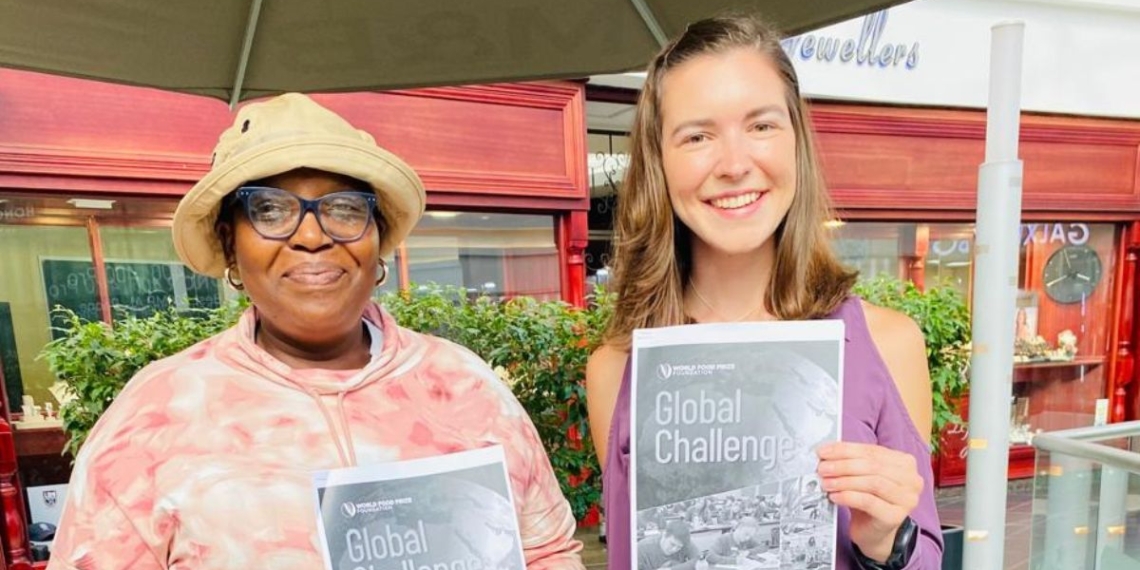
“The launch of the South Africa Youth Institute is about more than one event. It is about creating a pathway for young people to engage with the future of food, agriculture and sustainability,” said Francine Barchett, co-coordinator of the South Africa Youth Institute and former youth representative on the World Food Prize Foundation’s Council of Advisors.

Barchett recalls that her journey into agriculture began with a moment of profound ignorance rather than expertise.
“At the time, I knew almost nothing about food security,” she says of her first exposure as a teenager at the Michigan Youth Institute at Michigan State University. “I thought farmers were only men sitting on tractors.”
What followed, she explains, was a rapid shift in worldview as she was introduced to the complexity and dignity of food systems work, and began to understand food access as a central global challenge rather than a distant rural issue.
That early experience set in motion a chain of opportunities through the World Food Prize Foundation network, including participation in the Global Youth Institute in Iowa and a Borlaug-Ruan Internship in India, where she studied the impacts of open defecation on women’s nutrition and health outcomes.
Those formative experiences, she says, not only shaped her academic path toward Cornell University, but also cemented a long-term commitment to ensuring that other young people, particularly in countries like South Africa, have access to the same kind of life-changing exposure.
“The learners joining us this year are the first cohort in what we hope will become a lasting pipeline of future leaders for South Africa and beyond.”
Barchett said SAYI is designed as part of a global model that connects learners to long-term opportunities in agriculture, science, policy and development.
“Ultimately, success will not be measured only by this year’s programme, but by the trajectories of the young people who participate in it,” she said.
Related stories
- Backing women farmers can boost Africa’s agrifood systems
- FANRPAN unveils decade strategy for Africa’s food systems
- Krige: Agriculture deserves answers on Steenhuisen exit
- FMD: South Africa’s beef industry pays price for poor traceability
SAYI builds pathways into global food systems leadership
The SAYI launch forms part of the World Food Prize Foundation’s expanding global youth programming, positioning South African learners within an international network of agricultural and food systems leadership.
The initiative comes as food insecurity, climate pressures and widening inequality in access to nutrition continue to reshape global development priorities, particularly across Africa.
All learners who complete SAYI will be recognised as Borlaug Scholars and join the World Food Prize Foundation network, gaining access to opportunities such as the Borlaug-Ruan Internship and the foundation’s global alumni community.
Only the top two learners from this year’s South African cohort will go on to represent the country at the Global Youth Institute in the United States later this year.
Jon Wogman, senior director of global youth programmes and partnerships at the World Food Prize Foundation, said the expansion of the programme into South Africa reflects a growing global effort to identify and support future food systems leaders.
“The challenges facing global food systems will be solved by young people who are willing to ask difficult questions, think differently and lead with purpose,” said Wogman.
“We are excited to welcome South Africa into the World Food Prize Foundation’s global network of Youth Institutes and look forward to seeing these learners contribute to the future of food security around the world.”

Stellenbosch University and the future of food leadership
For Stellenbosch University’s Faculty of AgriSciences, which is hosting the inaugural event, the South Africa Youth Institute represents an investment in curiosity, leadership and the future of agricultural innovation.
“We are proud to establish the South Africa Youth Institute, a programme that encourages curiosity, critical thinking, and leadership while inspiring the next generation of agricultural innovators,” said Prof Kennedy Dzama, dean of the faculty.
Barchett said the inaugural cohort already demonstrates the value of giving young people structured access to global food systems conversations.
“Thirty-nine learners, together with educators, sponsors, mentors and industry partners have come together to make this inaugural year possible. That level of support shows what can happen when South Africa invests in its young people,” she said.
Among the schools represented is Makgongoana High School in Polokwane, Limpopo, one of the first schools to commit to the programme, signalling the institute’s reach beyond traditional urban and elite networks.
What will SA’s future food leaders need to understand?
The inaugural SAYI cohort is set to engage with a structured set of Global Challenge Papers that require learners to examine real-world food systems, development and sustainability issues across different regions of the world.
The topics span Southern Africa through to North America, covering issues such as water scarcity and poverty in South Africa, post-harvest food loss in Kenya, agricultural production challenges in Nigeria, and sustainable agriculture in conflict zones such as Gaza.
Taken together, the breadth of these research themes reflects the programme’s intent to move learners beyond classroom theory into applied global thinking.
By asking South African learners to interrogate challenges across diverse political, environmental and economic contexts, the SAYI is positioning them not only as future agricultural leaders, but as critical thinkers able to connect local realities with global food system dynamics.
Mashal Husain, president of the World Food Prize Foundation, earlier described the programme as an investment in young people who will shape the future of food.
“The South Africa Youth Institute embodies our dedication to nurturing the next generation of changemakers who will tackle the world’s most pressing food challenges,” said Husain.
“By engaging young leaders across South Africa, we are planting the seeds for a more resilient, innovative and food-secure future for the entire region.”
ALSO READ: Young food leaders rise as Youth Institute lands in Mzansi