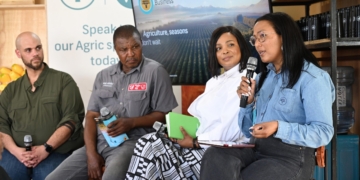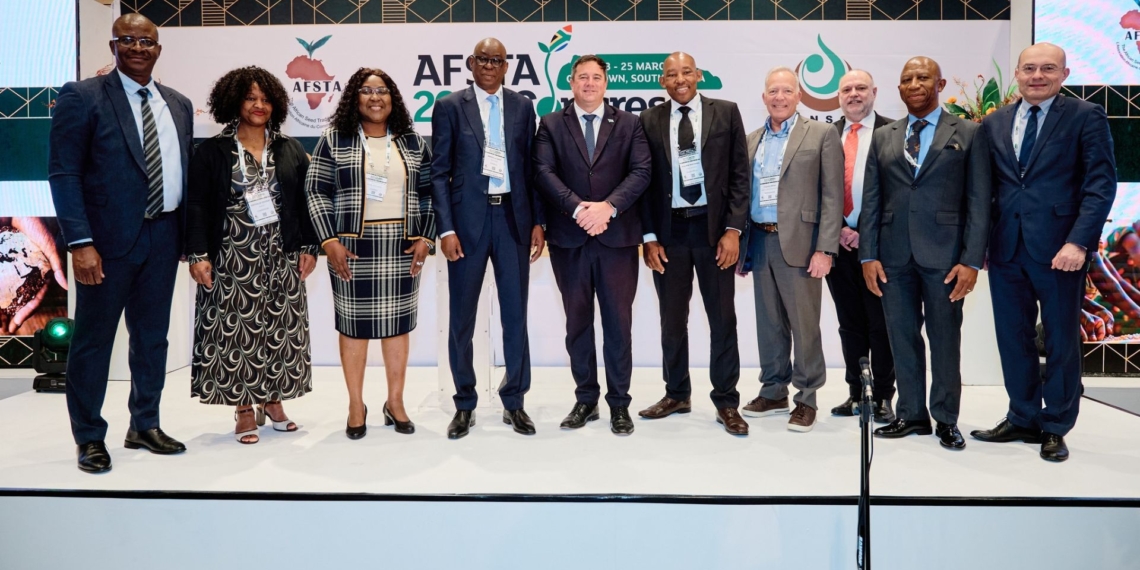
Over 500 delegates from across the globe gathered in Cape Town for the African Seed Trade Association (AFSTA) Congress, where discussions centred on navigating geopolitical challenges, addressing Africa’s rapidly growing population, and advancing the production and distribution of healthy, high-quality seeds.
The outgoing AFSTA president, Amadou Sarr, said that while the seed industry is facing challenges, it does not define it, as the leadership that was going to be elected needs to come up with lasting solutions to ensure growth and food security.
“For the past 26 years, we have worked hard on regional trade for seed companies. We worked hard to reimagine the seed industry in Africa; now it is up to the new leadership to come up with a strategic plan which will enhance us to move forward.
“We need to know how we are going to play our role in ensuring that there is economic growth, deal with quality assurance and climate change because those are some of the challenges we encounter,” he said.
Factors holding the seed industry back
In his address, agriculture minister John Steenhuisen said seed is not simply an input but the starting point of productivity, the carrier of innovation, and the foundation upon which resilient food systems are built.
“In South Africa, the strength of our seed sector reflects this reality. This industry was valued at over R13.1 billion in 2024, with field crops accounting for approximately R8.6 billion, vegetable and ornamental crops at R3.5 billion, and forage and turf crops just under R1 billion.
“The choices we make now will determine whether Africa remains dependent on imported solutions, or whether we build a continent that is able to feed itself, compete globally, and lead in agricultural innovation,” he said.
Steenhuisen noted that the current conflict in the Middle East is a stark reminder of how quickly global supply chains can be disrupted, and how exposed Africa remains to external shocks in areas such as fertiliser, fuel and key agricultural inputs.
Related stories
- Seed banking: How smallholders protect SA’s crop heritage
- High-quality seeds, high stakes for smallholder farmers
- Protecting SA’s green gold: Illegal plant trade threatens biodiversity
- Daybreak collapse leaves nearly 1900 workers jobless
“We cannot afford a future where innovation is slowed by uncertainty, where farmers are constrained by lack of access to quality inputs, or where fragmented systems hold back the full potential of this sector. The stakes are too high.
“Food security, economic growth, rural livelihoods and social stability are all tied to the strength of our agricultural systems, and those systems begin with seed,” he said.
The minister said what was required now was not incremental progress, but alignment. Alignment between policy and science, between public and private investment and across borders, so that Africa can operate not as isolated markets, but as a connected and competitive agricultural region.
Feeding a growing population
Steenhuisen added, “South Africa stands ready to play its part in that effort. We are committed to building an enabling environment that supports innovation, protects quality and expands opportunity. The future of African agriculture will be determined by the strength of our partnerships and the clarity of our shared vision.”
Meanwhile, Garlich von Essen of Euroseeds said the reality is that 2.5 billion people by 2050 will need to eat as the population grows.
“Investment in fighting food security in Africa is needed. We need the private sector to come in, not only on seed but on the entire value chain of food security. And in doing so, we need all the technologies, minds and brains that we can get our hands on to ensure that the seed sector continues to survive all the major hits like climate change,” he said.
Von Essen said global politics is very disruptive in the seed sector, and the war between Iran and the United States is putting a lot of pressure on the entire agricultural value chain.
“We have encountered a lot of crises in a very short space of time. It will take a lot of time to recover from all this, because central to everything is exports, which are hampered by fragile trade,” he said.
READ NEXT: Wieta Labour Desk: Ethical wine begins with empowered workers