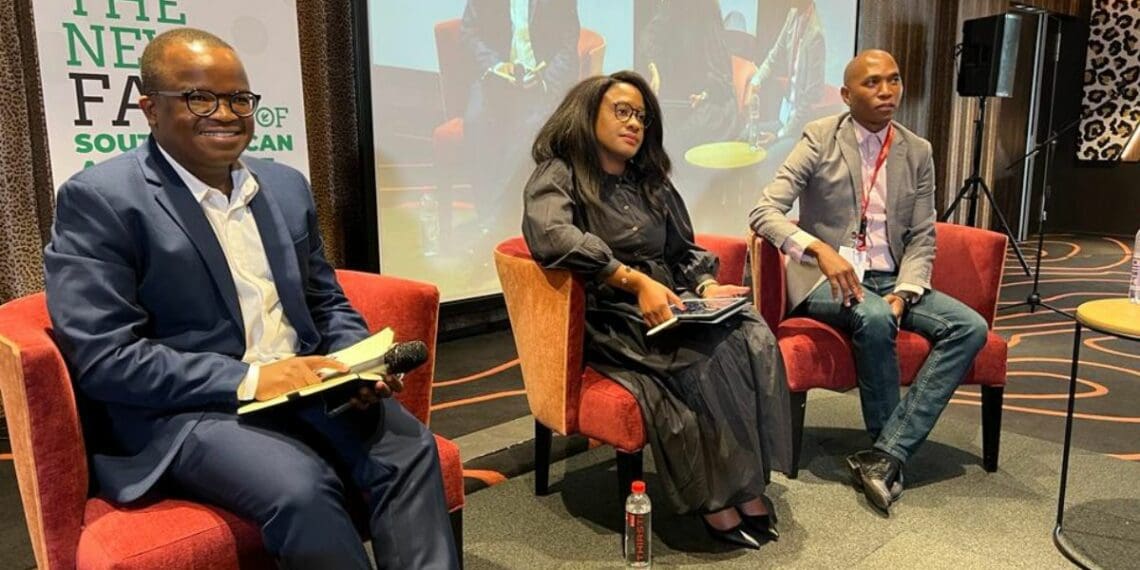
A concerning rise in global trends towards protectionism, weather conditions for the upcoming agricultural season, and a new blended finance programme for up-and-coming farmers. These were some of the pressing issues deliberated on during the Mzansi Young Farmers Indaba last week.
Some of South Africa’s top agricultural economists discussed economic factors affecting farmers during the indaba held in Sandton, Johannesburg. Wandile Sihlobo, chief economist at the Agricultural Business Chamber of South Africa (AgBiz), said that one of the key elements farmers should be on the lookout for is the impact of the third La Niña cycle which we are currently on.

“Fortunately, this time around it’s a weak one, so we will have a fairly good agricultural season going into next year… It is also important globally, because it does mean that some parts of the world will remain fairly dry, and that has implications for commodity prices, profitability and all kinds of things.”
Touching on climate change and the associated risks to farmers and financing institutions, Thabi Nkosi, chairman of the Land and Agricultural Development Bank of South Africa (Land Bank), pointed out that the banking sector was looking at alternative ways of assessing risks for agricultural businesses.
“It’s important that we think about the very different lens with which financiers are looking at agricultural businesses. A lot has changed over the last few years, and it’s quite important that we understand that. What we’ve seen is really just a shift towards a more dynamic way of assessing risk in agri-businesses.
“Financiers are quite cognisant about the role of climate change and the different strategies that need to be employed to mitigate that,” she said.
Global protectionism a potential problem

Dr Sifiso Ntombela, senior economist at the National Agricultural Marketing Council (NAMC), raised his concern around global trend towards protectionism. Because Mzansi’s agricultural sector generates over 50% of its revenue from exports, this trend should be a great cause of concern to farmers, he pointed out.
“We are seeing a strong shift into protectionism. So, the weaknesses in terms of global supply chains are becoming a challenge. This year, around about May, if I remember correctly, over 182 countries have instituted some form of export ban or some form of trade policy that is constraining or affecting global trade. That is worrying.”
Sihlobo agreed that there is a global rise in protectionism. He, however, added that South Africa is also indulging in protectionist practices. He added that the answer to protectionism lies perhaps in South Africa expanding its markets and not relying too much on the existing ones.
“How do we continuously develop markets beyond the areas in which we are concentrated, so that when one market closes the other remains open? How do we go into other markets in the Middle East and parts of Asia? [This is] so that all of the new entrant farmers, as they come into the sector, are not coming in a space that is more concentrated.”
Referring specifically to SA markets in neighbouring countries, Sihlobo said that having markets with functional production systems is less risky than having them rely solely on South African imports.
“You do want a region that has a bit of a buffer and a stable production. As patriotic as it can be to say South Africa should be the one that is producing, if everyone is relying on us, there’s a bit of a risk in that. You want the neighbors also to do relatively well, and I think we do have laws and ways of protecting South African farmers,” Sihlobo said.
A new blended finance model

Furthermore Nkosi, who acknowledged that the Land Bank had not been fulfilling its mandate to develop farmers, announced a new blended finance programme for emerging farmers. Together with the department of agriculture, land reform and rural development, the Land Bank is hoping to roll out the plan in the next few weeks.
“In this programme, we are going to be quite targeted. We are targeting specific commodities that have been set as priority commodities in accordance with the [Agricultural and Agro-processing] Master Plan,” she said.
“We are targeting developing farmers. We are targeting farmers that have a significant scale for growth, and we are saying that we want to change our funding model.”
ALSO READ: Land Bank: ‘New blended financing coming soon’
Sign up for Mzansi Today: Your daily take on the news and happenings from the agriculture value chain.