Friday, November 27, 2026
SUBSCRIBE
22 GLOBAL MEDIA AWARDS
Food For Mzansi
  • News
  • Changemakers
  • Lifestyle
  • Farmer’s Inside Track
  • Food for Thought
No Result
View All Result
  • News
  • Changemakers
  • Lifestyle
  • Farmer’s Inside Track
  • Food for Thought
No Result
View All Result
Food For Mzansi
No Result
View All Result
in News

Bitter taste for SA sugar industry as imports surge

South Africa’s sugar industry is under threat as foreign sugar floods the market, displacing locally produced sugar and costing the industry over R760 million in lost revenue. SA Canegrowers urge government action and consumer support to safeguard jobs and livelihoods

by Tiisetso Manoko
10th November 2025
Add FFM on Google
Scrapping the sugar tax is key for survival of the sugarcane industry.

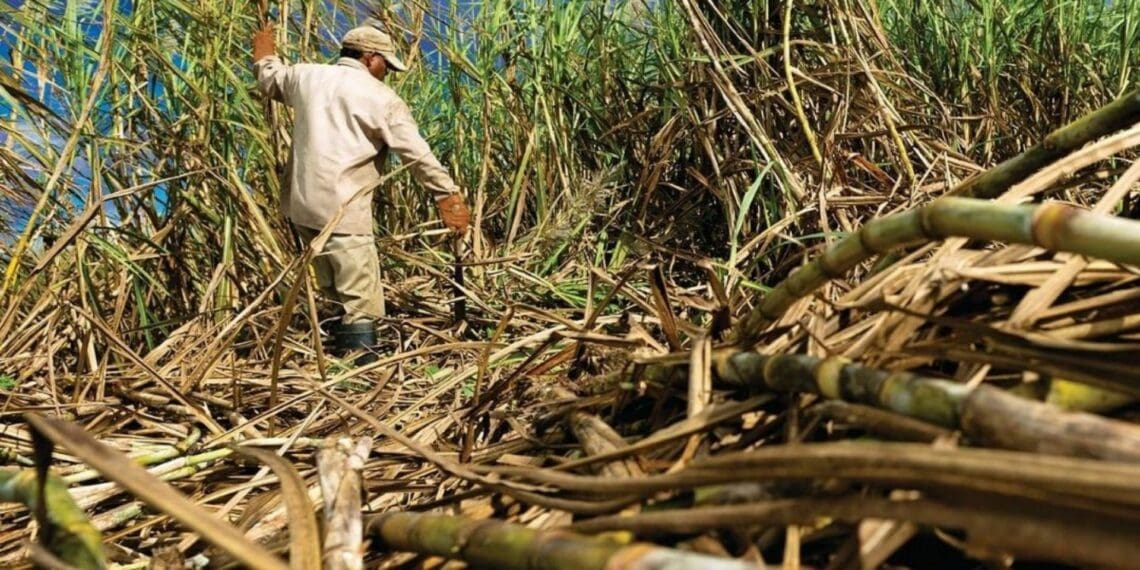
South Africa’s sugar industry is at a critical juncture. From small-scale farmers to mill workers, over a million livelihoods rely on sugarcane farming. Photo: Supplied/Food For Mzansi

Share on FacebookShare on TwitterShare on WhatsApp

South African Canegrowers have raised concerns with the sale of sugar locally, which has fallen drastically due to imported sugar. They said it threatens the stability of the industry and jobs in Mpumalanga and KwaZulu-Natal.

According to the association, sugar imports for 2025 were already more than 400% higher than 2024 levels, and this has directly led to a drop of more than 100 000 tons of locally produced sugar sold or used by commercial end users. 

“This 13% year-on-year drop in sales threatens to decimate the industry, and more needs to be done to halt sugar imports. SA Canegrowers calls on consumers, retailers, and food and drinks manufacturers to commit to buying locally grown sugar, as well as the government to enact stronger trade measures to protect the local industry.

“Even though the year is not yet over, there has been an unprecedented surge in deep-sea sugar imports in 2025. Between January and August 149 099 tons of sugar were imported from countries like Brazil, compared to 35 730 tons during the same period in 2024,” the association said in a statement.

Imports lead to local losses

The association noted that opportunistic importers sell the sugar at prices similar to locally produced sugar, thereby pocketing huge profits at no benefit to consumers. 

“This leads to South African sugar being displaced, with foreign sugar taking up retail shelf space or being used by food and beverage producers. For every ton of foreign sugar sold in South Africa, the local industry loses R7 600.

“Considering the drop in local sugar sales in excess of 100 000 tons, this loss equates to more than R760 million to the local sugar industry.”


Related stories
  • SA sugar industry remains fragile despite progress, says Mhlaba
  • Sustainable small-scale sugarcane growers vital to sugar industry
  • ‘Destructive’ sugar tax pushes industry to the brink
  • Young Limpopo scientist unlocks peperboom’s healing power

SA Canegrowers further stated that the 24 000 small-scale and 1 200 large-scale sugarcane growers in South Africa, which livelihoods they represent, and the families and communities they support, are under threat unless something is urgently done to address their concerns of imported sugar.

EARLY-BIRD TICKETS ARE AVAILABLE NOW!

Africa’s biggest youth-in-agriculture gathering is back – and it’s only getting bigger!

GET YOUR TICKET NOW!

Sugar industry critical for SA economy

The premier of Mpumalanga, Mandla Ndlovu, said the sugar industry in the province is a critical pillar that should never be allowed to struggle. He called on all stakeholders to join hands and fight all the bottlenecks.

“Mpumalanga province has at least two sugar mills in Malelane and Komatipoort, in the Nkomazi Local Municipality, which provides services to a significant number of small-scale sugar cane growers.

“The sugar mills also play a critical role in the province’s economy through its processing of raw sugarcane into sugar and by-products. The sugar industry is an integral part of the millions of people whose livelihoods are connected to the sugar farming sector,” he said.

Ndlovu committed himself to strengthening collaborations in research and land reforms programmes for sustainability in the sector. “In a province where unemployment is at 34%, the number of jobs created in the value chain of the industry shows the high level of commitment needed to address the socio-economic challenges that Mpumalanga is grappling with,” he said.

READ NEXT: Western Cape on high alert after FMD reports

Red stylized leaves resembling flames enclosed in a rounded, irregular red border on a white background.

Sign-up for the latest agricultural news delivered straight to your inbox every day with Mzansi Today!

Add FFM on Google Follow FFM on Google News

Tiisetso Manoko

Tiisetso Manoko is a seasoned journalist with vast experience in community media. He possesses diploma in media studies majoring in journalism, certificate in civic leadership. He loves news from all angles with particular interest in local government, agriculture and politics. He is a staunch Mamelodi Sundowns Football club supporter.

Tags: Commercialising farmerKwaZulu-NatalMpumalangaSugar industrysugarcane farmers
Calls to bridge the gap between red meat industry and researchers
News

Calls to bridge the gap between red meat industry and researchers

by Staff Reporter
26th November 2026

Experts at the Agri X Fusion summit unpacked how SA agribusinesses can leverage academic research, tax incentives, and collaborative partnerships...

Read moreDetails
Building the future: Seriti Institute brings new hope to Standerton

Building the future: Seriti Institute brings new hope to Standerton

25th November 2026
Gauteng farmer builds app to get fair livestock prices

Gauteng farmer builds app to get fair livestock prices

25th November 2026
Transformation Lekgotla: Call to fix ‘stubborn problems’ in farming

Ramasodi: ‘The best is yet to come for South African agriculture’

25th November 2026
Stop losing money on poor livestock marketing – here’s how to fix it

Stop losing money on poor livestock marketing – here’s how to fix it

25th November 2026

Why seasonal rainfall averages don’t guarantee maize yields

Family holiday inspires thriving Mzansi moringa business

Ramasodi: ‘The best is yet to come for South African agriculture’

Veg prices crash ahead of festive season, squeezing SA farmers

African markets offer fresh growth opportunities for SA rooibos

Join Food For Mzansi's WhatsApp channel for the latest updates!

JOIN NOW!
Next Post

Hustle pays: Lebogang’s R350 hatches 30 000-egg farm

THE NEW FACE OF SOUTH AFRICAN AGRICULTURE

With 21 global awards in the first six years of its existence, Food For Mzansi is much more than an agriculture publication. It is a movement, unashamedly saluting the unsung heroes of South African agriculture. We believe in the power of agriculture to promote nation building and social cohesion by telling stories that are often overlooked by broader society.

Why African farmers need finance, not just rules, to go green

Sugar industry seeks new path to 51% transformation target

EC farmer Zoleka Dikana scales from village roots to 31 retailers

Drought fears and high input costs shadow SA maize farmers

SA women honoured for breakthrough farming and water research

Family holiday inspires thriving Mzansi moringa business

  • Awards & Global Impact
  • Our Story
  • Contact Us
  • Cookie Policy
  • Privacy Policy
  • Copyright

Contact us
Office: +27 21 879 1824
News: info@foodformzansi.co.za
Advertising: sales@foodformzansi.co.za

Contact us
Office: +27 21 879 1824
News: info@foodformzansi.co.za
Advertising: sales@foodformzansi.co.za

  • Awards & Global Impact
  • Our Story
  • Contact Us
  • Cookie Policy
  • Privacy Policy
  • Copyright

Chat Options

About this assistant

This feature generates automated answers summarised from Food For Mzansi articles. By using it, you are interacting with an AI system (provided by Google), not a human. AI can make mistakes. Please refer to the source articles for verification and citation purposes.

Our staff do not check or moderate Lerato’s answers in advance, but may review some later. Our journalists continue to write and edit all the articles Lerato uses as sources.

To estimate unique and returning web users, we store a random browser ID in this browser. WhatsApp users are counted by phone number. The same person using both channels may be counted twice.

I'm Lerato, your AI assistant!
No Result
View All Result
  • News
  • Changemakers
  • Lifestyle
  • Farmer’s Inside Track
  • Food for Thought

Copyright © 2026 Food for Mzansi