The sugar industry has admitted it will miss its own transformation deadline. Now it wants government, funders and growers in one room to fix that. That was the blunt message as the Sugarcane Development Transformation Dialogue opened at KwaShukela in Mount Edgecombe, Durban, on Thursday.
The dialogue was convened by Kagiso Trust in partnership with the South African Farmers Development Association (Safda), the South African Sugar Association (SASA), Tongaat Hulett, Illovo, Gledhow Sugar Company and the Chatthe Group.
The target is clear: 51% of all cane delivered to South Africa’s mills should come from black growers. The industry says it sits at about 24% today. The deadline was 2030. Nobody in the room this morning pretended that date still holds.
The theme of the day reflected how the industry hoped to close the gap: developing an ecosystem to unlock investment and optimise development for inclusive sugarcane production. The message was clear: nobody could do it alone.

‘Brutally honest’: the 51% target is slipping
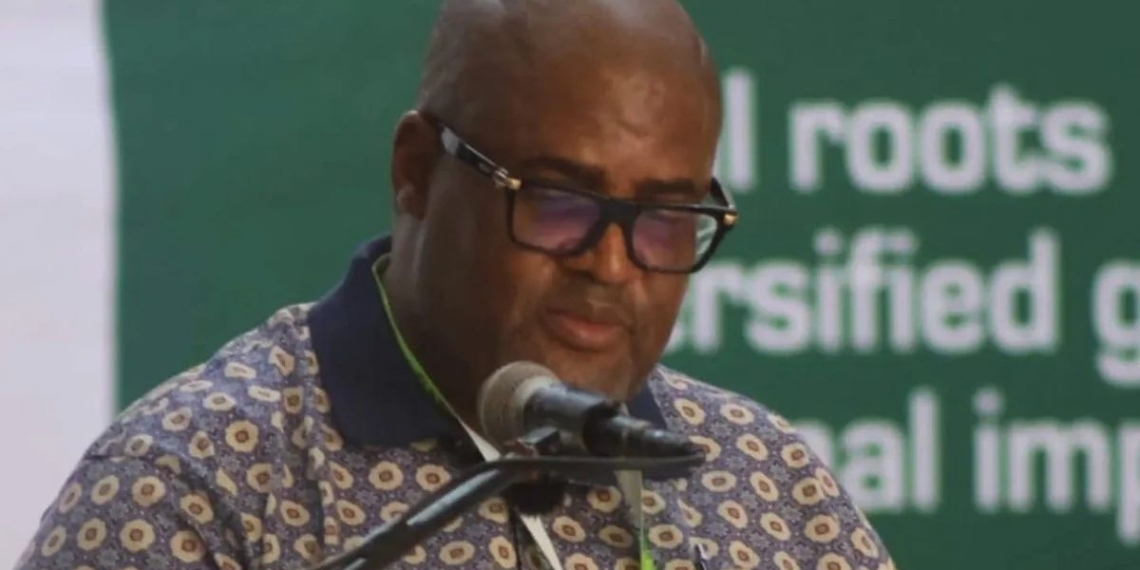
Trix Trikam, acting chairman of SASA, set the tone without sugar-coating anything. “We have to be brutally honest with ourselves and admit that we are nowhere near reaching the 51% target by 2030,” he told delegates.
His own view? Another five to ten years is more realistic. He floated 2036 as a new end date.
Trikam pointed to findings from the industry’s transformation interventions impact study.
The cane transport subsidy paid from the Transformation Intervention Fund does not cover growers’ actual transport costs. There is also a critical need for certified, improved seedcane, which he said the industry should tackle with a major initiative.
The money already on the table is not small. Under the Sugarcane Value Chain Master Plan, the premium price payment for small-scale growers climbed to R68 million.
SASA’s council then extended it with inflation-linked increases: R71 million for 2024/25, R76.2 million for 2025/26 and R77.7 million for 2026/27. On top of that comes a supplementary payment fund of about R102 million a year, a grower development account of just over R5 million a year and R4.4 million a year for administration.
Related stories
- Godlimpi calls for innovative sugarcane grower financing
- Scrap sugar tax to save farmers and jobs, SA Canegrowers plead
- Choosing local sugar is critical to keeping SA’s heritage alive
- Value chain collaboration key to building climate-resilient farming
Phase two of the industry transformation plan, with R2 billion allocated over five years, started in the 2025/26 season. But Trikam said that alone will not get the industry to 51%. It needs a new collaborative system that brings in government and the public and private sectors.
He held up the partnership between Kagiso Trust and Safda, which had completed its first year, as an example. Its story was brought to life in Rooted in Cane, a documentary produced by Food For Mzansi and premiered during the dialogue.
Trikam did not dodge the uncomfortable question either. “How can it be that black growers continue to dominate in terms of actual farmer numbers,” he asked, yet keep trailing their white counterparts in cane deliveries?
Some critics, he said, think the industry is chasing a mirage. “Not so.” Today, he said, “marks the beginning of a paradigm shift” towards making 51% black cane deliveries a reality within five to ten years. The industry sustains at least one million lives, so a lot rides on getting it right.
Nyhontso: ‘Our doors are open’
Minister of land reform and rural development Mzwanele Nyhontso started with history, not budgets. Sugar in KwaZulu-Natal, he said, was built on colonial land dispossession and forced labour, from the aftermath of 1879 and the Bambatha Rebellion of 1906 to the indentured labourers brought from India to work the cane fields.
He was just as clear that cane is not a colonial import in this part of the world. Shipwrecked Portuguese sailors recorded local people growing sugarcane on the coast as far back as 1635.
Why start there? “History provides the point of departure that should inform our efforts to transform the sugar industry,” Nyhontso said, quoting Maya Angelou: if you don’t know where you are coming from, you don’t know where you are going.
Then came the commitments. His department has revised its land access policy to widen who qualifies, with black women, persons with disabilities and military veterans named as priorities.
On 26 October, it launched the Integrated Land Reform and Rural Development Support Programme, with up to R1.2 billion set aside for the 2026/27 financial year across all nine provinces. Another R500 million is committed through the Land Bank for a blended finance scheme. Talks with the IDC and the Development Bank of Southern Africa are next.
Nyhontso said no less than 76 000 hectares of cane land has already been transferred to land reform beneficiaries, including restitution land in KwaZulu-Natal and Mpumalanga. Much of it is held by trusts and CPAs (communal property associations), and he admitted many face internal conflicts and difficult partnerships.
Given the public money invested, the government has a duty to help make these farms work.
His challenge to the room: graduate more black growers from small-scale to commercial production, and then push the commercial growers into exporting.
South Africa has 12 operating sugar mills, ten in KwaZulu-Natal and two in Mpumalanga. Black participation, he said, must reach critical mass across the whole value chain, from land and transport to milling and new products like ethanol.
Technology is part of that. With AI and new research reshaping farming, “getting access to new technology is no longer a matter of choice“. Black growers, he added, cannot be permanent recipients of government support. The goal is independent commercial farmers competing in international markets.
And before Nyhontso sat down, the announcement the room was waiting for: approved support for the next ploughing season. That includes R120 million for small-scale growers in rural areas and R80 million for access roads around farmer production support units (FPSUs), alongside further funding for land reform beneficiaries.
The hall broke into applause. “You did not clap until I mentioned it,” Nyhontso joked. “I see you.”
“Our doors are open,” he said, “and we invite all industry players to enter and engage with us.”
ALSO READ: R67m partnership transforms rural livestock health and traceability