As South Africa marks Youth Month this June, the International Water Management Institute (IWMI) in Southern Africa highlighted the critical role young people are playing in addressing water scarcity and strengthening community resilience in the Northern Cape.
Water scarcity in the Northern Cape is not only an environmental concern but a pressing development challenge that affects livelihoods, local economies and long-term sustainability.
Section 24(b) of the South African Constitution guarantees access to sufficient water for every citizen. It also ensures everyone has the right to an environment that is not harmful to health or well-being, including access to safe, clean drinking water. Furthermore, SDG 6 is the United Nations’ Sustainable Development Goal dedicated to ensuring the availability and sustainable management of clean water and sanitation for all by 2030.
It addresses the global crisis where billions lack safe drinking water, adequate sanitation, and hygiene facilities.
Through its AquaFutures South Africa Project, the International Water Management Institute (IWMI) in Southern Africa said it was equipping young people with the skills and platforms needed to drive locally grounded, scalable and sustainable water solutions by engaging with local municipalities through organised dialogues and partaking in citizen science programmes.
Youth-led efforts drive sustainable solutions
“The project thus promotes a more inclusive approach to water management by recognising youth as key stakeholders in shaping South Africa’s water future.
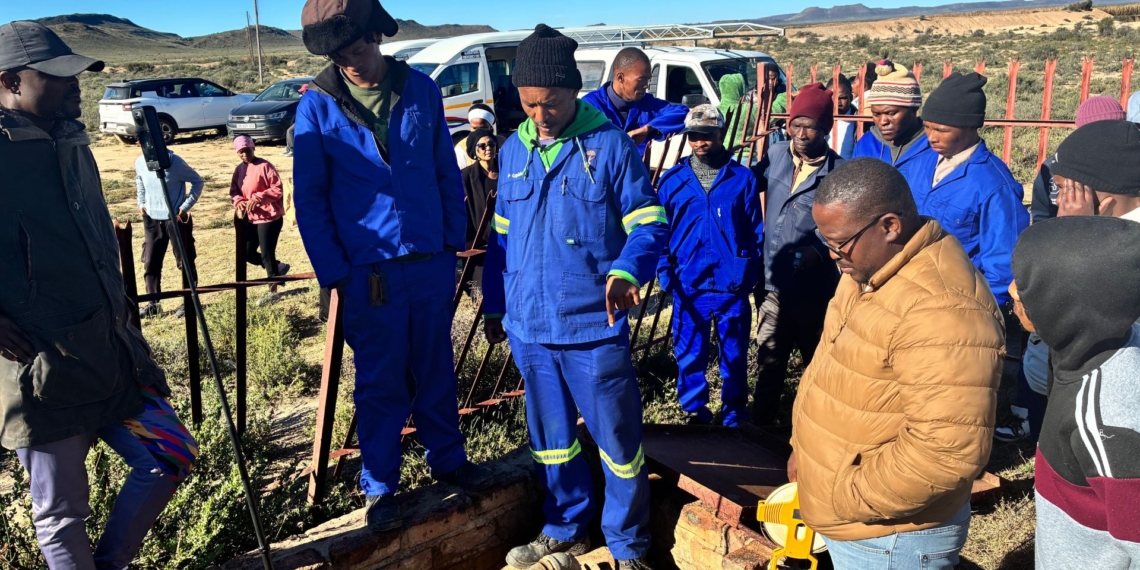
“Across the Central Karoo towns of Richmond, Hanover and Victoria West, young people are actively contributing to community-driven water management initiatives. Participants have described local water challenges as environmental disasters that pose severe health risks and economic setbacks that threaten livelihoods and food security,” the IWMI stated.
In a region experiencing persistent drought and water insecurity, these youth-led efforts are proving invaluable in addressing both environmental pressures and socio-economic inequalities.
Related stories
- ‘We need feed’: NC farmers plead amid prolonged drought
- SA soybean industry fights back after drought
- Cape heatwave havoc: Farmers battle extreme temperatures
- BFAP forum: Collaboration, traceability key to SA livestock future
As climate pressures intensify and water resources become increasingly constrained, initiatives like AquaFutures SA demonstrate that youth-led innovation is not only valuable but essential to building resilient communities.
Since its inception, the AquaFutures SA Project has worked closely with 25 young people in the Central Karoo to identify pressing water challenges and develop practical solutions.
Gender Equality and Social Inclusion (GESI) research officer, Seipati Mokhema, at IWMI, said that by recognising youth as key stakeholders in water governance, they were fostering more inclusive and forward-looking responses to the country’s water challenges.
“The project highlights the importance of institutional collaboration and youth engagement in creating spaces for dialogue, transparency and collective action towards sustainable water management, particularly in water-stressed communities across the Central Karoo.
“Youth in the Northern Cape are engaging in training that empowers them to contribute to community-led water management initiatives,” she said.
The AquaFutures SA Project is designed to strengthen youth participation in water and sanitation planning by equipping young people with practical and relevant skills to manage water resources during droughts and periods of water stress.
READ NEXT: Cape Town port hits rock bottom: Ranked last in global index