At the recent Mzansi Young Farmers Indaba, cattle breeder Christiaan de Jager shared practical insights on how strategic breeding decisions can significantly improve beef production efficiency and farm profitability.
For beef producers, carcass quality plays a critical role in determining market value and overall farm profitability. Animals that produce well-muscled carcasses with a high proportion of saleable meat allow farmers to maximise returns per animal while meeting market demand for quality beef.
In this regard, breeds that consistently deliver strong carcass traits can contribute significantly to the efficiency and profitability of beef production systems.
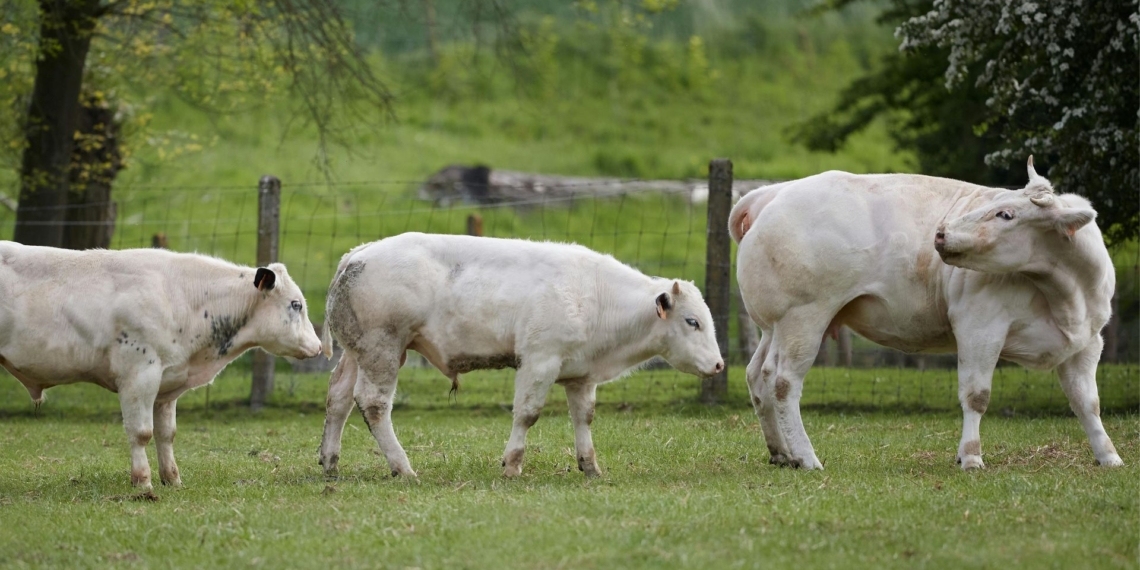
De Jager highlighted the potential of the Chianina breed and its crossbreeding value for South African cattle operations.
An ancient breed with modern production potential
The Chianina originates in Italy and is regarded as the world’s oldest purebred cattle breed. While relatively unknown to many local producers, De Jager explained that the breed has been scientifically selected for decades to improve growth, carcass yield, and feed efficiency.
According to research, the Chianina is the world’s largest and heaviest beef cattle breed and a top choice in the Italian meat market. By analysing 842 Chianina carcasses, researchers discovered that the weight and meat yield of specific sections, such as the “round” and “loin”, are strongly influenced by genetics.
Since these valuable traits are passed down consistently from parents to offspring, farmers can increase their profits by breeding cattle that produce heavier, higher-quality cuts of meat rather than relying solely on general appearance.
Related stories
- Why Kalahari Red goats are winning over SA farmers
- How to set up grazing camps and cut feed costs
- Ten tips to establish grazing pasture and boost profits
- Purpose in pastures: Dale Hutton’s journey to dairy excellence
According to De Jager, the breed represents what can happen when farmers are willing to change their approach.
“If you keep doing what you have always done, the result will remain the same. To make more money in farming, you have to be willing to make changes,” he said.
In Italy, the breed is tightly managed through a structured recording system. Every registered Chianina animal is tracked from birth through slaughter, with detailed records collected on carcass yield, growth rates, feed conversion, and bone percentages. This data-driven approach has allowed the breed to improve in a way similar to how poultry genetics have been enhanced over time.
Learning from livestock genetic progress
To illustrate the impact of selective breeding, De Jager compared the development of modern broiler chickens with those produced decades ago. Through systematic selection, broilers have dramatically improved in growth rate, feed efficiency, and carcass yield over the past 50 years. The same principle, he argued, can be applied in beef cattle production.
“That is economics. That is how you breed economically viable livestock,” he said. While South African cattle breeds have improved over time, De Jager noted that few have undergone the same level of structured carcass evaluation and data-driven selection as the Chianina in Italy.
Key characteristics: size, growth and feed efficiency
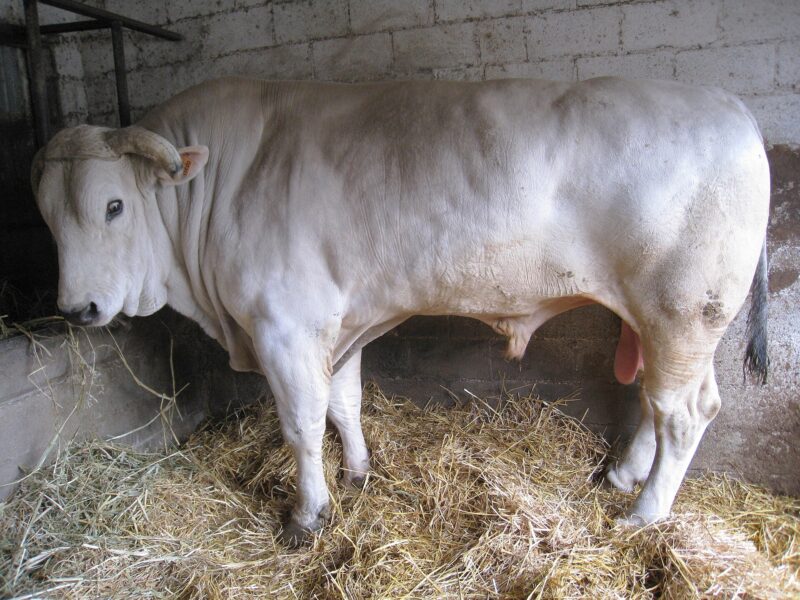
The Chianina is the largest cattle breed in the world, with mature bulls capable of reaching weights of up to 1.6 tonnes. However, De Jager emphasised that the breed’s real advantage lies in its productivity.
Under performance testing conditions, Chianina cattle have demonstrated:
- Daily weight gains exceeding 2kg per day
- Carcass yields of around 63–65%
- Feed conversion ratios that are significantly better than those of many conventional breeds
At a performance test station near Pretoria, one bull achieved a feed conversion ratio of 4.42 and a daily weight gain of 2.39kg, figures De Jager described as exceptional.
“When cattle eat less feed to gain more weight, that is where profitability comes from,” he said.
Why carcass yield matters
A key point De Jager emphasised was that profitability ultimately depends on meat produced per kilogram of live weight, not just total live weight. Using a simplified example, he compared three types of cattle grazing the same hectare:
- Small-framed cattle producing 220kg live weight with a 45% carcass yield result in about 99kg of meat.
- Medium-framed cattle producing 205kg live weight with a 55% yield produce about 112kg of meat.
- Larger cattle producing 190kg live weight but yielding 65% produce about 123kg of meat.
Despite producing less live weight per hectare, the larger cattle ultimately deliver more saleable beef. “Cattle farmers sell meat at the end of the day. Your profit is in the end product,” he noted.
The ‘cons’ farmers need to consider
According to Simitian Nest, there are several practical considerations that producers should keep in mind when working with the Chianina breed.
Handling and infrastructure requirements: Chianina cattle are among the largest cattle breeds in the world; their size and strength can be intimidating for inexperienced handlers. Farms working with the breed generally require strong, well-designed handling facilities capable of accommodating large animals safely.
Space and growth rate: The breed’s large frame means Chianina cattle require sufficient grazing space and good management. They also have a relatively extended growth period before reaching full maturity, which may not suit production systems that rely on faster-finishing animals.
Operational scale: Their size can make them less suitable for smaller farming operations with limited infrastructure or grazing capacity. In addition, Chianina genetics are less widely available outside specialised breeders, which can increase the initial cost of acquiring quality breeding stock.
Nutrition and finishing weights: To reach their full growth potential, Chianina cattle benefit from high-quality nutrition. Another consideration is that the breed may finish at heavier weights than some markets prefer, which means producers may need to align production with markets that value larger carcasses.
Despite these limitations, the breed offers strong economic potential in the right production systems. Chianina cattle are known for excellent growth rates, efficient feed conversion, and high carcass value, particularly in specialised beef markets where large, lean carcasses and premium beef cuts are in demand.
Crossbreeding opportunities for SA herds
One of the most practical applications for the Chianina breed is crossbreeding, particularly with locally adapted cows such as the Nguni. According to De Jager, the breed’s following characteristics make it well-suited for crossbreeding:
- Long, narrow frame
- Small head
- Relatively light bone structure at birth
- Strong growth potential
These traits help reduce calving difficulties while allowing calves to grow rapidly. “The Chianina is long and narrow with a small head. That makes it suitable to cross with many breeds while still producing strong growth.”
Best-suited production systems
While the genetics show clear potential, De Jager emphasised that the decision ultimately rests with the farmer. “Nobody can make the decision for you to change the bulls you are using. That decision must come from the farmer,” De Jager says.
The Chianina is generally best suited to experienced cattle producers and larger-scale beef operations in South Africa, where adequate grazing, strong handling facilities, and good nutrition are available.
The breed is particularly valuable in crossbreeding programmes, where Chianina bulls are used as terminal sires to improve growth rate, muscling, and carcass yield in herds based on locally adapted breeds such as the Bonsmara, Brahman, or Nguni.
As De Jager concluded, improving beef production is not only about working harder, but about making better genetic decisions that increase the value of every animal leaving the farm.
READ NEXT: Poultry farming: Tips to manage unpredictable weather patterns