In 2013, when financial struggles hit his family, Chumani Jezile took a simple step to help by planting pumpkins in the backyard. What started as a way to put food on the table has grown into a steady farming venture in Cala, Eastern Cape, with two partners by his side.
Along the way, Jezile has gained valuable experience, including travelling to the Middle East, attending workshops, and diving deep into export market research. Now, he’s focusing on expanding his reach in the agriculture industry, with big aspirations for the future.
Although he never imagined a career in agriculture, Jezile was surprised to find himself studying it at university. In matric, he applied for nursing and teaching but didn’t make it. He was accepted for his third option, farming management at Nelson Mandela Metropolitan University (NMMU).
It all started with him helping at home, but over time, his love for growing crops became part of his everyday life. “I even tried recycling that year,” he says, “but it failed because I didn’t have enough information or access to a market.” He adds that a lack of capital was also a major challenge.
Hustling in the farming space
“When my father retired, things at home were tough. We struggled just to cover the basics. It was in that challenging time that farming really came through for us.”
Growing crops the traditional way worked well for him as a food garden. However, in 2017, his interest shifted to aquaponics, which opened his eyes to different possibilities in farming.
“While I was studying, I also worked as a project assistant in a mini aquaponics project in Gqeberha, helping them set up their aquaponics structure.”
In 2018, he completed his BTech in agricultural management at NMMU. Four years later, in 2022, he moved to Cape Town and did a course in organic farming with Abalimi Bezekhaya, and trained as both a backyard gardener and a medium-scale farmer.
“My background in farming is mainly in fruits, vegetables, and crop production,” he says.
He also worked on a farm in Stellenbosch as a cold storage operator for six months, and later worked as a waiter. Jezile has been hustling his way through the farming space, taking every opportunity that came his way.
Related stories
- Legacy lives on: Mathidi finds purpose in potato farming
- From bare land to global dreams: Limpopo farmer rises up
Partners you can rely on
Jezile now works as an agricultural and food safety consultant in Gqeberha, while also farming with two business partners, Liyabona Moyeni and Samukele Vilakazi, in Cala. The three met through mutual friends and social media. Although the initial group had four members, the current team has worked together since 2023.
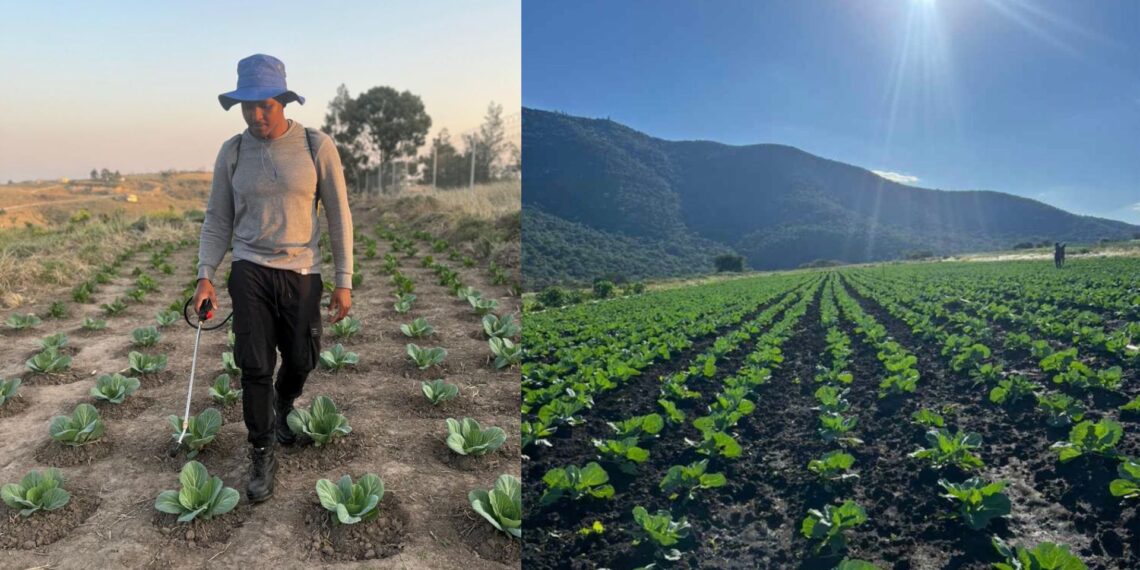
They farm on three hectares of a 13-hectare plot in Lower Tsengiwe Location in Cala. Jezile, who is originally from Middledrift, says leasing the land, owned by one of his business partners’ family, was a stroke of luck, as they don’t yet have land of their own.
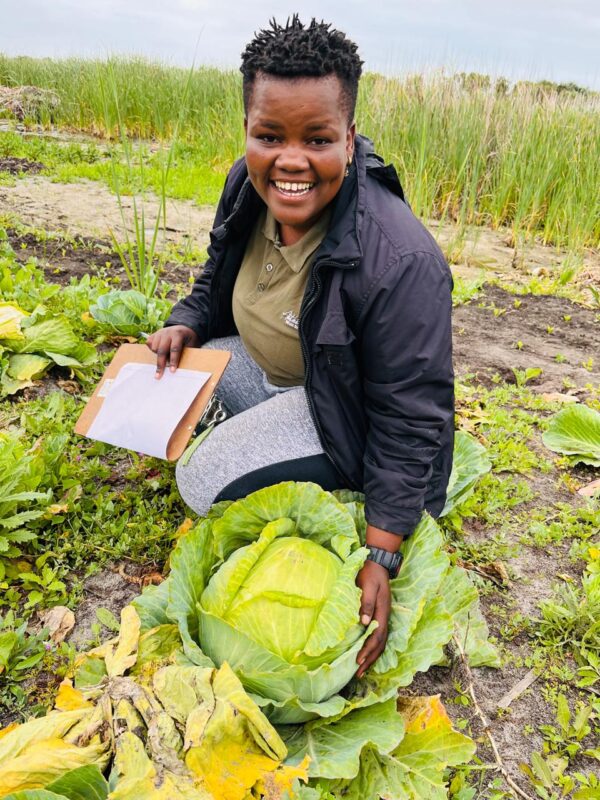
They grow cabbage throughout the year, supplying markets in Komani and surrounding communities in Cala. Each partner plays a specific role in the business. Jezile oversees production and market access, Moyeni handles maintenance and logistics, and Vilakazi focuses on administration.
Their business, Crop Circle Farm and Projects (Pty) Ltd, is slowly finding its feet. One of their main goals is securing water access, which has been a challenge from the start. “We’ve been trying to get a water licence since 2024. It’s delaying, but a year later, we’re still hopeful.”
Jezile adds, “We tried planting sorghum, but it didn’t take off; it rooted but never grew.”
He also shares that he moved away from maize growing after learning about certain toxins linked to cancer. “Maize is mostly used for animal feed and fattening.”
The trio have its sights set on the export market, particularly for livestock, but delays in securing permits have slowed their progress.
“After graduating in 2018, I wanted to explore life beyond agriculture,” he says.
This led him to Qatar, before the Fifa World Cup, where he landed a job as an equipment operator, working on the electric monorail system (EMS) for aircraft catering logistics. But that ended in April 2020 when the Covid-19 pandemic hit.
READ NEXT: Madonsela: ‘Farming’s tough, but I’m not here to chill’
Still, the dream didn’t die. “The goal was always to be self-sufficient and eventually tap into the export market for fresh herbs and leafy greens,” he says, reflecting on his time in Qatar. “Spinach was hard to find there. I’d only see it in fine dining restaurants. In regular supermarkets, leafy greens were scarce.”
He also noticed a strong demand for red meat in the Middle East, particularly goat meat; something the team wants to export once they start commercialising.
“There’s real demand for goat products in the Middle East,” Jezile says. “We want to get it right.”
Growing against the odds
The three business partners all have 9-to-5 jobs and mostly connect online and over weekends.
“I’ve realised that farming needs your full-time attention, but it’s tough to commit fully when access to funding is so limited.” He says leaving a stable job to focus solely on farming can make it difficult to stay afloat financially, especially while the business is still growing.
They’ve faced their fair share of setbacks, but continue to learn through trial and error.
Jezile shares some of his lessons: “Don’t shy away from using composted kraal manure – it really helps cut down on fertiliser costs.”
He also points out how soil type matters: “If you’re planting in water-retentive soil, make raised beds. We lost a lot of seedlings to root rot before we figured that out.”
While they have export ambitions, their goal is to build a strong base in Mzansi by supplying everything from fresh produce to whatever the market demands. For now, Jezile says, they’re still learning the ropes and finding their niche.
ALSO READ: Former Soweto DJ finds rhythm in sustainable farming
Get Stories of Change: Inspirational stories from the people that feed Mzansi.