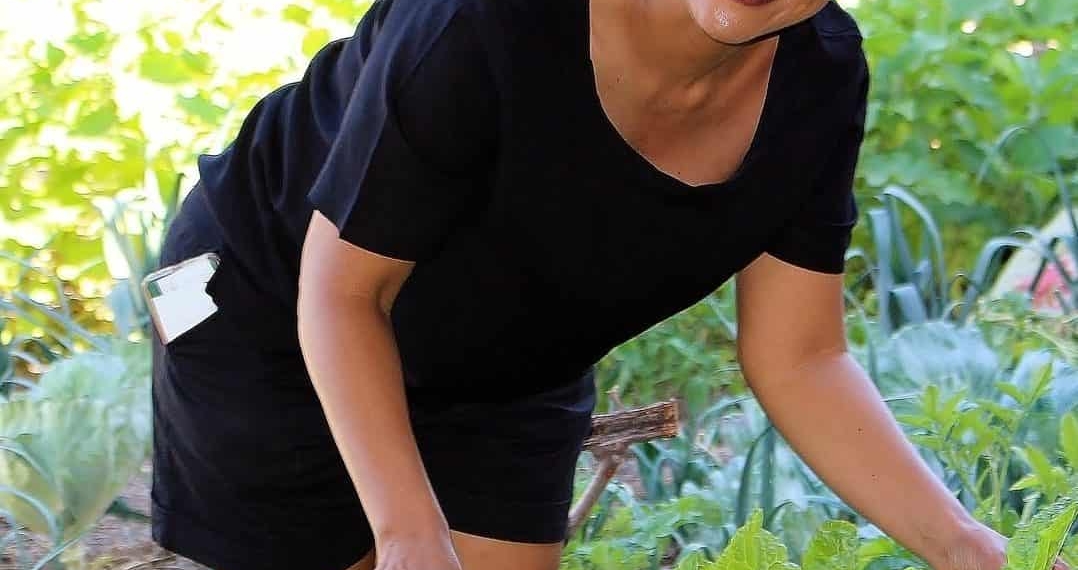
 She may have been inspired to become a winemaker by reading her mother’s romance novels, but it was her steely determination to succeed that drove her to become Mzansi’s first winemaker of colour.
Today Carmen Stevens (47) is an award-winning winemaker selling her own wines internationally. But she is still giving back to kids who are growing up in disadvantaged communities similar to where she came from.
“I grew up in Kraaifontein, but I also stayed in Belhar for part of my life. That’s why I started my charity, because I know the need is extremely big,” says Stevens.
Stevens knew from a young age that she wanted to work in the wine industry. As a child she struggled to read and write in English. Her mother, Julia, who had a collection of Mills and Boon romance books, suggested that Stevens read her a paragraph or two every night.
“Half of what I read I didn’t understand. When I started reading the books by myself, I learned that many of the stories are either about wine making or vineyards or they take place in a cellar. And that’s when I said I’m going to be a winemaker one day.”

But it wasn’t as easy as she thought it would be. After she matriculated from Scottsdene Secondary School in Kraaifontein in 1990, Stevens applied to study at Elsenburg Agricultural College in Stellenbosch. However, she was first rejected because of the colour of her skin and later because she had no military experience. Stevens believes this was just another way of keeping her out of the institution. She says due to the political change happening then, they realized that they couldn’t reject her again based on the colour of her skin and came up with a new excuse instead.
While still battling to study at Elsenburg, she decided to do a one-year agricultural diploma through Lyceum Correspondence College. Stevens refused to stand back and, after two years of struggle, she threatened to expose the institution through the help of the media. In January 1993 she started the agricultural course at the college with her main focus on viticulture and oenology.
From there on she worked for Distell for five years and another five years for another big company.
In 2014, Stevens started producing her own wine in Stellenbosch under the Carmen Stevens brand. She says 95% of her wine is sold in the United Kingdom and United States of America. She recently started selling in Johannesburg. The mother of two also combined the names of her daughters – Caitlin (15) and Victoria (13) – when naming her Catoria wine range.
“I worked very hard for what I have today. I am the first black winemaker to qualify in South Africa. I really had to fight to be where I am,” says Stevens.
She loves the variety in the day-to-day life of a winemaker, as the job takes her from the cellar and lab to the vineyards outdoors.
“I like the fact that I can be outside in the vineyards and also in the cellar. I’m very practical person and love working with my hands. I know about everything that is happening in my cellar. And most of all I know how each piece of equipment works.”
All the trials and tribulations she had to face made her the strong and successful woman that she is today. In 2017 the Department of Agriculture, Forestry and Fisheries named her their top entrepreneur for export markets. She was also awarded the Decanter World Wine Award in 2008.
When asked what makes her wine different, Stevens said she believes that each and every winemaker puts their own personality into their wine. She compares it to raising a child.
“You know what to do and what you shouldn’t do. And some parents allow certain things and others don’t. I believe my wines should have good structure, yet it needs to be inviting. It must have soft mid palates and it needs to have both a male and a female side to it. But I think my strongest character trait in my wines is that they are well-layered.”

With all the success that Stevens has achieved she has found a way to give back to underprivileged communities. In 2011 she established the Carmen Stevens Foundation. Through this foundation, Stevens provides food to children at schools in eleven communities in the Western Cape, which include Kraaifontein, Belhar and Elsies River. The initiative employs 42 women who prepare the food.
“I started charity work in 2011 by giving children soup. This year we will be giving 10 000 children a breakfast and a lunch for the whole year. Last year we gave 5700 children food,” says Stevens.
Despite her business and foundation that keeps her busy, Stevens always makes time for her daughters. She also likes to read in her free time. Her biggest vice, she says, is her love of beautiful shoes. “I’m not the biggest wine drinker, but I do enjoy a good glass of wine. I love gin and tonic. I have a big collection of gin.”
Looking back at where she started, Stevens says it was her mother’s prayers that carried her to where she is today. And one day when she is gone, and a new generation has taken over the wine industry, she would like to be remembered as the driven person that she is today.
“I would like to think that when they think or talk about me, they would say ‘Carmen was a go-getter, she knew what she wanted out of life and she made amazing wine. She was a formidable force and she opened a path for other women to come into this industry’”.