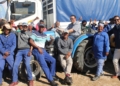
Rural and communal farmers in Mzansi encounter substantial challenges in nurturing and maintaining their agricultural ventures. In a discussion hosted by Kagiso Trust, the focus was on unveiling the hardships these food producers face and brainstorming actionable remedies.
The challenges faced by new small-scale farmers encompass issues related to land access, finance, market opportunities, technical skills, water management, and the need for a balanced approach that supports both commercial and subsistence farming.
According to Luvuyo Sandi, business and fund manager at Kagiso Trust, when it comes to land access and ownership issues, some areas where the farmers operate have land owned criminally, making it difficult for them to secure and utilise the land for farming.
“In some cases, access to land is under the control of traditional councils or leaders, introducing a unique set of challenges. There is also the issue of access to finance. Inadequate access to financial resources poses a significant challenge for emerging farmers,” Sandi said.
“The lack of funds affects their ability to invest in farming operations, purchase necessary equipment, and address other financial needs.”
Market access and exclusion from national networks are also among the challenges faced by this group of framers, he added.
Pioneering funding models for up-and-coming farmers
Kagiso Trust is dedicated to the development and up-and-coming farmers, which is why they employ a comprehensive approach to evaluate the feasibility and potential impact of funding initiatives for these farmers.

Recognising the limitations of conventional mechanisms like the banking and government sectors, Kagiso Trust, as an entity within the developmental state framework, actively engage in monitoring, initiating conversations, and catalysing innovative solutions to complement governmental and private sector efforts.
Under their social economic development programme, the Gala Impact Fund has been established to address key requirements for success in the sector, which is access to finance, market opportunities, and technical skills.
Notably, Kagiso Trust’s approach diverges from traditional funding models. They do not provide loans directly to individual farmers. Instead, they channel funds through a collective entity known as a farmer aggregator.
ALSO READ: Kagiso Trust helps new era farmers reach new heights
Land access and tenure dynamics
According to Zolani Mkiva, secretary general for the Congress of Traditional Leaders of South Africa (Contralesa), in communities, especially under the jurisdiction of traditional leadership, access to land is not a problem.
“This is simply because they don’t need to pay to work the land which they want to farm on.
“Secondly, the issue of land tenure in the rural landscape is different from one province to the other. In some provinces the communal land is very good, in other areas it’s not fit for purpose,” Mkiva said.
Furthermore, Mkiva said it is crucial to acknowledge the significance of supporting new farmers, who represent the entry-level into commercial farming. However, it’s equally important not to overlook the needs of subsistence farmers.
“Striking a balanced approach is essential, ensuring that the call for support to emerging farmers doesn’t overshadow the support required for subsistence farming. Recognising the critical role subsistence farming plays, not only in preserving tradition but also in alleviating poverty, underscores the need to address both segments comprehensively and inclusively.
READ NEXT: Small-scale crop farmers need more patient funding
Need for a collaborative mindset
Malapane Thamaga, an agricultural economist and representative for minister Thoko Didiza on the Maize Trust, said all these challenges have an impact on access to funding and financing.
“To access the type of financing emerging farmers are seeking, certain prerequisites must be met. [They’ll] need to provide collateral and furnish title deeds for your land, ensuring the commercial bank’s security in case of default.
“Verification of water rights is essential, given the significance of water in agriculture. Many emerging farmers lack access to water rights, making this a common hurdle,” Thamaga shared.
Thamaga added that encouraging and fostering the success of farmers, especially emerging ones, requires a shift in perspective and proactive engagement.
The key lies in motivating farmers to participate in formal organisations, emphasising the importance of networking and access to information, he said.
Additionally, the issue of partnership merits attention.
“Many emerging farmers perceive their neighbours as competitors rather than collaborators. It’s imperative to shift this mindset and view neighbouring farmers as opportunities for collaboration rather than threats,” Thamaga said.
Long-term strategies and plans
Kagiso Trust has engaged in various collaborative efforts to bolster the financial prospects and sustainability of emerging farmers. Their approach revolves around the farmer aggregator model, where funding is directed not to individual farmers but to entities well-equipped with market access and technical expertise.
“This promotes collaboration and partnership within the process. An example of such collaboration is evident in a project with a prominent retail company. This partnership involves a farmer entity managed by the retail giant, complete with technical experts working closely with local emerging farmers. The harvest goes to the supermarket’s supply chain,” Sandi explained.
Partnerships have also been forged with various financiers, ranging from private sector entities to developmental organisations.
Three key groups
At Kagiso Trust, their long-term strategies are aimed at continuously addressing persistent challenges hindering emerging farmers’ access to funding and support in South Africa’s agricultural sector.
Sandi said, “We have categorised our focus into three distinct groups. The influence category, the built category, and the growth category.
“In the influence category, our primary target is the youth, school learners and young individuals. Our objective is to influence young minds and alter perceptions of agriculture, portraying it as a viable opportunity and a potential career choice.”
By redirecting their efforts toward the youth, Kagiso Trust aims to secure the future sustainability of the agricultural sector. This commitment reflects our ongoing dedication to addressing challenges and fostering the long-term development of emerging farmers within South Africa’s agricultural landscape.
READ NEXT: Water recycling: A possible solution to tackle the El Niño threat
Sign up for Mzansi Today: Your daily take on the news and happenings from the agriculture value chain.