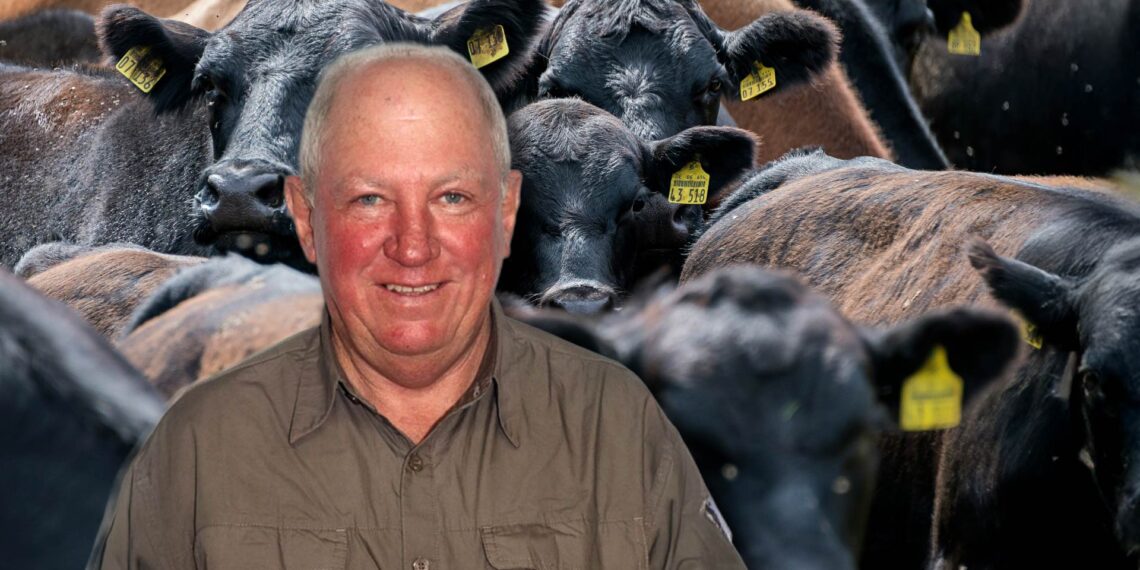
If you’re not farming sustainably, you’re already losing. Frik van Rooyen from the Red Meat Producers’ Organisation explains why today’s red meat producers have only two options: adapt or walk away.
Sustainability is a term that is often loosely used; however, for South Africa’s red meat producers, it’s non-negotiable. Those who do not adapt won’t survive.
Frik van Rooyen, deputy-chairman of the National Red Meat Producers’ Organisation (RPO), shares a practical perspective on what sustainable red meat production entails and why it matters.
When it comes to working with natural resources such as water and grass, Van Rooyen explains that it requires a strategic farm management approach.
“If we don’t manage our resources, you start having problems, and serious problems. Any farmers that are not farming sustainably these days, within a year or two, they’ll pack up and go and look for something else to do,” he says.
Another important factor is that input costs for farming are huge. As a result, the only way to manage that is to farm with nature and not against it, he explains.
Strategic land and water use
Van Rooyen stresses the importance of tailored, farm-specific strategies to protect natural ecosystems, adding that sustainability begins with how a farmer manages their land, day by day.
“Each and every farmer has got to have a management plan on his farm. He’s farming with natural resources. He needs to divide his farm up in camps, have a rotational plan for grass and water.
“By maximising the food on his farm, he can maximise the number of animals he carries. That, in turn, is directly linked with profitability.”
This approach not only ensures the longevity of grazing lands but also fosters biodiversity, prevents overgrazing, and conserves water.
Related stories
- Debunking myths: The nutritional power of red meat
- The South African red meat story consumers need to know
Technology, he says, is beginning to play a crucial role in red meat sustainability. However, this shift is less about flashy tech and more about rethinking inputs and outputs in a way that aligns with ecological principles.
“Farmers are looking at different technologies to increase the carrying capacity on their farms. They’re starting to use natural products to use fewer chemicals.
“It’s about doing more with less, being efficient, and preserving what you’ve got,” Van Rooyen shares.
The tightrope between profitability and responsibility
A challenge for many farmers is balancing sustainability with profitability. While sustainable farming does not necessarily mean sacrificing income, it does require finesse to get the two to work together.
“On a cattle or red meat farm, the two most important factors are your conception rate and your weaning weights.
“Those two things will determine whether you’re profitable or not. But you can’t increase animal numbers without increasing your resources.
“So managing your carrying capacity is critical. The challenge is: how do you stay profitable when costs are going up and prices are not?”
Van Rooyen says the often overlooked reality is that farmers remain price takers in an unpredictable market. And with input costs rising, maintaining this delicate balance becomes even more challenging.
What does this mean for consumers?
In many global markets, sustainability-conscious consumers drive change. In South Africa, however, Van Rooyen believes this trend is still emerging.
“The consumer buying meat isn’t really interested in whether it’s graded or grass-fed. He or she wants something that’s edible, that’s soft, that’s good, and above all, that’s affordable.
“We’re still one of the cheapest countries in terms of red meat prices, but that’s because of limited buying power. So right now, the effect of consumer choices on sustainability is minimal.”
That said, niche markets for grass-fed or organic red meat are growing slowly, and labelling initiatives, while limited, are beginning to take shape.
Van Rooyen shares that one of the most promising developments is the RPO’s recent achievement of ISO 9001 certification, a move designed to provide a consistent framework for sustainable red meat production.
“We’re trying to put a standard there for sustainable red meat production. The reason we’re doing it is to assist the farmers with information.
“It’s important for us to keep them on their farms and to continue farming with red meat. There is a future in red meat, but we need to guide it, shape it, and support it,” Van Rooyen explains.
While the future of red meat in South Africa depends on the strength of its farmers, their success will require the strength of systems built to support them. In the meantime, Van Rooyen encourages farmers to do what they do best.
“Don’t get negative. Do what you do best. Put your heads down and farm.”
- This story is part of a special series in partnership with the Red Meat Producers’ Organisation (RPO) – a tribute to the farmers feeding our nation, one meal at a time.

READ NEXT: Young chefs sizzle in junior red meat competition
Sign up for Mzansi Today: Your daily take on the news and happenings from the agriculture value chain.