South Africa’s red meat industry is rewriting its environmental story through regenerative grazing. Farmers are proving that with the right practices, livestock can restore soil health, boost biodiversity, and even help fight climate change.
Red meat often sparks heated debates online. Social media posts, documentaries, and news reports sometimes paint beef, lamb, and goat meat as enemies of the planet. From greenhouse gas emissions to land degradation, it seems like red meat has a tough reputation. But here’s the thing: the story isn’t that simple.
Across South Africa and beyond, the red meat industry is making serious moves to be more sustainable, reduce carbon footprints, and take care of the land.
It’s no secret that livestock farming contributes to greenhouse gas emissions, particularly methane. Methane is about 25 times more potent than carbon dioxide at trapping heat in the atmosphere over a 100-year period.
When cows, sheep, and goats digest their food, they release methane – a natural part of digestion called enteric fermentation. On top of that, overgrazing and poor land management can lead to soil erosion and loss of biodiversity.
For many South Africans, who are increasingly conscious of climate change, these issues raise real questions: “Can we enjoy meat and still protect the planet?” The answer, it seems, lies in smarter farming practices and responsible meat production.
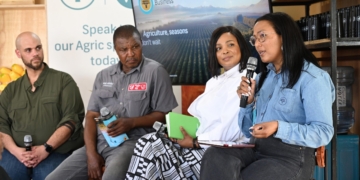
“The perception that red meat is inherently bad for the environment ignores the innovations happening on farms today,” says Enrike Maree, an agricultural communicator from AgreetothisAgri. “Many producers are adopting practices that actually restore soil health and support biodiversity.
Andrew Ardington, founder of the Regenerative Agriculture Association of Southern Africa, agrees.
“Yes, regenerative grazing improves soil health and function and thereby carbon sequestration when compared to set stocking,” he explains.
“All of our veld is degraded to some extent because of decades of overgrazing. But regenerative systems can reverse that damage by improving soil function and bringing back palatable grasses, legumes, and forbs that have long disappeared.”
Related stories
- Why red meat producers can’t afford to ignore sustainability
- South African red meat keeps rural economies alive and growing
- Regenerative agriculture: A sustainable solution for soil health
Grazing that cares for the land
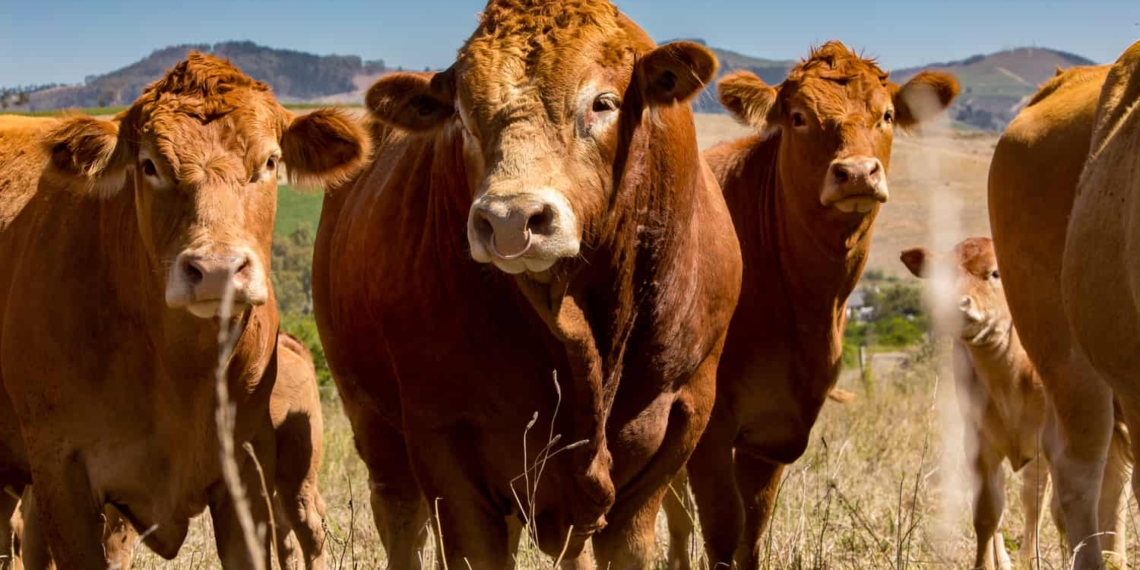
One of the most exciting changes in the red meat industry is the shift towards regenerative grazing. This isn’t just buzzwords. Regenerative grazing is about using livestock to actively improve soil health rather than deplete it.
By moving herds strategically across pastures, farmers mimic natural grazing patterns of wild herbivores. This encourages grass growth, improves soil structure, and even helps capture carbon from the atmosphere.
Take, for example, rotational grazing systems. Instead of letting animals roam freely over a large area, farmers move them between smaller paddocks. This prevents overgrazing, allows plants to recover, and increases soil carbon storage. Over time, these practices can make a farm a net carbon sink – meaning it absorbs more carbon than it emits.
“Rotational grazing isn’t just better for the soil; it benefits the animals too,” Maree adds. “Healthier pastures lead to healthier livestock, which in turn supports a more sustainable and resilient meat industry.”
Ardington, however, stresses that not all grazing systems are created equal. “There’s a difference between rotational grazing and regenerative grazing,” he notes.
“Put most simply, the one is run by a spreadsheet, and the other is run by a person on the ground who is managing the meeting between the cow and the veld, getting that balance right. Rotational grazing is not the same as regenerative grazing.”
He explains that when regenerative systems are managed well, the veld begins to recover naturally.
“As cattle impacts become more evenly distributed, dormant seeds in the soil germinate again. Over time, diversity increases, the ecosystem becomes more resilient, and the soil’s ability to function improves dramatically. It’s a virtuous cycle,” he says.
Carbon footprint reduction
South African red meat producers are also experimenting with ways to cut methane emissions directly. One approach is improving feed quality. High-quality forage and specially formulated feeds help animals digest food more efficiently, which reduces methane release. Some farmers are even exploring feed additives that can inhibit methane production in the stomach.
Technology also plays a role. Precision farming tools, like GPS and drones, help monitor pasture conditions and animal movement. This reduces overstocking and prevents unnecessary land degradation. Efficient water use and renewable energy on farms – think solar-powered pumps and biogas systems – further shrink the environmental footprint of meat production.
Ardington cautions against thinking that feed additives alone can fix the sector’s climate problem.
“Forage and feed additives might reduce GHG emissions, but that’s only a solution if we continue producing beef in intensive systems,” he says. “When we get livestock onto regenerative, grass-based systems, they become an environmental asset rather than a liability.”
He also challenges the way emissions are currently counted. “The entire concept of the environmental pollution of cattle production is a scrambled egg,” he says.
“Matter cannot be created or destroyed – cows can’t make carbon. The carbon they burp has to come from somewhere. When we account for emissions but not sequestration, we’re ignoring the biogenic cycle, where carbon goes round and round between grass and cow.”
Wildlife and biodiversity benefits
Responsible grazing doesn’t just help soil. It can protect wildlife, too. Many South African livestock farmers manage their land in ways that create habitats for birds, insects, and small mammals. Well-managed grazing lands can even serve as corridors for wildlife migration, connecting nature reserves and protected areas.
In some regions, farmers work alongside conservation organisations to restore degraded land. For instance, planting native grasses and shrubs not only improves forage for animals but also supports insects and pollinators that are critical for healthy ecosystems. The result? A landscape where red meat production and biodiversity can coexist.
“Technology is enabling farmers to make data-driven decisions that benefit both the environment and the bottom line,” Maree notes. “It’s an exciting time for agriculture because sustainability and productivity are aligning more than ever before.”
Ardington adds that many so-called environmental issues, like dung and urine accumulation, are really management issues.
“If dung and urine end up on healthy soil, they’re not pollutants but crucial fertilisers,” he says. “Problems only arise when cattle are removed from soil ecosystems and placed into intensive systems that break the natural nutrient cycle.”
The role of consumers
Sustainability isn’t just a farm-level issue. It’s something young consumers can influence, too. Choosing locally sourced meat reduces the emissions associated with transport. Supporting brands and farmers who follow responsible grazing and environmental stewardship sends a clear signal: sustainable practices matter.
Smarter consumption doesn’t mean giving up meat. It’s about eating with intention: appreciating quality over quantity, exploring different cuts, and valuing the story behind your food. The red meat industry is responding to this demand by being transparent about where and how animals are raised.
“Consumers have the power to drive change,” Maree emphasises. “By choosing meat from farmers who prioritise sustainability, people can support practices that have real environmental impact.”
Innovation and research
South Africa’s red meat sector is also investing in research to improve sustainability. Universities and industry bodies are studying everything from genetics to feed efficiency, aiming to produce animals that grow efficiently with fewer environmental costs. Programmes that reward farmers for adopting sustainable practices are gaining traction, providing both financial incentives and recognition for responsible production.
There’s also a push to educate the next generation of farmers and consumers. Workshops, farm tours, and youth-focused initiatives are showing that meat production can be both ethical and environmentally conscious. By connecting young people with the land and the animals, the industry hopes to inspire a generation that values food quality, environmental responsibility, and cultural heritage.
“Education is key,” Maree says. “When young people understand how meat is produced and see sustainable practices in action, they’re more likely to make informed choices and advocate for responsible farming.”
The bigger picture
It’s important to remember that red meat is more than just a protein source. It’s part of South Africa’s culture, economy, and landscape. Millions of rural families rely on livestock farming for their livelihoods, and the industry contributes significantly to food security. By embracing sustainable practices, the red meat sector is proving that economic growth and environmental care don’t have to be at odds.
As Ardington puts it, “The biggest change we can make is to get regenerative grazing happening on as many hectares as possible. But we have to stop believing that the solution is always technological. Sometimes the real fix is simply managing land better.”
So next time you see a steak or lamb chop on your plate, remember there’s a story behind it. It’s a story of innovation, stewardship, and dedication to the planet. South African red meat producers are stepping up, proving that with the right practices, enjoying meat and caring for the environment can go hand in hand.
“The narrative around red meat is changing,” Maree concludes. “With conscious farming and consumer choices, we can enjoy our traditional foods while nurturing the land for future generations.”
This story is part of a special series in partnership with the Red Meat Producers’ Organisation (RPO) – a tribute to the farmers feeding our nation, one meal at a time.

READ NEXT: Regenerative farming: Healthy soil, healthy food, healthy profits