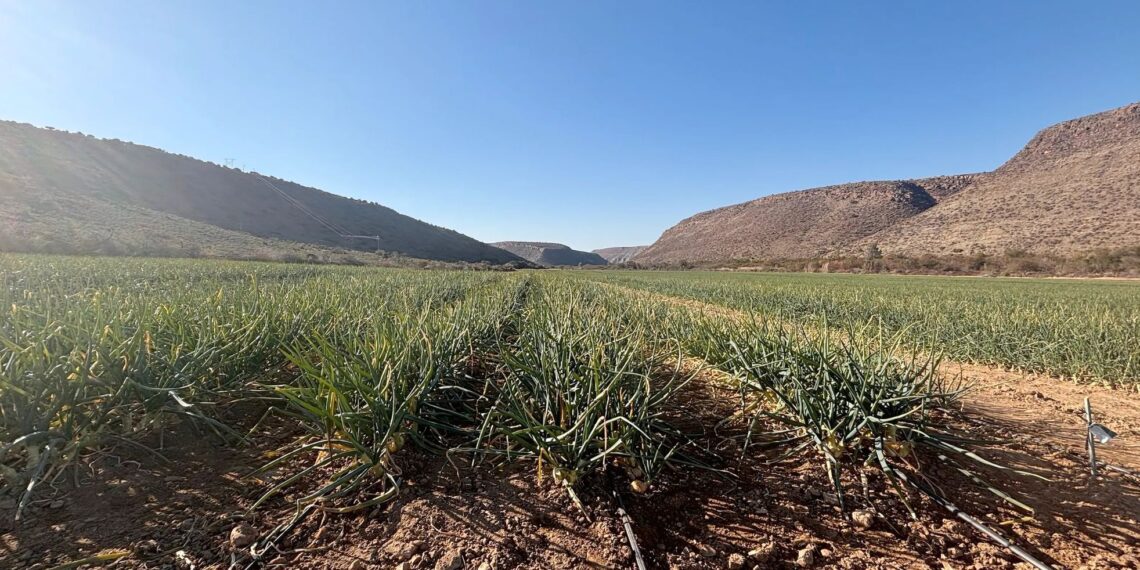
If your business goals include producing world-class crops and boosting your export advantage, then precision irrigation should be a key part of your strategy. Experts agree it’s more than just about saving water; it’s about giving your plants exactly what they need, when they need it, to produce the superior quality that global markets demand.
This was the core message at a recent Impact Day hosted by Netafim South Africa in Stellenbosch, celebrating 60 years in the sector.
Irrigation specialists on the panel challenged the common misconception that precision irrigation is only for high-value crops or simply a drought strategy. They stressed that a new mindset is needed for farmers to unlock their full potential.
The power of drip irrigation
According to Coenraad Fraenkel, extension manager at Citrus Research International, there is a direct relationship between precision irrigation and superior quality for export.
South Africa is the world’s second-biggest citrus exporter, shipping fruit to over 100 countries. With many markets six to eight weeks away, a fruit’s internal quality must be exceptionally resilient to arrive in top condition.
Fraenkel explained that drip irrigation gives the industry “the ability to give the right combination of nutrients at the right time to get a crop with superior quality”.
ALSO READ: Netafim celebrates 60 years of driving precision irrigation
He added that experts consistently agree that at least 40% of pre-harvest fruit quality revolves around irrigation, not just water, but the combination of water and nutrients.
He suggested the success of the citrus industry can serve as a powerful example for other sectors. To remain competitive and expand their export markets, industries like berries and apples must also recognise that superior fruit quality is the key to success.
ALSO READ: CGA’s Dr Ntshabele charts bold citrus future for SA
Precision irrigation for all crops
Francois Fourie, an irrigation expert and farmer from Turf Technology and Irrigation in Limpopo, reinforced this idea, stating that precision irrigation is a strategic tool for all farmers, not just those with high-value crops.
“We need a mind shift on precision irrigation,” Fourie said. “Stop thinking that it’s only for high-value crops. I think there’s a lot of value in cash crops.”
He explained that a proper precision system applies the right amount of water and fertiliser directly to the root zone. However, this requires a collaborative effort.
Fourie emphasised that designers must understand a client’s specific definition of a precision system, while both the designer and the farmer need deep knowledge of the crop and soil characteristics, such as water-holding capacity and infiltration rates.
Ignoring these factors, he warned, makes a successful outcome difficult.
Beware of incorrect use
Effective drip irrigation requires more than just installation. Andre du Toit, a Netafim expert, said it demands proper management, collaboration, and a focus on production rather than simply saving water.
He warned that using a drip system incorrectly can result in more water usage than older methods. He offered an example where “with the correct shading of the dripper, the water use went up but the production was better”. This highlights that the ultimate goal is not water reduction, but optimised output.
Du Toit pointed to a significant disconnect between producers, input consultants, and irrigation designers.
He noted that systems are often installed without enough collaboration, leading to situations where the farm manager “cannot farm what the producer wants [them] to do with it.”
“There must be more collaboration on that,” he said.



READ NEXT: From bare land to global dreams: Limpopo farmer rises up