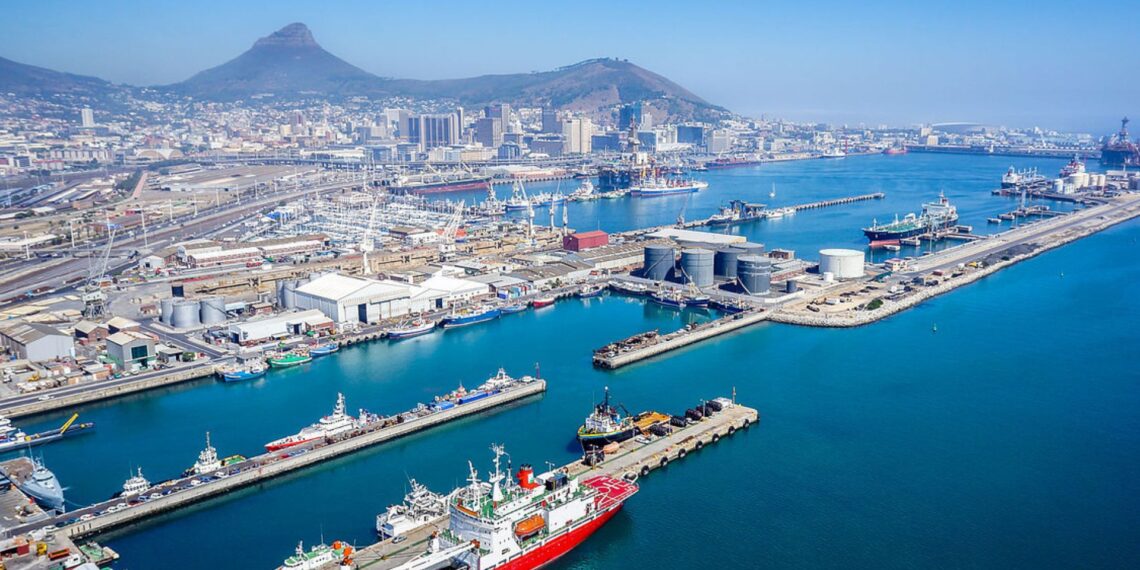
The apple and pear export industry has lost R1 billion due to logistical failures at Cape Town port in 2024. Stakeholders met with the Western Cape department of mobility this week, urging immediate intervention to prevent further market share loss in key global markets.
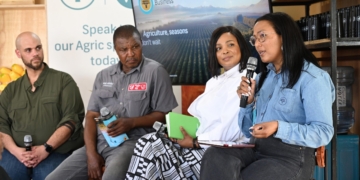
The department met with Two-a-Day, one of South Africa’s leading apple and pear packing and marketing cooperatives, and its logistics partner Link Supply Chain Management, for a strategic discussion and site visit aimed at tackling the logistical challenges affecting the fruit export industry.
“Industry role players warned that without urgent intervention, including the fast-tracking of the port’s privatisation, the country risks losing hard-won market share in key global markets,” Tru-Cape said in a statement.
No room for port delays
Roelf Pienaar, managing director of Tru-Cape Fruit Marketing, said the industry works in a complex, time-sensitive value chain, and if a vessel to Europe, the United Kingdom, or the Far East is missed, the sale is gone. One does not get a second chance to deliver on time in a programme-driven market.
“Logistics is the single biggest risk for us right now. If we can’t get our product out, everything else from on-farm innovation to market development is compromised,” he said.
Related stories
- SA citrus exports set to grow despite port and tariff pressures
- Severe delays at Cape Town port disrupt fresh produce exports
- SA’s agricultural exports reach record high despite drought
- Ports, energy, and trade: Agri leaders react to Sona 2025
Chris Petzer, Two-a-Day’s operations director, explained that Cape Town port delays often force the business to divert containers to Port Elizabeth at significant cost, simply to keep the supply chain moving and avoid halting harvest and packing operations.
“It’s not sustainable, but sometimes it’s the only option to prevent greater losses,” he said.
While Cape Town port’s efficiency is slightly improving, Chris Knoetze, managing director of Link Supply Chain Management, a fourth-party logistics provider owned by several of the Western Cape’s leading fruit exporting companies, including Two-a-Day and Tru-Cape Fruit Marketing, noted although crane productivity has improved, it is still throttling exports.
“Given several interventions, like Transnet’s appointment and changes at senior management level, the repair and maintenance of equipment, solving personnel matters, focusing on operational improvement and capital investment in new rubber tyre gantry cranes (RTGs) in Cape Town Container Terminal, we should expect to see a step change in productivity to at least twenty gross crane movements per hour (GCH) or more in the coming months. However, the process is still too slow and far removed from the 33 GCH reported by Transnet in November 2012.
“When port operations are disrupted, it impacts product quality, increases costs, and damages our credibility with overseas buyers,” Knoetze said.
READ NEXT: Tru-Cape strengthens apple & pear exports in Africa and Asia
Improving port efficiency a priority
Meanwhile, the department of mobility confirmed that it is actively pursuing measures to address these constraints. Corrine Gallant, deputy director-general at the department, outlined existing initiatives, including Cape Town port’s logistics development project management unit and plans to revitalise rail infrastructure.
“We are working on both the landside and waterside inefficiencies. This includes improving road freight safety and capacity, restoring rail services like the Overberg line, and ensuring that the Western Cape’s needs are heard at a national level. We cannot afford more costs in the chain; our focus is on solutions that remove bottlenecks and protect jobs,” he said.
Gerhard van Heerden, director at Link Supply Chain Management, noted that farmers, packhouses, and fruit exporters are investing in efficiency every day. “Now we need the same urgency and commitment at the port because without it, the entire value chain is at risk.”
Isaac Sileku, Western Cape minister of mobility, emphasised the need for urgency and structured collaboration with Transnet.
“We cannot afford to be reactive. We must have formal agreements and mechanisms in place so that when bottlenecks arise, we know exactly which button to press. Speed of execution is critical; our farmers and exporters cannot wait years for solutions,” he said.
READ NEXT: Precision irrigation unlocks superior crop quality & exports