Friday, August 21, 2026
SUBSCRIBE
22 GLOBAL MEDIA AWARDS
Food For Mzansi
  • News
  • Changemakers
  • Lifestyle
  • Farmer’s Inside Track
  • Food for Thought
No Result
View All Result
  • News
  • Changemakers
  • Lifestyle
  • Farmer’s Inside Track
  • Food for Thought
No Result
View All Result
Food For Mzansi
No Result
View All Result
in News

Sticky food prices push poor households to the brink

South African households are in crisis as food inflation hits the poorest hardest. The Competition Commission reveals families spend over 40% of their income on food, while prices for essentials like bread and maize remain high

by Tiisetso Manoko
8th September 2025
Financial literacy: A gateway for farmers who dream big

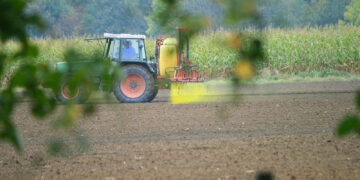
The Competition Commission's recent report has highlighted how rising utility costs create a double-squeeze on agriculture, hitting both farmer production costs and consumer till prices. Photo: Food For Mzansi

Share on FacebookShare on TwitterShare on WhatsApp

The Competition Commission have raised concerns about the deepening economic strain on South African households, with a disproportionate burden falling on low-income communities.

In their report on the cost of living, the commission stated that with food and non-alcoholic beverages consuming over 40% of expenditure for the poorest households, the impact of food inflation is particularly acute.

Andiswa Sibhukwana, an economist from the commission, said South African households are barely coping as essential goods like food, fuel, and electricity have made it impossible to afford by low-income earners.

Prices of food staples troubling

“Food and energy insecurity has made matters worse because they have increased food security. Over 57% of monthly income is spent on transport and electricity, which little remains for food and other necessities,” she said.

Sibhukwana explained that while some staples like canned pilchards have shown signs of responsible pricing at the retail level, other essential food items, including eggs, IQF chicken, brown bread, sunflower oil, and white maize meal, exhibit troubling patterns of price stickiness and widening retail margins.

“In several cases, producer or input costs have fallen or stabilised, yet retail prices remain elevated, suggesting weak market responsiveness. Historically, maize meal producers have responded to upward movements in the maize price but have not been particularly responsive to reductions in the white maize price typical ‘rocket and feather’ behaviour.

“We will continue to monitor to see if producers respond to lower prices and provide relief to consumers because historically this has not been the case,” she said.


Related stories
  • SA food prices spike, fuelled by meat and veggies
  • Podcast: Brace for higher food prices
  • The farmer’s guide to supplying fresh produce to markets
  • Veld fire training highlights need for farmer preparedness

Meanwhile, on sunflower oil, Sibhukwana said historically, the oilseed producers have exploited market conditions. First in 2022 by pushing up prices in response to global oilseed increases from the Ukraine war, but local sunflower seed prices did not go up.

“Since the beginning of 2025, seed prices have exhibited considerable volatility, while producer prices have largely remained relatively stable.

“This dynamic has influenced the farm-to-producer price spread, which declined significantly in January and February. Although there was a modest recovery in March, the spread remained within a typical range and below the levels observed in 2024.”

Cost of living crisis

According to Sibhukwana, in May 2025, the farm-to-producer spread rose sharply, reaching a high of 27%. “This notable increase in margins is attributable to a continued decline in seed prices, which was not matched by equivalent reductions in producer prices.

“As this is largely due to volatility, it may not be immediately concerning, but if seed prices continue to fall and producer prices do not respond, then that would be concerning,” she said.

The report noted that the domestic poultry industry remains sensitive to global trade developments, including fluctuations in import volumes and the potential impact of tariff adjustments or temporary trade exemptions.

“In recent times, the poultry industry has benefited from, amongst others, increased availability, reduced import prices and lower input costs. The influx of lower-cost imports may be exerting pressure on producer prices, which have remained relatively stable for almost two years.

“The increase in prices at the producer level raises some concerns given that South Africa’s poultry industry is now recovering well following the avian flu outbreak in 2023 and 2024,” the report stated.

The Pietermaritzburg Economic Justice and Dignity Group said, based on their calculations, food was bought after monies for transport and electricity had been paid for or set aside (leaving R1 974.87 – for food and everything else).

“If the entire R1 974.87 all went to buy food, then for a family of four persons, it would provide R493.72 per person per month. This is below the food poverty line of R796 per person per month,” the organisation stated.

READ NEXT: Free State prepares farmers for planting season

Sign-up for the latest agricultural news delivered straight to your inbox every day with Mzansi Today!

Tiisetso Manoko

Tiisetso Manoko is a seasoned journalist with vast experience in community media. He possesses diploma in media studies majoring in journalism, certificate in civic leadership. He loves news from all angles with particular interest in local government, agriculture and politics. He is a staunch Mamelodi Sundowns Football club supporter.

Tags: Competition CommissionConsumer interestFood inflationFood pricesInform me
Nampo Cape expands women’s programme at Bredasdorp Park
News

Nampo Cape expands women’s programme at Bredasdorp Park

by Staff Reporter
20th August 2026

Nampo Cape 2026 presents an expanded Santam Agriculture Women’s Programme, bringing inspirational talks, live entertainment, and community spirit to Bredasdorp...

Read moreDetails

Bolder taste, local roots: Maggi revamps iconic chicken noodles

19th August 2026
Jabu Mphambo, acting CEO of Land Bank; Johann Kotzé, CEO of AgriSA; Dr Keith du Plessis, CEO of Casidra; and Jannie Strydom, CEO of Agri Western Cape. They will be among the exciting speakers at Food For Mzansi and Land Bank’s popular lunchtime conversations at Nampo Cape 2026. Photos: Supplied/Food For Mzansi

Plan your Nampo Cape around these lunchtime conversations

19th August 2026
Market first: How Tshepiso built Blessed and Beautiful Farms

Market first: How Tshepiso built Blessed and Beautiful Farms

19th August 2026
High dam levels offer temporary cushion as SA braces for El Niño

High dam levels offer temporary cushion as SA braces for El Niño

19th August 2026

Trailblazers call for greater access, opportunity for women in agri

SA, India agree on new citrus protocols after decade-long talks

eFama wants farmers to produce for demand, not hope

Jonay Khoaene’s shift to sheep pays off in Postmasburg

Poultry value chains: Driving rural economic growth in SA

Join Food For Mzansi's WhatsApp channel for the latest updates!

JOIN NOW!
Next Post
Land reform farm blossoms under Lipali’s leadership

Land reform farm blossoms under Lipali’s leadership

THE NEW FACE OF SOUTH AFRICAN AGRICULTURE

With 21 global awards in the first six years of its existence, Food For Mzansi is much more than an agriculture publication. It is a movement, unashamedly saluting the unsung heroes of South African agriculture. We believe in the power of agriculture to promote nation building and social cohesion by telling stories that are often overlooked by broader society.

Practical management tips every SA livestock farmer must follow

Former nurse drives EC agroecology revolution in Ncera Village

15 000 jobs shed: Why the SA agri sector is feeling the pinch

Closing SA’s gender gap in commercial farming success

Trailblazers call for greater access, opportunity for women in agri

Smart energy puts Mzansi farms on a stronger footing

  • Awards & Global Impact
  • Our Story
  • Contact Us
  • Cookie Policy
  • Privacy Policy
  • Copyright

Contact us
Office: +27 21 879 1824
News: info@foodformzansi.co.za
Advertising: sales@foodformzansi.co.za

Contact us
Office: +27 21 879 1824
News: info@foodformzansi.co.za
Advertising: sales@foodformzansi.co.za

  • Awards & Global Impact
  • Our Story
  • Contact Us
  • Cookie Policy
  • Privacy Policy
  • Copyright

Chat Options

I'm Lerato, your AI assistant!
No Result
View All Result
  • News
  • Changemakers
  • Lifestyle
  • Farmer’s Inside Track
  • Food for Thought

Copyright © 2024 Food for Mzansi

This website uses cookies. By continuing to use this website you are giving consent to cookies being used. Visit our Privacy and Cookie Policy.