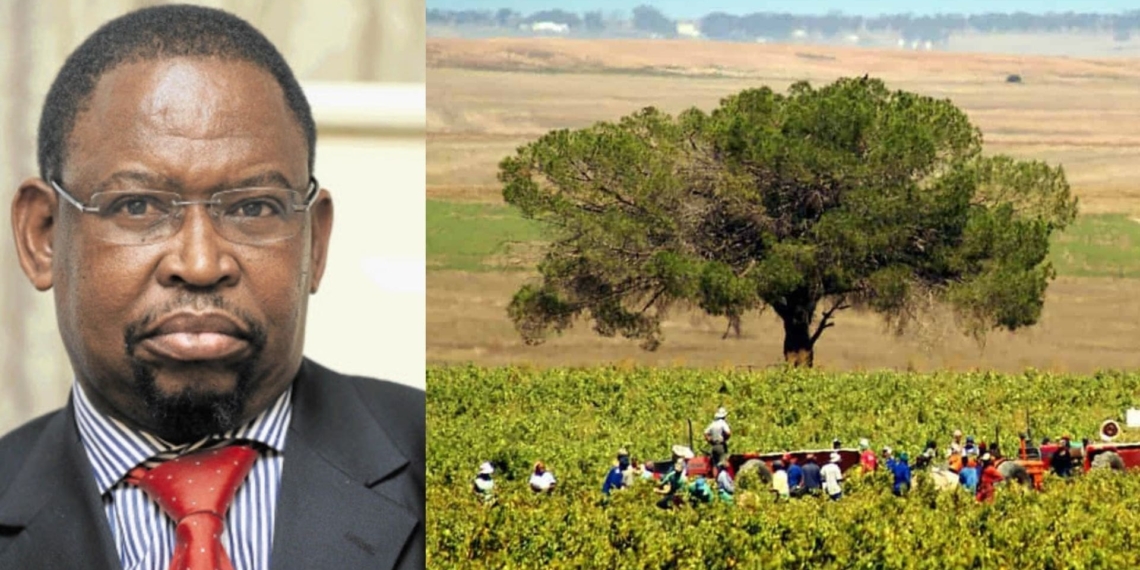
Ahead of the much-anticipated budget speech by finance minister Enoch Godongwana, many in the agricultural space have called on him to prioritise the sector and put more money into water, rail, road infrastructure, and tangible plans for ending load shedding.
Chief executive of SA Olive Wendy Petersen said they would like extra virgin olive oil and olive oil to be VAT zero-rated just like other vegetables and sunflower oils are.
Leniency expected
“We would like the support from government to look at imports and statutory levies that are applicable to them (olive oil products) and we believe South African Revenue Services can play a vital role in these collections,” she expressed.

Petersen said energy solution and support for farmers are critical and they would like to hear a plan from the minister of finance regarding that. She added that water rights need to be addressed to ensure a conducive environment for olive oil producers.
Communications manager at Groote Post Wines Peter Pentz said the most important thing for wine producers is that the government would put sin tax on the same level as inflation or lower, but not go above the inflation rate.
“This is being said under the industry that is already facing many challenges such as load shedding, increases in raw materials, increase in [the] minimum wage; and all these things are price-based and they add up to the operation of the business especially in the wine industry.
“At the end of the day, you need to make a profit out of your product. The wine markets are seeing that people are drinking less, we saw last year that there was a 3% decline in alcohol consumption, so we are seeing that people are spending more wisely. Consumers now are very price conscious,” he said.
READ NEXT: SA Olive CEO charts course amid global challenges
Navigating through the storms
North West sunflower farmer Minky Kgopa said she is hoping that the minister would touch on plans to support sustainable farming practices, investments in agricultural technology, and measures to address climate change’s impact on agriculture.

“My mind is on climate change mainly because our crop is burning due to lack of rain in the North West. That is we asking if is it possible for the minister to consider assisting farmers in mitigation of the results of an El Niño,” she said.
Nedbank senior economist Isaac Matshego said persistent load shedding, worsening transport bottlenecks, soft global demand, and subdued commodity prices would hurt production and exports.
He said the budget speech is expected to show that economic conditions will remain broadly unsupportive of significant fiscal consolidation.
“We expect more financial assistance to be announced for Transnet. In November 2023, National Treasury advanced a R47 billion bailout package for the transport utility, with R22.8 billion of the facility immediately available for draw-down.”
Matshego said the many social expenditure demands will have to take a back seat for a while, with the National Treasury prioritising pressing issues that will help to revive economic growth faster, primarily the Eskom debt package and the Transnet bailout.
Meanwhile, the deputy chairperson of the Black Agricultural Commodities Federation, Mike Gcabo, said they would like agriculture to get the big slice of the minister’s budget considering the performance over the last few years.
Budget should address land, infrastructure, levies
“We would appreciate if there could be more attention paid to the land transformation issues and questions. Land needs to be transferred to black farmers. We would like to see provisions being made and action being taken in that regard,” he said.
Gcabo said it is important that road and rail infrastructure be addressed as a matter of urgency because it is pointless to for farmers to produce food and not be able to reach the market.

Agri Western Cape chief executive officer Jannie Strydom said he hopes that the minister would refrain from increasing the fuel levy or sin taxes this year, with specific reference to excise duties on alcohol and tobacco.
“Primary agricultural producers cannot afford an increase in the general fuel levy and road accident fund levy. We therefore appeal to the minister to avoid an above-inflation increase this year.
“In 2019 and 2020, excise duties increased by more than inflation, while in 2021 we saw a sharp rise above the inflation rate. Agri Western Cape hopes that the financial sustainability of the wine industry will be taken into account and that the increase in excise duty will be limited to the inflation rate as was the case last year,” he said.
ALSO READ: Research breakthrough on greenhouse gas emissions in rainfed agriculture
Sign up for Mzansi Today: Your daily take on the news and happenings from the agriculture value chain.