Thursday, August 6, 2026
SUBSCRIBE
22 GLOBAL MEDIA AWARDS
Food For Mzansi
  • News
  • Changemakers
  • Lifestyle
  • Farmer’s Inside Track
  • Food for Thought
No Result
View All Result
  • News
  • Changemakers
  • Lifestyle
  • Farmer’s Inside Track
  • Food for Thought
No Result
View All Result
Food For Mzansi
No Result
View All Result
in News

Turning waste into wealth: Bio-economy holds key to growth

SA’s agriculture department is calling for urgent investment in the bio-economy to drive inclusive growth and environmental sustainability. By investing in bio-innovation, from resilient crops to sustainable agro-processing, the sector can create new green jobs and transform waste into wealth

by Staff Reporter
18th October 2025
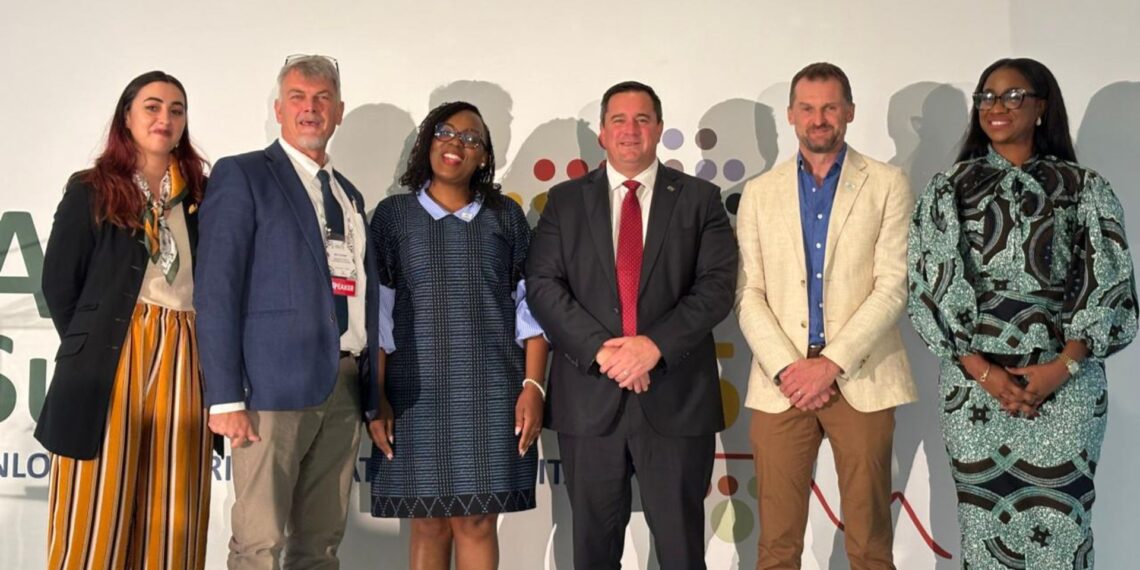
Minister John Steenhuisen with delegates at the African Natural Capital Alliance Summit. Photo: Supplied/Food For Mzansi

Minister John Steenhuisen with delegates at the African Natural Capital Alliance Summit. Photo: Supplied/Food For Mzansi

Share on FacebookShare on TwitterShare on WhatsApp

The department of agriculture has emphasised the importance of bio-economy and advancing it in ways that promote inclusive economic growth, environmental stewardship, and social equity.

During the recent African Natural Capital Alliance (ANCA) Summit in Cape Town, minister John Steenhuisen said the bio-economy offers a truly transformative pathway to address the triple planetary crisis: climate change, biodiversity loss, and pollution.

“The bio-economy is the core solution. It enables resilient, responsible, and inclusive growth, enhances human wellbeing, and reduces poverty. Crucially, it supports climate mitigation and adaptation, biodiversity conservation, sustainable development, and is central to ensuring food security and nutrition.

“Yet, we face a critical inefficiency: according to the Centre for International Forestry Research World Agroforestry (CIFOR-ICRAF), Africa currently captures less than 10% of the value of its biomass. While there are undeniable reasons behind this, such as gaps in science and technology skills, infrastructure, innovation funding, and enabling policy, this disparity presents us with a remarkable opportunity,” he said.

Impact of bio-innovation on agriculture

The minister said it is critically important that government and private partners must invest strategically in adding value to the raw biomass that the continent produces, so that it can derive greater economic benefit for the people from agricultural productivity.


Related stories

  • Bio-economy boom: Tech innovations for future growth
  • Cut fertiliser waste and boost yields with smart farming
  • How indigenous essential oils can drive jobs, food security
  • Mastering seed germination: The key to a strong maize harvest

According to the department across the full agricultural value chain, bio-innovation can deliver a transformative impact. This includes:

  • Crop and livestock improvement, including indigenous species, to withstand climate-related stresses;
  • Agro-processing and integrated food and nutrition research;
  • Development of animal vaccines and energy crops; expansion of bio-controls and biofertilisers;
  • Growth in aquaculture, soil conservation, and water resource management;
  • Critically, building high-value skills and capabilities and systems to drive agro-innovation. The bio-economy also brings circular economic principles to life, reminding us that “waste” is only waste if we waste it.

“Urgency is not just about seizing the opportunity of the bio-economy; it is about safeguarding it before it slips away. It is about investing in the ecological infrastructure that underpins both our current economy and the more sustainable one we aspire to build.

“We must accelerate innovation ecosystems that can commercialise and scale to have the necessary impacts. For the agricultural sector, financing the bio-economy on a large scale is not just a choice, it is the driving force behind significant transformation,” Steenhuisen said.

He noted that the benefits are clear, and there is a need to build resilience by investing in the tools that farmers need today, such as bio-inputs and climate-resilient crops.

“We create new revenue opportunities by supporting local infrastructure that transforms ‘waste’ into valuable products like bioplastics and bioenergy; and most importantly, we guarantee fair access to affordable, long-term capital for smallholders through innovative solutions like Bio-Bonds, ensuring that those who feed us become the primary beneficiaries of the wealth generated from their biological resources,” he said.

READ NEXT: SA vineyards poised for a strong 2026 harvest

Sign-up for the latest agricultural news delivered straight to your inbox every day with Mzansi Today!

Staff Reporter

Researched and written by our team of writers and editors.

Tags: Commercialising farmerInform meSustainable agriculture
Smart irrigation key to getting more value from every bag of fertiliser
Advertorial

Smart irrigation key to getting more value from every bag of fertiliser

by Patricia Tembo
3rd August 2026

PARTNER CONTENT: Effective fertigation begins with effective irrigation. Netafim agronomist Louis Fourie shares how precision drip fertigation keeps costly nutrients...

Read moreDetails
Limpopo youth turns backyard broiler project into poultry business

Limpopo youth turns backyard broiler project into poultry business

3rd August 2026
ASF outbreak contained, but pig farmers urged to stay vigilant

ASF outbreak contained, but pig farmers urged to stay vigilant

3rd August 2026
This week’s agri events: 03 – 07 August

This week’s agri events: 03 – 07 August

3rd August 2026

A super El Niño looms: Africa’s five lessons in climate resilience

2nd August 2026

Land Bank responds to debt recovery and ongoing farmer litigation

New agriculture chair targets FMD, governance, oversight

ASF outbreak contained, but pig farmers urged to stay vigilant

Rooibos project turns classrooms into space labs

A super El Niño looms: Africa’s five lessons in climate resilience

Join Food For Mzansi's WhatsApp channel for the latest updates!

JOIN NOW!
Next Post
Homemade custard

Sweet, smooth, and healthy: Whip up your own custard

THE NEW FACE OF SOUTH AFRICAN AGRICULTURE

With 21 global awards in the first six years of its existence, Food For Mzansi is much more than an agriculture publication. It is a movement, unashamedly saluting the unsung heroes of South African agriculture. We believe in the power of agriculture to promote nation building and social cohesion by telling stories that are often overlooked by broader society.

How grain farmers can secure cash flow and funding in uncertain seasons 

Professionalism pays: How Jantjies built a thriving lucerne business

New agriculture chair targets FMD, governance, oversight

South Africa’s child nutrition crisis demands urgent action

More than gadgets: How practical agritech boosts your bottom line

Western Cape suffers driest July on record ahead of intense El Niño

  • Awards & Global Impact
  • Our Story
  • Contact Us
  • Cookie Policy
  • Privacy Policy
  • Copyright

Contact us
Office: +27 21 879 1824
News: info@foodformzansi.co.za
Advertising: sales@foodformzansi.co.za

Contact us
Office: +27 21 879 1824
News: info@foodformzansi.co.za
Advertising: sales@foodformzansi.co.za

  • Awards & Global Impact
  • Our Story
  • Contact Us
  • Cookie Policy
  • Privacy Policy
  • Copyright

Chat Options

I'm Lerato, your AI assistant!
No Result
View All Result
  • News
  • Changemakers
  • Lifestyle
  • Farmer’s Inside Track
  • Food for Thought

Copyright © 2024 Food for Mzansi

This website uses cookies. By continuing to use this website you are giving consent to cookies being used. Visit our Privacy and Cookie Policy.