Sunday, November 22, 2026
SUBSCRIBE
22 GLOBAL MEDIA AWARDS
Food For Mzansi
  • News
  • Changemakers
  • Lifestyle
  • Farmer’s Inside Track
  • Food for Thought
No Result
View All Result
  • News
  • Changemakers
  • Lifestyle
  • Farmer’s Inside Track
  • Food for Thought
No Result
View All Result
Food For Mzansi
No Result
View All Result
in Advertorial

Yes, precision irrigation is possible on a budget

by Staff Reporter
11th August 2022
Add FFM on Google
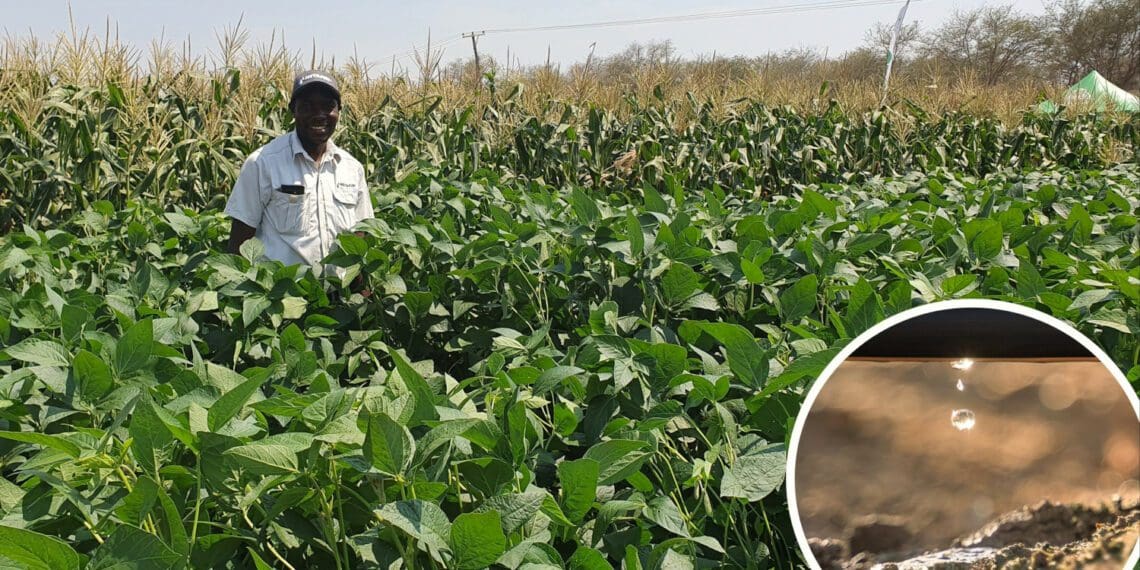
Thanks to Netafim’s innovative solutions, drip irrigation is within reach of small-scale farmers. Photo: Supplied

Thanks to Netafim’s innovative solutions, drip irrigation is within reach of small-scale farmers. Photo: Supplied

Share on FacebookShare on TwitterShare on WhatsApp

Can small-scale farmers reap the benefits of precision irrigation? Absolutely yes! says Zambia-based agricultural engineer and Netafim technical advisor Nambwale Kalunga.


Input costs are through the roof, financing is hard to come by and, just like water, electricity seems to be becoming a scarce resource. The pressures on Mzansi’s farmers might let them assume that precision irrigation solutions are unaffordable right now.

Netafim technical advisor Nambwale Kalunga. Photo: Supplied

But these pressures are exactly why precision irrigation makes sense, says Nambwale Kalunga, a qualified agricultural engineer and technical advisor for Netafim in Zambia.

The company’s whole philosophy is to help farmers grow more with less, after all.

Kalunga has seen innovative plans that farmers with limited resources can make. This includes finding ways to irrigate their crops with optimal efficiency.

As precision irrigation means that farmers can deliver precise amounts of water and nutrients to the root-zone of each plant, this doesn’t only solve a water problem for them, but a host of other common challenges as well.

“With our drip irrigation solution, for instance, required weed control will be drastically reduced, water application will be precise, it will effectively discharge your nutrients in the root zone, and crop yield and quality will increase,” he says. All this, while requiring less labour and becoming less dependent on the weather.

The cost of a new system

Naturally, there’s always money involved in installing new technology on your farm. “But we can work around the dilemma of spending money to save money,” says Kalunga. Small-scale farmers don’t necessarily have to opt for the top-tier systems to reap the benefits of precision irrigation.

Firstly, it’s important to remember that everything works on a sliding scale. The smaller the area that needs irrigation and the more basic the irrigation needs, the lower the cost of installing a precision irrigation system will be.

Secondly, Netafim has a system specifically developed for small-scale and subsistence farmers. NetaKit™ is a unique, gravity-based drip irrigation system that requires little to no electricity. The FDS or Family Drip System is suitable for plots ranging from 100 m² to 1 000 m² and DripK for plots ranging from 1 600 m² to 9 600 m².

There’s also the expert effect: Netafim’s agronomists and technical advisors have access to a full range of irrigation solutions and decades of experience in identifying, selecting, and refining the best systems for farmers in different circumstances. It’s a team with the know-how to fit the right system to every farmer’s specific needs, resources, and budget.

In the end, Kalunga emphasises, the biggest benefit lies in optimal yields and savings that will add up in the long run.

Netafim has a precision irrigation solution specially developed for food producers who farm on between 100 m² and to 9 600 m² and want to enjoy the benefits of drip irrigation. Photo: Supplied

No electricity? No problem

For farmers who cannot or don’t want to install grid-tied irrigation, solar-powered irrigation systems are an obvious solution and can be scheduled to run in the sunny hours of the day. Furthermore, NetaKit™ is an option that needs even less energy. It is a gravity-based system that only requires a slope or a water storage tank that is elevated to at least 1 m above the ground level.

If the original water source is higher than the farmer’s field, no energy would be necessary at all. If the water needs to be pumped from a lower-lying water source, a generator can run briefly to fill up a storage tank. “Even then, we can guide you on the size of the tank,” says Kalunga to emphasise the precise resource efficiency Netafim always keeps in mind.

What’s more, is that the NetaKit™ is a complete and easy-to-install kit with all the necessary components included.

Expert advice at your fingertips

To assist farmers even further, Netafim places a lot of focus on sharing knowledge. Netafim has developed a free online information hub, the Precision Irrigation Academy, where farmers can find the answers to their most pressing questions. The topics of the tutorial videos include everything from product-specific maintenance to irrigating in different soil types and accurately checking for soil moisture.

On the company’s website, farmers can familiarise themselves with the company’s different products and solutions, find a vast range of crop knowledge, and discover the stories of clients from across the globe who have seen the benefits of precision irrigation first-hand.

In the end, says Kalunga, it’s about the Netafim team knowing that many farmers’ resources are stretched to the limit, but still being able to make a positive impact. “If you come to us, we will ask the right questions to help you grow more with less.”

• To hear an interview with Kalunga on embracing precision irrigation despite limited resources, listen to the latest episode of Farmer’s Inside Track. For more information on Netafim South Africa, click here.

Full podcast episode:

Spotify
Apple Podcasts
Google Podcasts

ALSO READ: Farmers, we need to grow more with less

Sign up for Farmer’s Inside Track: Join our exclusive platform for new entrants into farming and agri-business, with newsletters and podcasts. 
Add FFM on Google Follow FFM on Google News

Staff Reporter

Researched and written by our team of writers and editors.

Tags: irrigationNetafim South AfricaPrecision farmingPrecision irrigation
Karin Kleinbooi, executive director for inclusion and development at South Africa Wine; Berene Sauls of Tesselaarsdal Wines; Denzel Swarts of Zoetendal Vineyards; and Mahalia Kotjane of Three Quarters Wines at South Africa Wine’s Inclusive Growth Indaba 2026. Photo: Food For Mzansi
News

Six hard-earned lessons from black-owned wine brands

by Ivor Price
19th November 2026

Four wine entrepreneurs share their costly mistakes and biggest breakthroughs. Their lessons offer valuable insights into building profitable, sustainable wine...

Read moreDetails
A young woman crouches in a community garden, holding a green tomato to show an older man standing beside her in an apron.

Why giving farmers seedlings isn’t enough to beat the next drought

19th November 2026
Neat rows of green crops stretch across a vast field toward rolling hills under a cloudy sky.

AgriSA, IFC partner to streamline sustainable farm finance in SA

19th November 2026
Cuts of raw red meat displayed on trays behind a glass butcher's counter.

Festive demand vs. El Niño: What’s driving SA’s livestock market?

18th November 2026
Karin Kleinbooi, executive director for inclusion and development at South Africa Wine, spearheaded the Inclusive Growth Indaba 2026, championing the view that transformation and industry competitiveness must go hand in hand. Photo: Food For Mzansi

Beyond the bottle: How black-owned wines can win market share

18th November 2026

Supplying Joburg Market: Phumla Qwabe grows her next chapter

Why smart tech is key to solving Africa’s post-harvest losses

You’ve collected the data. Now what?

Eight-year harvest low threatens survival of SA wheat farms

Climate risk is business risk: How farmers can prepare for El Niño

Join Food For Mzansi's WhatsApp channel for the latest updates!

JOIN NOW!
Next Post
Bumper harvest for Mzansi’s olive growers

Bumper harvest for Mzansi’s olive growers

THE NEW FACE OF SOUTH AFRICAN AGRICULTURE

With 21 global awards in the first six years of its existence, Food For Mzansi is much more than an agriculture publication. It is a movement, unashamedly saluting the unsung heroes of South African agriculture. We believe in the power of agriculture to promote nation building and social cohesion by telling stories that are often overlooked by broader society.

Private partnerships unlock millions for land reform beneficiaries

African markets offer fresh growth opportunities for SA rooibos

Supplying Joburg Market: Phumla Qwabe grows her next chapter

How Alkelp is turning seaweed into biostimulants that deliver value on the farm

Climate risk is business risk: How farmers can prepare for El Niño

Eight-year harvest low threatens survival of SA wheat farms

  • Awards & Global Impact
  • Our Story
  • Contact Us
  • Cookie Policy
  • Privacy Policy
  • Copyright

Contact us
Office: +27 21 879 1824
News: info@foodformzansi.co.za
Advertising: sales@foodformzansi.co.za

Contact us
Office: +27 21 879 1824
News: info@foodformzansi.co.za
Advertising: sales@foodformzansi.co.za

  • Awards & Global Impact
  • Our Story
  • Contact Us
  • Cookie Policy
  • Privacy Policy
  • Copyright

Chat Options

About this assistant

This feature generates automated answers summarised from Food For Mzansi articles. By using it, you are interacting with an AI system (provided by Google), not a human. AI can make mistakes. Please refer to the source articles for verification and citation purposes.

Our staff do not check or moderate Lerato’s answers in advance, but may review some later. Our journalists continue to write and edit all the articles Lerato uses as sources.

To estimate unique and returning web users, we store a random browser ID in this browser. WhatsApp users are counted by phone number. The same person using both channels may be counted twice.

I'm Lerato, your AI assistant!
No Result
View All Result
  • News
  • Changemakers
  • Lifestyle
  • Farmer’s Inside Track
  • Food for Thought

Copyright © 2026 Food for Mzansi