Friday, May 22, 2026
SUBSCRIBE
21 GLOBAL MEDIA AWARDS
Food For Mzansi
  • News
  • Changemakers
  • Lifestyle
  • Farmer’s Inside Track
  • Food for Thought
No Result
View All Result
  • News
  • Changemakers
  • Lifestyle
  • Farmer’s Inside Track
  • Food for Thought
No Result
View All Result
Food For Mzansi
No Result
View All Result
in Farmer's Inside Track

A well-oiled vision: Moseki transforms castor beans into opportunity

Lesedi Moseki faced the harsh realities of entrepreneurship when his first venture failed. By pivoting to high-value cosmetic castor oil, his company, iGrovest, has grown from a hand-processed operation on communal land to a thriving business supplying major retailers

by Patricia Tembo
1st April 2026
Agricultural economist and iGroVest founder Lesedi Moseki shares how he built a castor bean agribusiness from virtually nothing to 20 hectares by exploring niche crop opportunities.
Photo: Gareth Davies/ Food For Mzansi

Agricultural economist and iGroVest founder Lesedi Moseki shares how he built a castor bean agribusiness from virtually nothing to 20 hectares by exploring niche crop opportunities. Photo: Gareth Davies/ Food For Mzansi

Share on FacebookShare on TwitterShare on WhatsApp

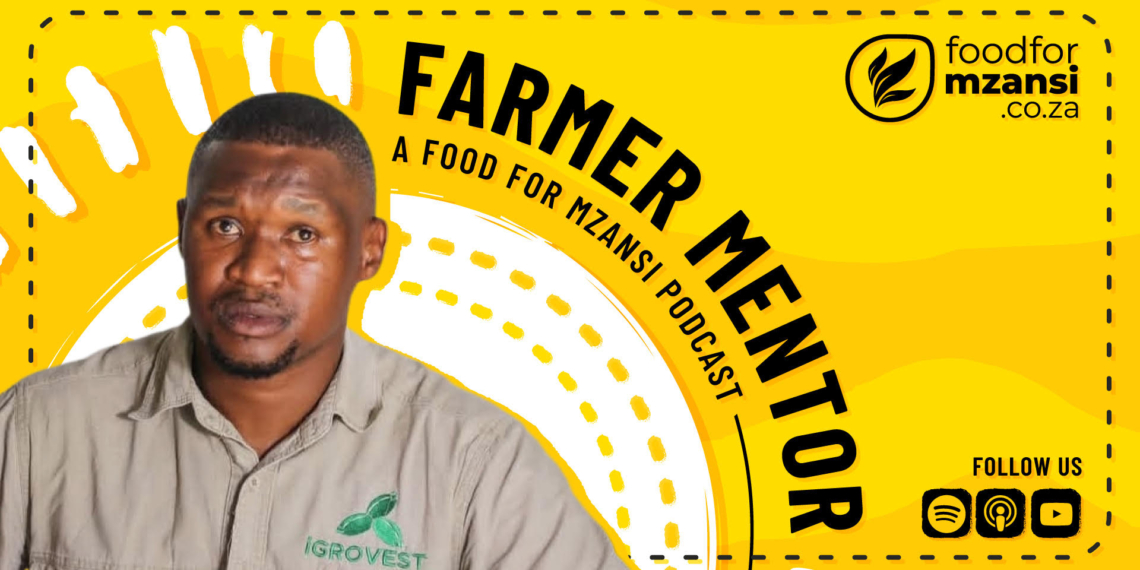
Lesedi Moseki is redefining resilience through iGrovest Group. Starting with nothing in Taung, North West, he turned communal land into a thriving castor bean enterprise. In this Farmer Mentor episode, he shares how small-scale farmers can tap into niche markets and own their value chain. 


For Lesedi Moseki, founder and managing director of iGrovest Group in Taung, North West, entrepreneurship was always part of his life plan. Trained as an agricultural economist with experience in government and the private sector, he left formal employment in January 2020 to build his own agribusiness, just weeks before the Covid lockdown. 

“The leap was not easy. I don’t see myself going back to the system. Entrepreneurship is where I belong,” he says. 

Before focusing fully on agriculture, Moseki co-founded a shuttle business and later launched a maize milling operation during lockdown. Although the milling business grew rapidly, it ultimately failed due to pricing pressure and distribution challenges.

“We were on the shelves, but we weren’t making money. That experience taught me the importance of margins, due diligence, and controlling your distribution,” he reflects. 

The lesson was clear: farmers and processors who surrender their routes to market often surrender their pricing power. 


Related stories
  • Castor bean farming could be SA’s next big opportunity
  • A guide to sustainable dry bean farming
  • Discipline and dirt define Meshack Ndongeni’s farming success
  • Mission Masiu: A family that farms together, grows together

Why castor bean?

Moseki founded iGrovest in 2019 amid growing discussions around biodiesel and climate change. He initially explored castor bean as a biofuel feedstock but later pivoted to cold-pressed castor oil for health and cosmetic markets after identifying stronger demand. 

“When something grows naturally in your environment, there is opportunity; you just need to unlock it.”

Castor remains a niche crop in South Africa, and Moseki believes this is precisely where opportunity lies. 

He notes that farming is one of the slowest paths to wealth creation, which is why farmers should actively explore untapped markets with room for growth and differentiation.

Moseki encourages producers not to confine themselves to long-established industries such as maize or cattle, where competition is intense, and margins are often constrained. Instead, he highlights emerging crops such as pigeon pea and cassava, which institutions like the Agricultural Research Council are supporting in terms of research and commercialisation.

Starting from zero

iGrovest began on communal land in Taung with virtually no capital. There was no infrastructure and no irrigation. Moseki initially sourced water manually before raising funds to drill a borehole and acquired an old tractor to prepare the land. 

“We started with nothing, just an idea, access to seed and our own hands,” he says.

The first harvest was processed entirely by hand, with oil extracted manually. Market validation followed through direct sales and social media engagement, and as demand grew, the operation expanded from two hectares to around 20 hectares. 

iGrovest also collaborates with other farmers through a seed supply and buy-back system, enhancing local participation in the value chain.

The company is now extending its market reach through direct partnerships with retailers, including an agreement with Spar, while continuing to supply local pharmacies. This approach enables the company to maintain control over pricing and distribution, minimise reliance on intermediaries, and capture the full value of niche crops like castor bean. 

Moseki stresses measured growth, “Do not try to scale too fast. Grow gradually, your area, then the next town. If you move too quickly, the market can choke you.”

Collaboration drives success

Beyond production, Moseki emphasises unity among farmers.

“Too many of us work in silos,” he says. “Successful agricultural industries were built through collaboration over generations.”

He believes black farmers, in particular, must identify scalable commodities and build industries collectively from the ground up. “We must support one another and grow together. That is how we become significant in this sector.”

For Moseki, resilience begins with clarity of purpose. “You must know your ‘why’. Business will break you many times. If your reason is weak, you will stop.”

READ NEXT: Why Africa’s medicinal plants are the next big agricultural export

Sign-up to Farmer's Inside Track for the best farming tips, news and advice to thrive!

Patricia Tembo

Patricia Tembo is motivated by her passion for sustainable agriculture. Registered with the South African Council for Natural Scientific Professions (SACNASP), she uses her academic background in agriculture to provide credibility and technical depth to her journalism. When not in immersed in the world of agriculture, she is engaged in outdoor activities and her creative pursuits.

Tags: castor beanCommercialised farmerInspire meniche cropsNorth West
Diamond fibre: How Angora farmers can crack the mohair market
Farmer's Inside Track

Diamond fibre: How Angora farmers can crack the mohair market

by Vateka Halile
20th May 2026

South Africa dominates the global mohair trade, producing half the world's supply through an intricate pipeline stretching from Karoo farms...

Read moreDetails

Climate variability moves from background risk to core driver of South African agriculture

20th May 2026
Plan before you plant: Key insurance lessons for SA farmers

Plan before you plant: Key insurance lessons for SA farmers

20th May 2026
Small-scale farmers stand to benefit from new infrastructure at Dube AgriZone 2 in KwaZulu-Natal, which will provide access to packhouses, cold storage and logistics support near King Shaka International Airport. Photo: Supplied/Food For Mzansi

KZN’s agri gateway grows: Dube AgriZone 2 opens new doors

20th May 2026

Infrastructure crisis deepens strain on storm-battered fruit farmers

19th May 2026

Infrastructure crisis deepens strain on storm-battered fruit farmers

Development finance key to growing future commercial farmers

Tomato price debate: Joburg Market, RSA Group weigh in

Dairy giant expands with Ladismith Cheese Company deal

Climate variability moves from background risk to core driver of South African agriculture

Join Food For Mzansi's WhatsApp channel for the latest updates!

JOIN NOW!
Next Post
At Koopmanskloof Winery, farmworkers and management engaged through Fairtrade Africa’s DONUTS wine programme, showing how dialogue and collaboration can transform vineyard labour relations. Photo: Supplied/Koopmanskloof

When farmworkers find their voice, work finds its dignity

THE NEW FACE OF SOUTH AFRICAN AGRICULTURE

With 21 global awards in the first six years of its existence, Food For Mzansi is much more than an agriculture publication. It is a movement, unashamedly saluting the unsung heroes of South African agriculture. We believe in the power of agriculture to promote nation building and social cohesion by telling stories that are often overlooked by broader society.

Green economy pathways offer hope for SA’s unemployed youth

Thozama teaches Khayelitsha’s kids to grow their own food

Middle East tensions and fuel hikes threaten SA food prices

SA growers turn up the heat in Europe with grapefruit campaign

Limpopo farmers’ day: Collaboration, compliance take centre stage

Wild at heart: Shane Ngwenya swapped fear of snakes for science

  • Awards & Global Impact
  • Our Story
  • Contact Us
  • Cookie Policy
  • Privacy Policy
  • Copyright

Contact us
Office: +27 21 879 1824
News: info@foodformzansi.co.za
Advertising: sales@foodformzansi.co.za

Contact us
Office: +27 21 879 1824
News: info@foodformzansi.co.za
Advertising: sales@foodformzansi.co.za

  • Awards & Global Impact
  • Our Story
  • Contact Us
  • Cookie Policy
  • Privacy Policy
  • Copyright
No Result
View All Result
  • News
  • Changemakers
  • Lifestyle
  • Farmer’s Inside Track
  • Food for Thought

Copyright © 2024 Food for Mzansi

This website uses cookies. By continuing to use this website you are giving consent to cookies being used. Visit our Privacy and Cookie Policy.