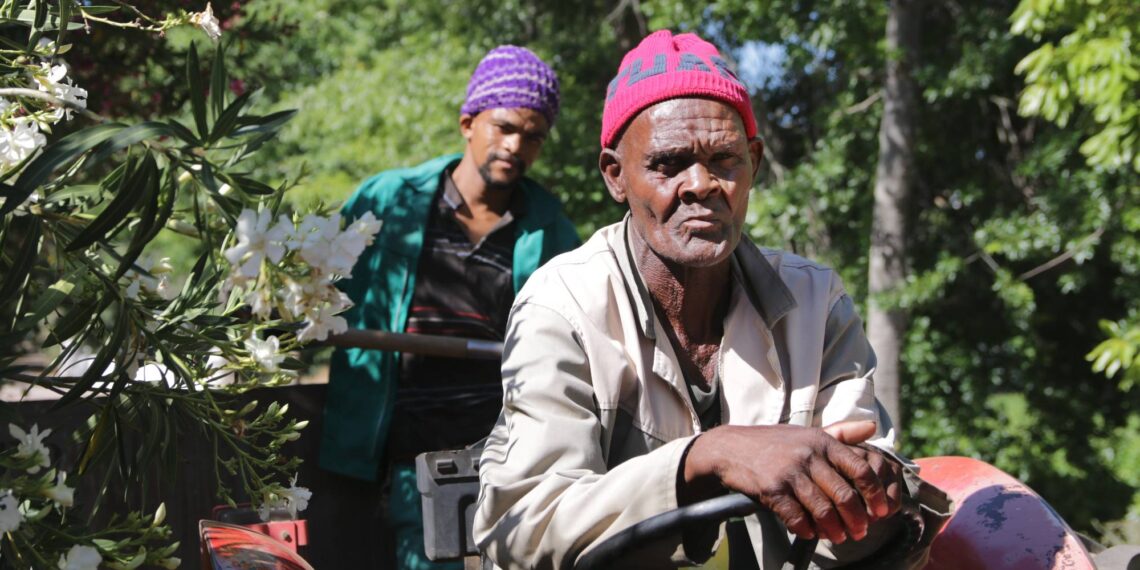
On a quiet morning at the close-out meeting of Fairtrade Africa’s DONUTS programme, something unusual happened. Farmworkers spoke. Not cautiously, not through intermediaries, but in their own words. Some were emotional. Others were assertive. All were listened to.
That moment captured the essence of Dignified Opportunities Nurtured through Trade and Sustainability (DONUTS) wine: a programme built on the radical idea that dignity, dialogue and decent work cannot be delivered to workers without being built with them.
From 2022 to 2025, DONUTS worked across Africa’s agricultural value chains, with a strong focus on the wine sector, to confront some of farming’s most entrenched challenges: low wages, unsafe working conditions, weak labour relations and the quiet normalisation of human rights abuses.
It did so not by adding another layer of compliance, but by creating spaces where workers, employers, unions and the state could sit in the same room and talk.
The realities that led to DONUTS
“The workers were the direct beneficiaries of this project,” says Emerentia Patientia, the senior project officer for this project at Fairtrade Africa, who played a central role in driving the DONUTS wine project. “It’s easy for us as implementers to say the programme made an impact. But the real validation comes from hearing it from the workers themselves.”
At the close-out meeting, that validation was impossible to ignore. Patientia recalls how workers’ testimonies carried an emotional weight that no monitoring report could replicate. Their stories, she explains, gave the programme legitimacy because they came “from their own mouths, from their real experiences”.
That emphasis on voice was deliberate. For years, labour regulation in agriculture has existed largely on paper. Laws promised democratised workplaces, but farms remained places where power flowed in one direction. DONUTS wine was born out of the recognition that compliance without conversation changes very little.
A shift on the farm
From the perspective of farm management, DONUTS wine marked a turning point. Athenkosi Gosani, a manager at Koopmanskloof Winery in Stellenbosch, describes the programme as moving relationships “beyond certification”.
Related stories
- Donuts wine programme puts farmworkers first
- Farmworker indaba sheds light on social challenges on wine farms
- SA wine industry sets global standard for ethics and transparency
- Koue Bokkeveld farmworkers get equipped to lead and protect
“Yes, there are standards we must comply with,” she says, “but DONUTS wine opened people’s eyes to the importance of relationship-building and capacity-building.”
Workers became more confident, more willing to raise concerns – technical and social – and more comfortable speaking directly to management.
What changed, Gosani argues, was not just procedure but posture. The programme helped dismantle the “them and us” mentality that has long defined farm labour relations. Respect, she insists, is reciprocal: “You give respect to get respect.”
Unions, trust and a long memory
For trade unions, DONUTS addressed another deep-rooted problem: distrust. Lennox Makali of the National Union of Food, Beverage, Wine, Spirits and Allied Workers (NUFBWSAW) speaks candidly about how workers previously engaged with unions — cautiously, often without follow-up, and sometimes not at all.
“Before, workers would complain, but they wouldn’t come back,” he says. “They didn’t trust that anything would happen.” Through DONUTS, unions gained access to training, government departments and clear referral pathways. Workers learned where to go if they faced harassment, unfair dismissal or unsafe conditions.
The change was subtle but profound. “Now they phone you,” Makali says. “They remind you. That tells me they are starting to trust.”
Anthony Hendricks of the Food and Allied Workers Union (FAWU) echoes this shift. Before DONUTS, many farms engaged primarily through worker committees and existing internal structures, but there was often limited understanding of how trade unions fit into the broader labour ecosystem.
Through the DONUTS workshops, workers gained clearer insight into the role of trade unions, their right to freedom of association, and how these structures can complement workplace committees rather than compete with them.
Hendricks explains that there was previously a degree of uncertainty, but that this has since shifted to greater openness. Farms are now more willing to engage, and workers have a clearer understanding of how trade unions can support and complement existing workplace structures.

When law meets reality
For Wilbur van Niekerk, a commissioner at the Commission for Conciliation, Mediation and Arbitraiton (CCMA), DONUTS offered a practical lesson in how labour law actually comes alive. South Africa’s Labour Relations Act has promised economic development, social justice and democratised workplaces since 1995. Yet, as Van Niekerk notes, farms changed very little.
“The law sets the standard,” he says, “but change happens because people want it to happen.”
What DONUTS wine demonstrated was the power of social dialogue. Not as a slogan, but as a system. When workers are treated as stakeholders and not passive recipients, workplace relations shift. Van Niekerk believes the model could fundamentally alter agriculture if applied at scale, especially through mechanisms like bargaining councils.
He is blunt about what must not be lost: unions. “If you want justice to be delivered, you have to include unions,” he says, warning against the outdated view of unions as disruptors rather than constitutional actors.
The state steps in… differently
The Department of Employment and Labour’s role in DONUTS wine highlights another innovation: collaboration instead of siloed enforcement. Nancy Bulongo, a labour inspector specialising in health and safety, describes the programme as a bridge.
“Through DONUTS wine, we could do advocacy,” she explains. Workers received direct education on workplace safety, gained access to inspectors’ contact details and continued to seek advice long after workshops ended.

For Bulongo, the lesson is clear: partnerships between government and programmes like DONUTS wine amplify impact. “At the end of the day, we all share one common denominator – the well-being of workers.”
Sustainability beyond funding cycles
As the programme draws to a close, the looming question is continuity. DONUTS wine was never meant to be a once-off intervention. Its sustainability lies in what it leaves behind: trained worker-trainers, ongoing social dialogue platforms and emerging structures like a proposed agricultural bargaining council for the Western Cape wine industry.
Patientia speaks of these as “mind shifts” rather than outputs. Workers trained as trainers, she notes, experienced a profound boost in self-worth. “To think: I can train others on my own farm. That changes how you see yourself.”
The risk, as unions warn, is regression. “If this falls away, we go ten years back,” Makali cautions. Hendricks, more pragmatic, sees the bargaining council as the next frontier. Slow and complex, but essential.
A programme needs a driver
In one of the discussion’s many unscripted moments, Van Niekerk makes an observation that lingers. Programmes like DONUTS wine, he says, do not succeed through structure alone. They need a driver.
He names Patientia not out of politeness, but out of recognition. “This didn’t happen by attrition,” he says. “It required skill, adaptability and commitment.”
Others echo the sentiment. Gosani thanks her for creating platforms that made real change possible. Union leaders agree: the programme worked because it was led with clarity and conviction.
Listening as legacy
As the programme winds down, there is no grand declaration of victory. Instead, there is consensus: DONUTS wine mattered because it listened.
In an industry where workers have long been spoken about, DONUTS wine insisted they be spoken with. It reminded employers that compliance is hollow without respect, unions that trust must be earned, and the state that regulation works best when paired with education and partnership.
The programme may be ending, but its most radical contribution remains alive on farms where workers now pick up the phone, speak up in meetings, and understand – perhaps for the first time – that dignity at work is not a favour. It is a right, nurtured through dialogue, trade and sustainability.
READ NEXT: Go green & Greek: Recipes for the perfect summer salad