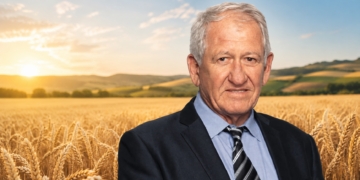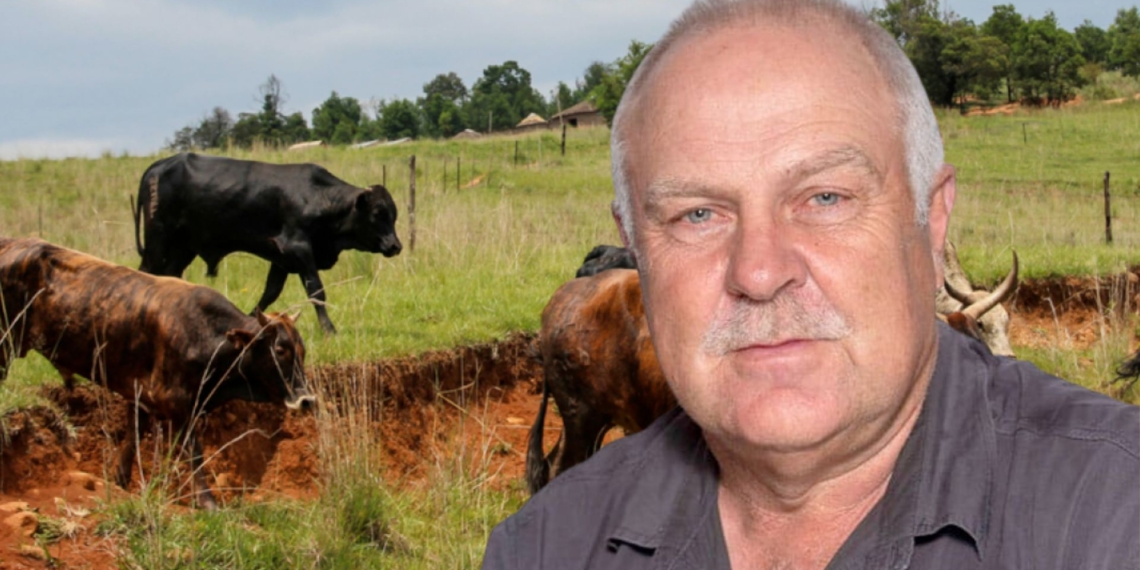
According to Francois Wilken, farmer and president of Free State Agriculture (FSA), farmers are battling a crisis that goes beyond drought. He says with profits shrinking and pressures mounting, their struggles are overlooked by those beyond the farm gate.
Farmers are facing their greatest survival crisis yet. Regardless of what economists and other scholars may wish to believe, farmers are in trouble – financially, emotionally, and spiritually.
Farmers are price takers, both on the input and output sides, and still bear the cost of transport in both directions. It is time we examine the real factors that have led to the crisis producers now find themselves in.
While drought plays a role, we have also had years of good rainfall. Why, then, do farmers no longer make enough profit to bridge the inevitable bad years?
Influencing factors
Over time, input costs have continued to rise, and farmers have been manipulated into accepting this as inevitable. The problem lies in the fact that international input supply companies are increasingly disconnected from farmers on the ground and their challenges. Profits for shareholders take precedence over the survival of the very sector upon which every country’s existence depends.
The investment bubble is bound to burst! Why does maize seed cost R300 000 per tonne while the grain price is R4 000 per tonne? The cost of agricultural equipment is utterly exorbitant and unaffordable. For instance, the CEO of a well-known company manufacturing green agricultural equipment in America earns R1 282 191 per day. That alone speaks volumes, yet there will undoubtedly be long-winded justifications for it.
Do not underestimate the intelligence of our farmers! Livestock farmers face unaffordable input costs such as medicine, equipment, and concentrates, making it impossible to farm profitably at current prices.
Farmers have, over time, been encouraged to adopt improved practices, such as conservation farming, to save on fertilisers and chemicals. Yet input suppliers have mastered the art of redirecting those savings into their own pockets, just as they channel profits during good years into the hands of shareholders and directors through the next season’s inputs.
Related stories
- Land reform key to reviving rural economies and drive growth
- Dairy dynasty: Family, innovation fuel Foundation Farm success
This is why organisations such as Agbiz and Agri SA can question the negative figure for agriculture at 28%. To what end? Lowering it to 20% to create the impression that agriculture is not doing too badly? You do not know what is truly happening with farmers, as your focus is limited to what occurs beyond the farm gate.
Farmers are proud people who do not easily speak about their struggles. I have the privilege of talking to many farmers, and I can confirm that things are not going well. There is widespread uncertainty and despair.
Farmers are constantly bombarded with figures, statistics, forecasts, and assumptions from so-called scholars. Yet, we are the ones who endure the blows when things go wrong. Everyone beyond the farm gate continues to receive their salaries. Meanwhile, farmers are repeatedly told to “stay positive, be resilient, adapt” by individuals who do not comprehend our emotional struggles and fight for survival.
Farmers are inherently optimistic and positive – otherwise, we would not continue farming. We understand the natural environment, both its risks and rewards, but to be exploited is something we can no longer tolerate in silence.
The two poles
Farmers are often blamed for high food prices. Let me explain:
The Earth has two poles – the North and the South. Consider the South Pole as the producers and the North Pole as the consumers. The South Pole (producers) are price takers; they do not set any prices for inputs or outputs. The North Pole (consumers) pay whatever they are charged. In the middle lies a “fat belly” that dictates terms. If the poles are destroyed, the entire system spins off its axis and collapses.
This may sound controversial, and I may be criticised, but it is time to wake up and face the consequences head-on. Open your eyes and talk directly to farmers. Do not limit yourself to the so-called prominent farmers; there are many others, and no one is being spared. Some may survive a little longer, but this situation is unsustainable for everyone.
There is much more to discuss, but let us start here. I implore those in the middle – if you feel angry or targeted – let us talk. This is not just a South African issue; it is a global one. Farmers are being exploited and blamed worldwide. Let us attempt to address this together. Look at what is happening in other countries.
- Francois Wilken is a farmer and the president of Free State Agriculture. The views and opinions expressed in this article are those of the author and do not necessarily reflect the views or positions of Food For Mzansi.
READ NEXT: Canegrowers seek sustainable future and fair policies
Sign up for Mzansi Today: Your daily take on the news and happenings from the agriculture value chain