Tuesday, November 3, 2026
SUBSCRIBE
22 GLOBAL MEDIA AWARDS
Food For Mzansi
  • News
  • Changemakers
  • Lifestyle
  • Farmer’s Inside Track
  • Food for Thought
No Result
View All Result
  • News
  • Changemakers
  • Lifestyle
  • Farmer’s Inside Track
  • Food for Thought
No Result
View All Result
Food For Mzansi
No Result
View All Result
in News

Experts warn: Land rights disputes hurt food security

Land reform without clarity can harm more than it helps. At a CoRE-SFS webinar, experts warned South Africa that unresolved disputes over land rights, boundaries and community membership risk worsening inequality and food insecurity

by Patricia Tembo
4th October 2025
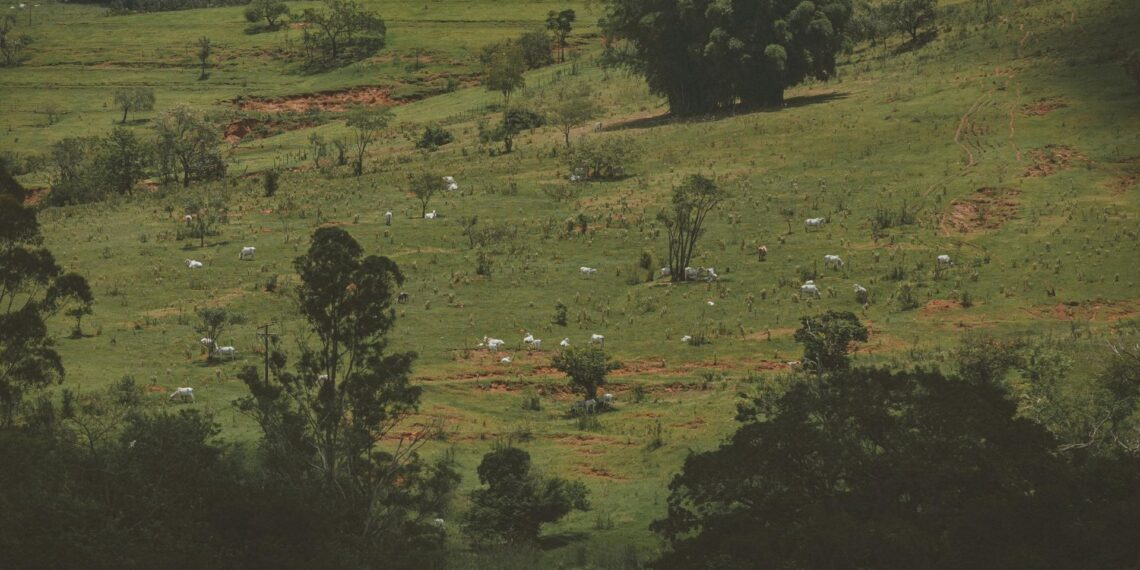
Experts at the Africa-Europe CoRE-SFS webinar warned that unclear land rights and weak implementation risk undermining South Africa’s land reform and food security. Photo: Pexels

Experts at the Africa-Europe CoRE-SFS webinar warned that unclear land rights and weak implementation risk undermining South Africa’s land reform and food security. Photo: Pexels

Share on FacebookShare on TwitterShare on WhatsApp

The Africa-Europe Cluster of Research Excellence in Sustainable Food Systems (CoRE-SFS), hosted by the University of Pretoria, recently held a webinar series tackling key themes shaping the future of agriculture.

Corrado Tornimbeni, associate professor in the department of political and social sciences at the University of Bologna, Italy, drew from research in Mozambique and Zimbabwe, where land reforms in the late 1990s and early 2000s were designed to protect community rights while integrating them into modern markets. Communities were given rights over land, forests, and even wildlife, but three key challenges quickly surfaced.

“The first was clarifying exactly what rights communities had. The second was delimiting boundaries and recognising traditional areas. The third the most difficult was defining who belonged to the community and could legitimately claim those rights,” Tornimbeni said. 

According to Tornimbeni, this last issue proved the most divisive. Membership disputes not only created local conflicts but also reopened old wounds, reviving forms of exclusion that resembled colonial hierarchies.


Related stories
  • Macadamia exports adapt to changing markets, US tariffs
  • Exports up, jobs down: Why agri-trade leaves rural workers behind
  • Jobless graduate turns EC homestead into opportunity hub
  • How Eastern Cape communities plan to restore grazing lands

Lack of farmer training and power struggles

Tornimbeni stressed that groups seen as “secondary users” such as women, migrants, and younger farmers often suffered the most. Their rights depended on others’ recognition, leaving them vulnerable and unable to invest fully in farming.

“These reforms were meant to empower communities, but they often reproduced existing inequalities. The result was that some gained strong, secure rights, while others were pushed to the margins,” Corrado said.

For South Africa, this raises serious concerns. Tornimbeni noted that without carefully defining who has rights to redistributed land, the country risks deepening inequality and wasting valuable agricultural potential.

The experts agreed that South Africa’s land reform has often transferred land without preparing beneficiaries to farm it. Tornimbeni warned that when disputes over identity and authority are left unresolved particularly between traditional leaders and community property associations (CPAs) land risks lying idle.

“Restitution without clarity creates uncertainty and uncertainty discourages investment in agriculture, which directly affects food production,” Tornimbeni said.

Meanwhile Dr Charlotte Mafumbo, senior lecturer in the college of humanities and social sciences (CHUSS) at Makerere University, Uganda, pointed to East Africa’s system of certificates of customary ownership as a model that could help South Africa. These certificates demarcate land rights at the household or individual level within communal systems, providing clarity while still respecting tradition.

“No matter how much assistance, no matter how much money is put and given to women, it was not going to solve the problem of food inequality and food insecurity in that region, because the key issue was access to land,” Mafumbo said.

Although South Africa has progressive land reform laws, both Tornimbeni and Mafumbo emphasised that implementation remains the missing link. Policies may look good on paper, but without demarcation, farmer training, and conflict resolution, land reform risks worsening food insecurity instead of solving it.

“The way we govern land today will determine whether tomorrow’s food systems are just, resilient, and sustainable,” Tornimbeni said.

READ NEXT: Beyond the stage: Finalists reveal the heart of AGT

Sign-up for the latest agricultural news delivered straight to your inbox every day with Mzansi Today!


Patricia Tembo

Patricia Tembo is motivated by her passion for sustainable agriculture. Registered with the South African Council for Natural Scientific Professions (SACNASP), she uses her academic background in agriculture to provide credibility and technical depth to her journalism. When not in immersed in the world of agriculture, she is engaged in outdoor activities and her creative pursuits.

Tags: AfricaCommercialising farmerFood SecurityInform meLand reform
Brotherly hustle: Limpopo duo takes egg business to campus
Inspiration

Brotherly hustle: Limpopo duo takes egg business to campus

by Vateka Halile
30th October 2026

Can university students help solve food insecurity? Brothers Phuti and Dumisani Maake think so! By delivering fresh eggs between classes,...

Read moreDetails

Nedbank: ‘Transformation must deliver sustainable farmers’

30th October 2026
Municipal failure drives up production costs for poultry farmers

Municipal failure drives up production costs for poultry farmers

30th October 2026

Minister launches R1.2b land reform programme to support farmers

30th October 2026

Young scientist safeguards Mzansi’s crops and food security

29th October 2026

From notebook to digital: You don’t have to digitalise your farm overnight

Veggie prices plummet: Why your grocery bill might drop this week

Minister launches R1.2b land reform programme to support farmers

Early heat lowers Tru-Cape cherry harvest, but brings top quality

Agda congress: Why production alone won’t save your farm

Join Food For Mzansi's WhatsApp channel for the latest updates!

JOIN NOW!
Next Post
!Xhariep AWSA honours top farmers and agriculturalists


!Xhariep AWSA honours top farmers and agriculturalists


THE NEW FACE OF SOUTH AFRICAN AGRICULTURE

With 21 global awards in the first six years of its existence, Food For Mzansi is much more than an agriculture publication. It is a movement, unashamedly saluting the unsung heroes of South African agriculture. We believe in the power of agriculture to promote nation building and social cohesion by telling stories that are often overlooked by broader society.

Agoa blow: SA faces higher tariffs, but US market stays open

80+ community gardens sell produce at Shoprite, Checkers

From notebook to digital: You don’t have to digitalise your farm overnight

Farmers speak out: What they need from municipal leadership now

This week’s agri events: 02 – 06 November

Climate change could force redesign of SA’s farming regions – ARC

  • Awards & Global Impact
  • Our Story
  • Contact Us
  • Cookie Policy
  • Privacy Policy
  • Copyright

Contact us
Office: +27 21 879 1824
News: info@foodformzansi.co.za
Advertising: sales@foodformzansi.co.za

Contact us
Office: +27 21 879 1824
News: info@foodformzansi.co.za
Advertising: sales@foodformzansi.co.za

  • Awards & Global Impact
  • Our Story
  • Contact Us
  • Cookie Policy
  • Privacy Policy
  • Copyright

Chat Options

About this assistant

This feature generates automated answers summarised from Food For Mzansi articles. By using it, you are interacting with an AI system (provided by Google), not a human. AI can make mistakes. Please refer to the source articles for verification and citation purposes.

Our staff do not check or moderate Lerato’s answers in advance, but may review some later. Our journalists continue to write and edit all the articles Lerato uses as sources.

To estimate unique and returning web users, we store a random browser ID in this browser. WhatsApp users are counted by phone number. The same person using both channels may be counted twice.

I'm Lerato, your AI assistant!
No Result
View All Result
  • News
  • Changemakers
  • Lifestyle
  • Farmer’s Inside Track
  • Food for Thought

Copyright © 2026 Food for Mzansi