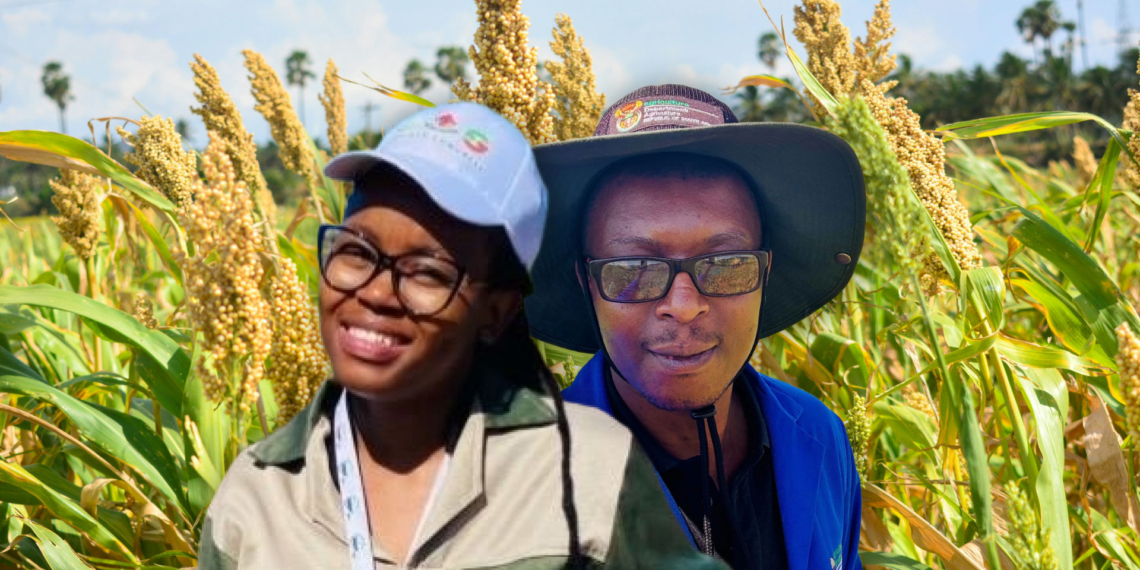
Forgotten by many, sorghum could hold the key to South Africa’s food future. With deep roots in African agriculture, the hardy grain thrives where maize struggles. Dr Lehlogonolo Matelele and Nompumelelo Ngejane from the department of agriculture explains how expanding sorghum production can help farmers diversify, reduce risk, and strengthen household nutrition.
What if the future of South Africa’s food security lies in a crop many people have forgotten?
Across South Africa, smallholder farmers are standing on the frontlines of climate change. Unpredictable rainfall, longer droughts, and rising input costs are making traditional farming systems increasingly difficult to sustain.
For many farmers who depend on rain-fed agriculture, the question is no longer whether the climate is changing, but which crops can survive under these new conditions.
Amid these challenges, an ancient African grain is quietly making a comeback. Sorghum (Sorghum bicolor), once a staple crop across many communities, is re-emerging as a climate-smart solution for farmers facing hotter and drier growing seasons.
Long before maize became dominant, sorghum nourished households, fed livestock, and formed part of cultural and traditional practices across the continent.
Today, its natural resilience to drought, heat, and low-input farming conditions is placing sorghum back in the spotlight. For South Africa’s smallholder farmers, this hardy crop is not simply a reminder of the past; it may well be a lifeline for the future.
As climate pressures intensify, the rising interest in sorghum signals a renewed appreciation for crops that can help secure both livelihoods and food systems in a changing world.
A grain built for tough times
South Africa’s smallholder farmers are on the frontlines of climate change. Erratic rainfall, rising temperatures, and prolonged droughts have made maize, a traditional staple, an increasingly risky bet. Sorghum, however, thrives where maize falters.
Related stories
- Getting started with sorghum farming
- Bringing sorghum back: How Malebe is reviving indigenous grains
- Sorghum’s comeback: Why it matters now
- Amaranth: Can this supercrop move beyond niche markets?
Benefits of sorghum
The low-input characteristics of sorghum
- Drought tolerance
Sorghum can grow well in dry areas because it has deep roots and leaves that reduce water loss. It needs less water than crops like maize and rice, making it suitable for places with low or unpredictable rainfall.
- Reduced fertiliser requirements
Sorghum can grow in soils with low nutrients. It does not need as much fertiliser as many other crops, which helps farmers save money and reduces environmental pollution.
- Pest and disease resistance
Sorghum is naturally strong against many pests and diseases. This means farmers do not need to use a lot of pesticides, which lowers costs and protects the environment.
- Adaptability to marginal lands
Sorghum can grow in poor soils, hot conditions, and dry areas. This allows farmers to use land that is not suitable for other crops, increasing food production.
Environmental Benefits
- Water conservation
Because sorghum uses less water than many other grains, its cultivation helps conserve scarce water resources. This is particularly important in regions experiencing water shortages or increasing drought due to climate change.
- Reduced greenhouse gas emissions
Lower fertiliser and pesticide use means fewer emissions associated with manufacturing and applying agricultural chemicals. Additionally, sorghum’s efficient photosynthesis and ability to produce high biomass make it a promising crop for sustainable agriculture and bioenergy production.
- Soil health improvement
Sorghum contributes to soil conservation in several ways:
- Its deep roots improve soil structure.
- Crop residues can increase soil organic matter.
- It can be used in crop rotations to break pest and disease cycles.
- Climate change resilience
Due to its tolerance to drought and high temperatures, sorghum is considered a climate-smart crop. It provides stable yields even under extreme weather conditions, helping farmers adapt to changing climates.
Socioeconomic benefits
Beyond environmental advantages, sorghum supports rural livelihoods. It is used for food products such as porridge, flour, and beverages, and also serves as animal feed and a raw material for biofuels and industrial products.
Its low input requirements make it especially valuable for smallholder farmers who have limited access to irrigation, fertilisers, and pesticides.
Nutritional power on the plate
The table below (Table 1) shows the nutritional content comparison between maize and sorghum:
Table 1: Quantified nutritional content of both maize and sorghum
| Nutrient | Maize | Sorghum | Scientific interpretation |
| Iron (Fe) | ~0.5 – 2.9 mg | ~3.9 – 4.4 mg | Sorghum contains about 1.5–7× more iron than maize. |
| Dietary Fibre | ~2 – 6.7 g | ~6.7 – 10.2 g | Sorghum has significantly higher fibre, often 2–3× more. |
| Antioxidants | Contains carotenoids such as lutein and zeaxanthin | Rich in phenolic compounds, tannins, and flavonoids | Sorghum generally has higher total phenolic antioxidants than maize. |
| Complex Carbohydrates | ~74–75 g carbohydrates | ~70–72 g carbohydrates | Both are high in complex carbohydrates, with maize slightly higher in total carbs but sorghum having slower-digesting starch. |
Additionally, sorghum is also gluten-free and suitable for various food products, including porridge, flour blends, traditional beverages and baked goods.
Encouraging household consumption of sorghum can improve both food availability and nutrition, a double win for food security.
Farmers finding hope
In KwaZulu-Natal, Sipho Dlamini, a young farmer who returned to his family’s land after university, has turned sorghum into a business opportunity.
“I saw the craft beer boom and thought, ‘Why not sorghum?’” he explains. “Now I supply local brewers who want authentic African flavours. It’s not just farming; it’s entrepreneurship.”
His cooperative of 20 smallholders has pooled resources to invest in milling equipment, allowing them to sell sorghum flour directly to urban health-conscious consumers.
What holds sorghum back?
Despite its strengths, sorghum faces challenges:
- Limited market visibility
- Consumer preference for maize
- Fewer commercial buyers
- Perceptions of being an “old-fashioned” or “poor man’s” crop
To unlock its full potential, support is needed in:
- Seed availability: Improving access to quality sorghum seed through community seed systems, seed banks, and improved varieties can help farmers increase productivity while preserving locally adapted genetic diversity.
- Extension services: Strengthening agricultural extension support can equip farmers with knowledge on improved sorghum production practices, including soil management, pest control, and post-harvest handling.
- Local agro-processing: Developing local processing facilities can add value to sorghum by producing foods such as flour, porridges, cereals, and beverages while creating rural employment opportunities.
- Market linkages: Building stronger connections between farmers, traders, processors, and retailers can create reliable markets and encourage greater sorghum production
- Inclusion in school feeding programmes: Incorporating sorghum into school feeding programmes can improve child nutrition while creating stable demand for locally produced sorghum
Policy support and public awareness could significantly shift perceptions and demand.
A crop for a changing climate
For smallholder farmers battling unpredictable rainfall and rising input costs, sorghum offers something invaluable: resilience.
Diversifying into sorghum:

As South Africa confronts increasing climate uncertainty, returning to climate-smart indigenous crops may be one of the smartest moves we can make.
Can smallholder farmers afford not to diversify? The answer is NO! Diversification is key.
In a hotter, drier South Africa, crop diversity is no longer optional; it is essential.
The bottom line
Sorghum is not a step backwards. It is a step toward climate resilience.
For smallholder farmers standing in fields scorched by heat or waiting anxiously for rain that may not come, sorghum represents hope rooted in history and adapted for the future.
Perhaps the future of South Africa’s food security lies not in abandoning maize, but in standing maize side-by-side with sorghum.
Food security is not about depending on one crop; it is about spreading risk.
- Dr Lehlogonolo Matelele is the directorate genetic resources, National Plant Genetic Resources Centre at the department of agriculture, and Nompumelelo Ngejane from the KwaZulu-Natal department of agriculture and rural development, Cedara Soil Analytical Services. The views and opinions expressed in this article are those of the author and do not necessarily reflect the views or positions of Food For Mzansi.
READ NEXT: Maize farmers tighten defences as Goss’s wilt spreads