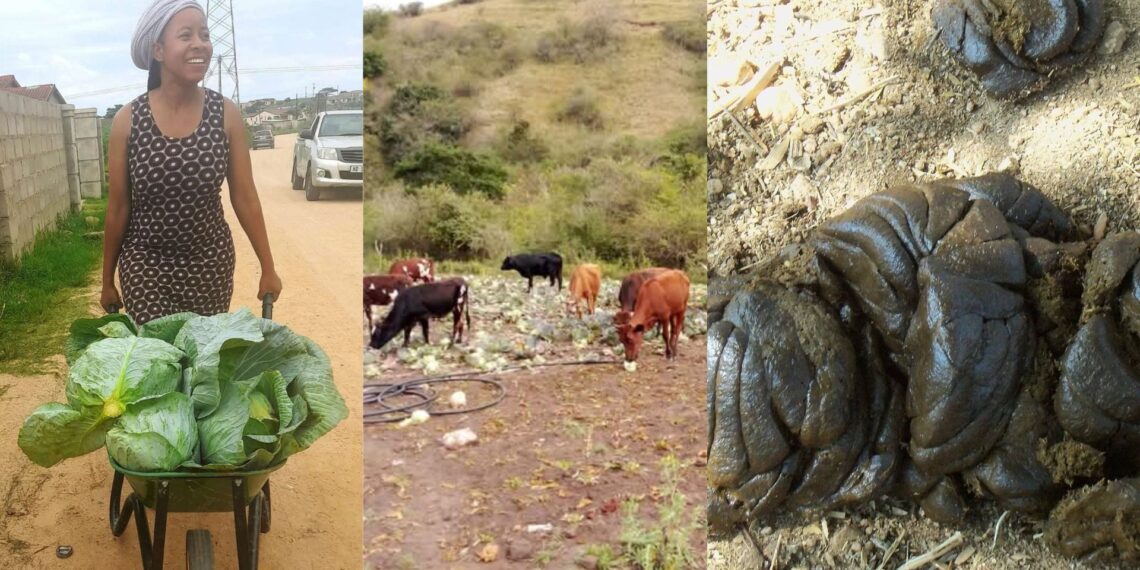
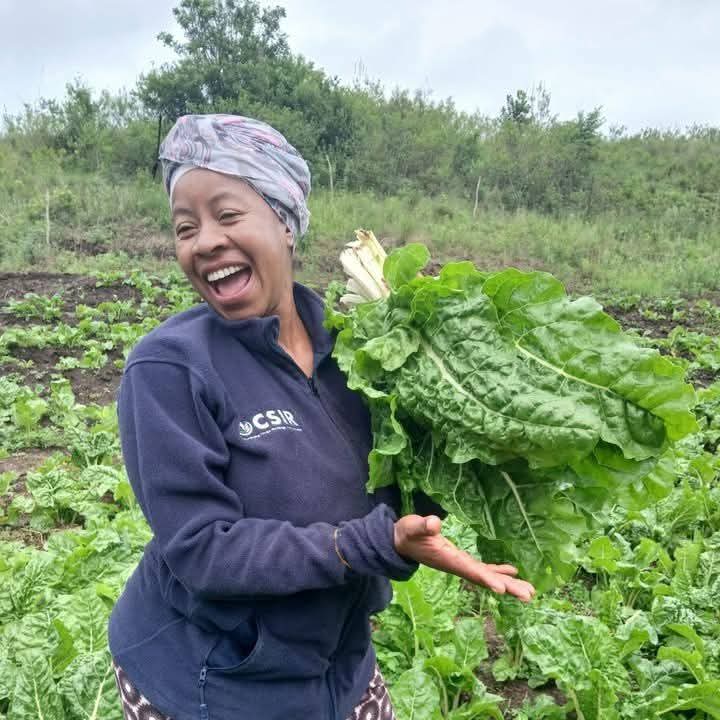
Forget what you think you know about farming. Today’s new-era farmers are rewriting the script. Like Thandiwe Mchunu, founder of TMGG Pty Ltd. When Food For Mzansi asked her what she farms with, she laughed and said: “I’m farming with cow dung.”
Armed with a chemical engineering degree from the University of KwaZulu-Natal, Mchunu has turned cow dung into gold, producing and selling her own organic fertiliser.
In 2021, she started her business on 77 hectares of leased land in KwaZulu-Natal’s Umdoni Municipality. This, after spending three years travelling across several African countries, working with the African Union in Ethiopia.
Travelling to African countries like Uganda, Kenya, and Rwanda introduced Mchunu to rich, organic food. She says it was unlike anything she’s ever had.
“The taste of their vegetables and fruits still lingers in my brain. It’s so fresh and unique. It’s like you are connected to the earth from just the first bite,” Mchunu says.
After just a week, she felt the difference. She says her skin was glowing, and she had more energy, all thanks to eating fresh fruit, veggies, fish, and meat every day.
Where dung piles up, opportunity grows
Mchunu’s business was built on loans from the banks and family members because the startup costs were quite high. “I’m still struggling to pay because of the ups and downs we keep experiencing due to security issues,” she says.
Despite this, she has managed to build her own fertiliser company, with a strong diversification strategy in place.
Mchunu says cow dung is most abundant in and around kraals. During the rainy season, however, cattle often can’t sleep inside the kraal because of the excess cow dung, forcing them to sleep outside.
Having a proper waste management project that collects organic waste is highly beneficial to livestock farmers, she says. “This kind of waste is incredibly useful for improving soil fertility.”
Securing funding or donor support has been difficult because of the loans she already has. “Financial institutions won’t fund me because, in their eyes, my business doesn’t make enough sense or profit. So they don’t see it as worth funding.”
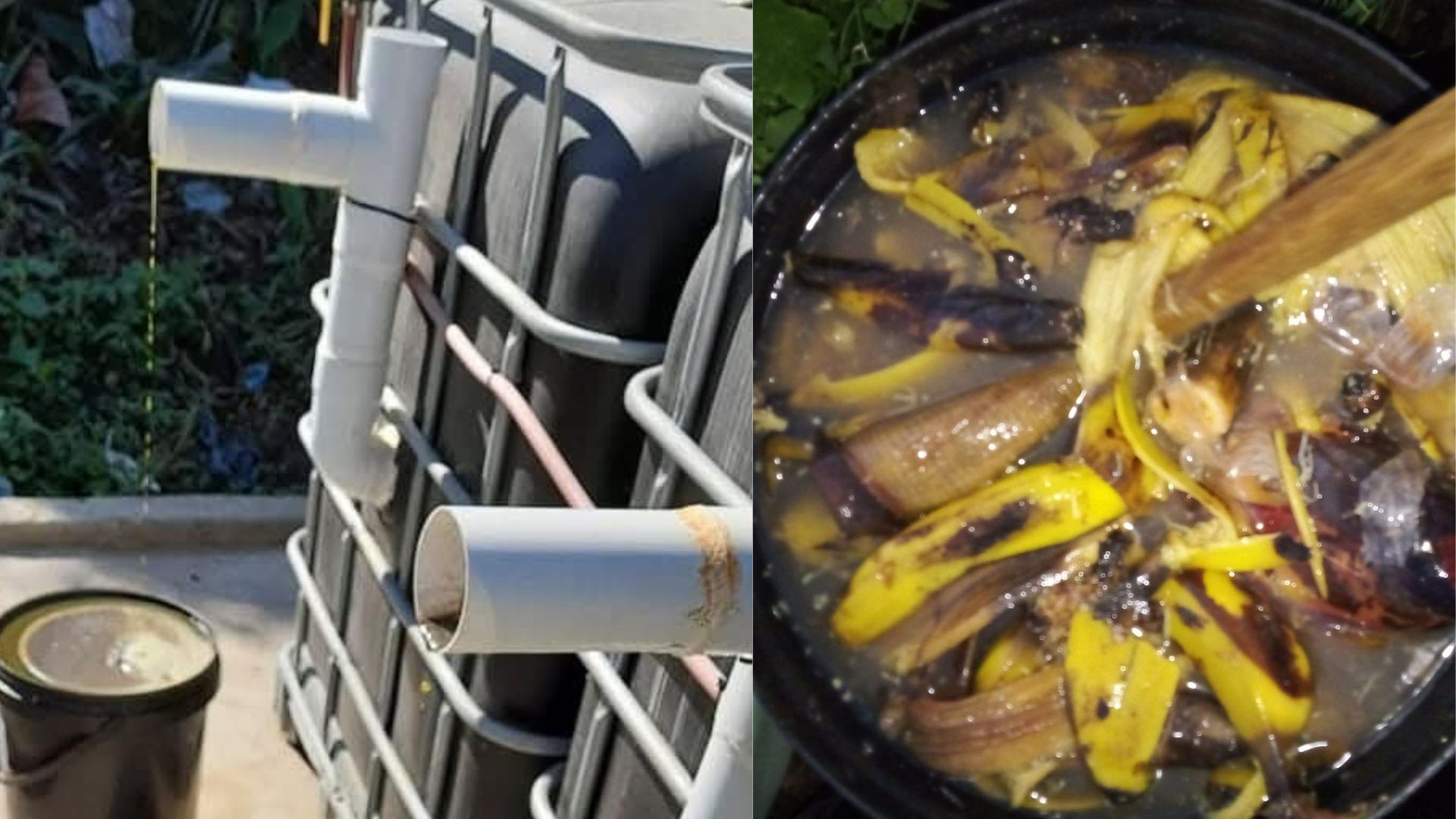
Mchunu explains that, due to limited resources, she operates 2 000-litre anaerobic digesters which produce about 25 litres of organic fertiliser per month. Other methods yield around 20 litres every two weeks.
“We’re not selling it at the moment,” she says. “When we did, some farmers got frustrated because it sold out in minutes.”
For now, the fertiliser is produced solely for use on their own farm, until further notice.
Related stories
- Mzansi’s mopani queen has given the worms a complete facelift
- Duo unlock magical world of black soldier flies
- Podcast: Growing greener and sustainable with organic fertilisers
How it works is, they pour fertiliser on the land after planting, but apply cow dung months before as a base layer in the field. Since she doesn’t own cattle herself, Mchunu sometimes struggles to meet the market demand for her fertiliser.
Mchunu sells her fertiliser in litres, since it’s made in liquid form using anaerobic digesters. “We feed the cow dung into digesters to produce liquid fertiliser, which we then use on crops.”
She also teaches other small-scale farmers how to make their own organic fertilisers and shares farming tips through a monthly subscription service.
“I share different methods, tips, and secrets to help other farmers grow sustainably,” she says.
Diversifying to keep the dream alive
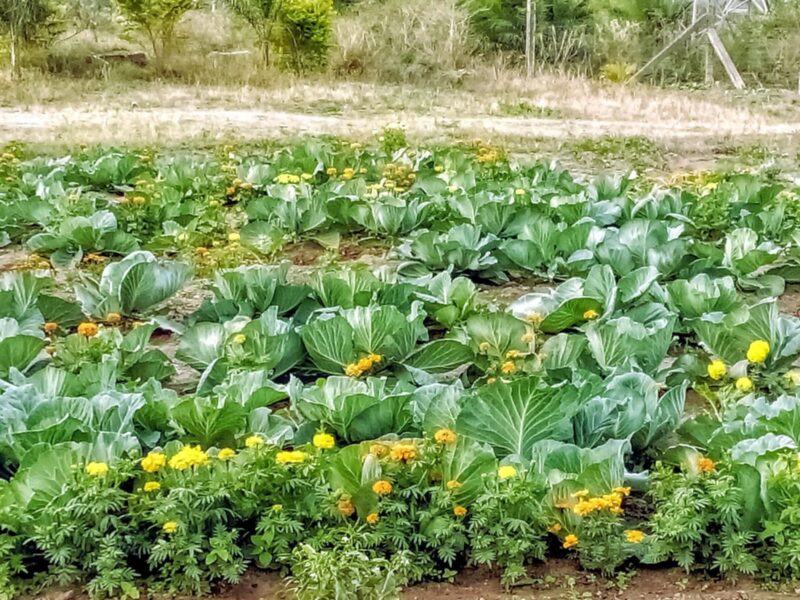
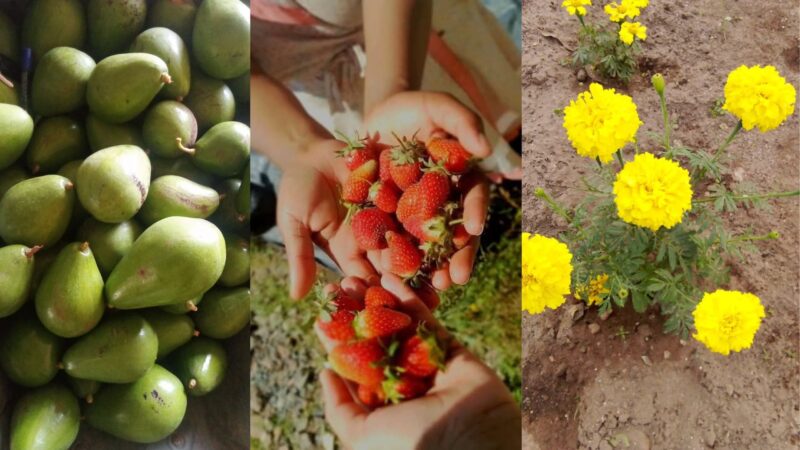
Mchunu currently farms on less than a hectare due to a lack of funds, but her vision remains strong. She has had to diversify her offering, growing spinach, cabbage, beetroot, red onions, lettuce, carrots, sweet potatoes, and butternuts.
“We also grow bananas, avocados, and strawberries in the fruit section,” she adds.
In her herb garden, she farms parsley, coriander, thyme, and rosemary. “The herbs also help to deter pests,” she says.
Although she prefers not to share too many details due to the sensitivity of the matter, Mchunu says that her business was once sabotaged. On top of that, she has had to deal with food theft, which has left her feeling unsafe.
“This business needs proper security,” she says. “Especially as a female farmer, feeling safe is still just a dream.”
For now, she has secured supply contracts for her fresh produce.
“I also supply fresh produce markets. These markets alone can take up to 50 000 cabbages per week, as they supply schools, hospitals, prisons, supermarkets, and even neighbouring countries.”
TMGG has also supplied major retailers like Spar and Pick n Pay, mainly with cabbages. She recalls a time when she would deliver three times a week to one supermarket, but they then experienced a setback.
“At one point, someone sprayed weed killer on the spinach,” she says, noting the incident affected her trust and safety.
Mchunu’s biorefinery dreams
Looking ahead, Mchunu says she envisions TMGG establishing a biorefinery, where companies producing organic waste will have a safe and legal space to dump their waste in an environmentally friendly way. The waste would then be processed either naturally or through thermal treatments.
“Whether it’s spoiled liquor, juice, canned beans, overfull kraals with cow dung, or invasive plants in urban or rural areas, we will service them all,” she says.
She adds, “I’m hoping to create over 100 jobs in both the waste management and farming sectors, and produce a minimum of 1 000 tons from the 77 hectares we already have.”
“Scaling up our production requires funding, and we’re hopeful for a positive response from where we’ve applied.”
Mchunu notes that the department of agriculture in Umdoni Municipality sometimes donates synthetic fertilisers such as NPK and urea.
“We use some of it when growing cabbages for customers who aren’t concerned about whether the crops are grown organically or conventionally.”
Still, she hopes for more consistent support from other organisations, especially for funding to expand her organic fertiliser operation.
READ NEXT: The Beyoncé of cattle: Linda lets her Brahmans do the talking
Sign up for Mzansi Today: Your daily take on the news and happenings from the agriculture value chain.