Greenhouse farming offers numerous advantages, including extended growing seasons and improved environmental control, but it doesn’t make crops immune to pests and diseases. Without proper crop protection strategies, greenhouses can become hotspots for infestations that spread quickly and threaten entire harvests.
For farmers, particularly those operating soil-based or aquaponic systems, effective pest and disease management is essential.
According to Greenhouse Tunnels, greenhouse structures serve as a physical barrier against pests and diseases. By preventing the entry of unwanted pests and pathogens, growers can significantly reduce the reliance on chemical inputs and minimise crop damage, creating a healthier and more controlled growing environment.
Drawing on years of hands-on experience, MJ Nunes, an agriculturist and director of Sable Creek Farms, shares practical and sustainable methods for enhancing crop protection in greenhouse systems. He also highlights common mistakes to avoid, to keep crops healthy, resilient, and ready for market.
Related stories
- Aquaponics basics: Get your system thriving
- Winter gardening: Turn cold days into cropping gold
- Managing soil acidity to improve crop quality
- Cutworm infestation: Here’s how to protect your crops
A controlled environment with high stakes
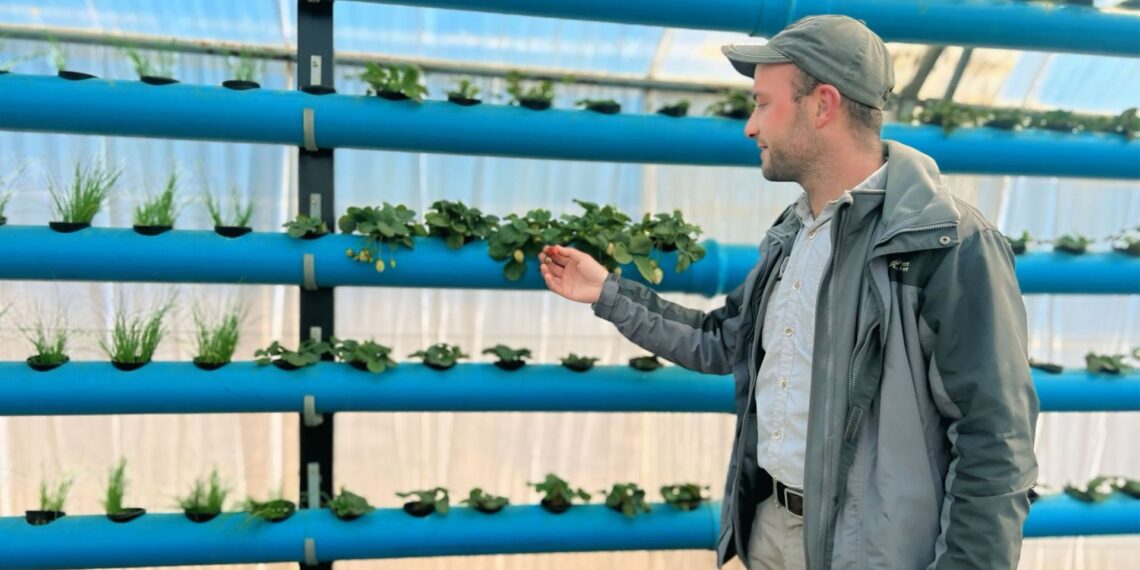
For Nunes, a greenhouse system provides a unique opportunity to control growing conditions. However, this also means that if something goes wrong, such as a pest invasion or disease outbreak, it can spread rapidly. “It is a more different farming technique, where we’ve got a closed environment that we can control,” he says.
Scouting: The first line of defence
One of the most effective methods Nunes uses is regular scouting, which is the practice of walking through the greenhouse and checking each plant closely.
“We take a day or two in the week where we do scouting… and see if there are any pests or diseases on the plants,” he shares. This proactive approach enables early detection before an outbreak becomes unmanageable.
To help with early warnings, Nunes recommends a clever technique: rose bushes planted outside the greenhouse.
“Rose bushes usually get diseases and pests before any other fresh produce, so we have a look at our roses, and that will tell us if we’ve got a problem or if we are still in the green zone.” This innovation, borrowed from vineyard farmers in the Cape, has significantly reduced pest-related issues.
LISTEN: Good crop protection strategies key to higher yields
Beneficial insects and predators
While many farmers instinctively kill any insect they see, Nunes emphasises the importance of identifying beneficial insects.
“It is also important that we scout and check for predatory insects, which are, in our eyes, the good ones, such as spiders, praying mantises, and ladybirds.” These natural predators feed on harmful pests and can reduce the need for spraying.
Biosecurity and sanitation
Sanitation is non-negotiable for effective crop protection. “Biosecurity is very important,” Nunes states. One of the most serious threats he notes is the tobacco mosaic virus, which can be carried into greenhouses by people who use tobacco products. “It can take out a whole crop,” he warns.
To prevent disease spread, the farm uses footbaths at the greenhouse entrance and enforces strict hygiene protocols. These measures help prevent diseases from being transferred by workers or visitors.
Quarantine and disease management
When diseases do appear, Nunes says the first step is accurate identification. “The farmer is going to have to identify what the disease is and then contact a specialist who has dealt with the situation before.” Attempting to solve problems without expert input is a common mistake.
Once the disease is brought under control, it’s important to continue with treatment. Many people make the critical error of stopping once the symptoms disappear, but preventative measures must be maintained to prevent the disease from returning.

The role of technology in crop protection
Although Nunes acknowledges that technology has its place, especially in large-scale field farming, he believes hands-on methods are more effective in smaller greenhouses.
“I’ve got a lot of trust in technology, but at certain points where produce is involved, it’s more important for me that I trust myself and my staff.”
However, he acknowledges innovations such as:
- Insect zappers that use light and electric currents to attract and eliminate pests.
- Frequency-based repellents that disrupt insect movement and navigation.
- Automated dosing units that deliver precise amounts of pesticides or treatment, enhancing efficiency and effectiveness.
While he sees the value of these tools for commercial-scale farming, Nunes says that for smaller greenhouses, hands-on scouting is still the most efficient approach.
Crop rotation in soil vs. greenhouse farming
While crop rotation is critical in soil-based farming, it’s less relevant in hydroponic systems.
Nonetheless, Nunes points out that even in hydroponic and general greenhouse operations, crops are still rotated, but it’s driven more by market demand than by agronomic necessity. For instance, growers might produce lettuce during the summer months and shift to other crops in winter to align with consumer trends.
In soil-based greenhouses, however, he emphasises the importance of crop rotation: “It is very important to do crop rotation for the safety of your soil as well as disease and pest control.”
Common mistakes to avoid
Nunes notes several critical errors that greenhouse farmers should avoid, particularly when it comes to pest and disease management. He stresses that attention to detail and following proper procedures can make the difference between a thriving greenhouse and one plagued by recurring issues.
Among the most common mistakes are:
Stopping treatment too early: “Farmers stop once the situation is sorted out. Spraying every seven or every 14 days must continue.”
Misidentifying beneficial insects: “One would think a praying mantis is a pest; meanwhile, it is beneficial,” Nunes says. He explains that predators like praying mantises, ladybirds, and lacewings can play a valuable role in natural pest control. Eliminating them disrupts the natural balance, potentially leading to worse pest outbreaks in the long run.
Overdosing pest repellents: Nunes recalls a case where a farmer noticed red spider mites and increased the dosage of an organic pest repellent. “It unfortunately backfired on him, and it burned the leaves of the plants.” His recommendation is to stick to standard safety measures, avoid excessive application, and always adhere to proper procedures and timing guidelines.
READ NEXT: Farming smarter: Digging into GIS data