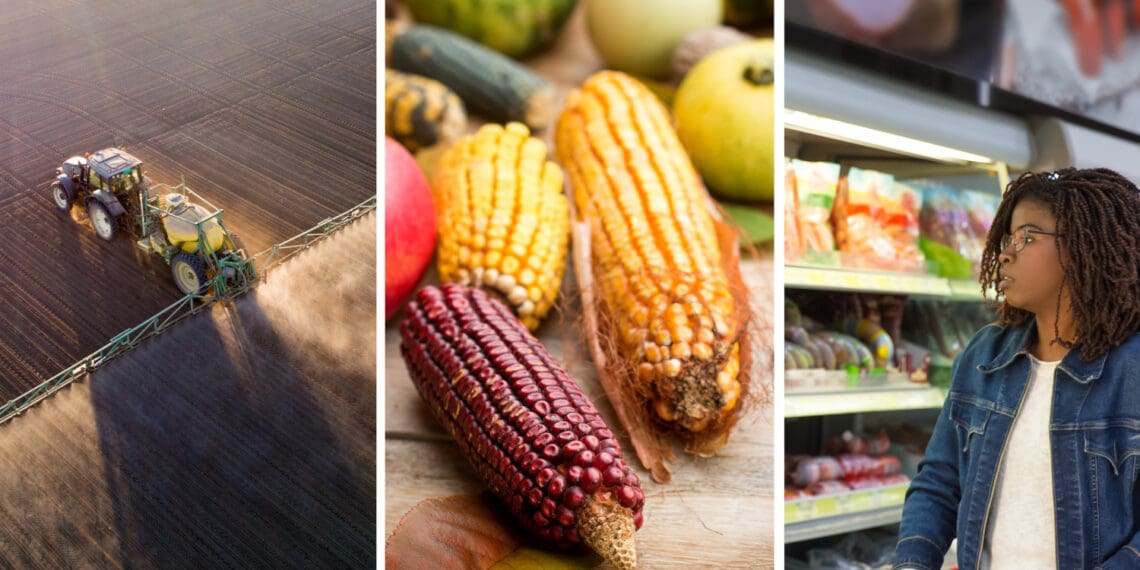
Natural gas and fertiliser prices shot up towards the end of 2021. This will inevitably lead to higher food prices in the coming year. Thabile Nkunjana explains how global events impacted South Africa and why there has never been a better time for people to grow their own food.
Soon consumers might realise that a sandwich comes from the farm and not the freezer. This is thanks to rising energy prices which have put pressure on fertiliser production and thus prices across the world.
Numbers from Agbiz suggest that South Africa imports about 80% of its fertiliser. Fertiliser production heavily relies on natural gas and gas prices have proven to be a big problem.

To add to the escalating gas price problem, Hurricane Ida noticeably damaged an ammonia producing plant in the USA in September last year, while labour supply disturbances due to Covid-19 exacerbated the matter in other countries.
The rising energy prices have forced fertiliser producers in some parts of the world to cut production by as much as 40%, solely due to high energy costs, according to Yara, a leading fertiliser producer globally. As a result of these factors, fertiliser production output took a heavy knock.
According to World Grain, the Russian government also introduced an export quota on fertiliser to guard local fertiliser supply and limit production costs for farmers. Just a bit of context: Russia is the leading supplier of ammonium nitrate globally. Based on data from the Trademap, in 2020, Russia exported 3.6 million tonnes, followed by the USA with close 600 thousand tonnes for the same year.
Fertiliser export limitations and the combination of the above-mentioned factors, related to fertiliser production and thus the supply, are likely to have devastating effects on the global fertiliser market and subsequently on food production for next year.
Higher fertiliser prices will possibly reduce yields across the globe, especially when nitrogen-containing fertilisers are not applied in adequate quantities due to reduced application or inaccessibility. This might have a direct effect on global food stocks, which eventually affect food prices.
This season had low carryover stocks. Any further declines in production for next year will be a blow for consumers, especially in countries with struggling economies.
Agriculture feeling it across the globe
While fertiliser prices were already rising, planting for grains and oilseeds for the year 2022/23 was well underway across the globe: Brazil with its safrinha maize crop as well as the Northern Hemisphere. Around this period, fertiliser usage increased and further influenced prices.
The global fertiliser problems will possibly have serious implications for food. Production costs might be higher than usual, and farmers’ profits could be seriously impacted. Given the global commodity prices, the world might be heading to a food crisis in 2022.
Based on data from the International Grain Council, on 11 November 2021, maize and wheat sub-indexes were 15% and 42% higher, respectively, year on year. Also, wheat prices were escalating at an alarming rate and Russia, which is the biggest wheat supplier globally, and was said to be mulling higher wheat export quotas from January to June 2022. This comes at a time when the market is already under pressure due to tight supplies globally.

Effects on the home front
As already mentioned, South Africa largely depends on global fertiliser supply. Production costs were soaring in South Africa with diesel prices fuelling the situation.
The National Agricultural Marketing Council tracks local input costs, including fertiliser, and things were not looking good. Di-ammonium phosphate, urea and potassium chloride were respectively 77.1%, 63.2% and 63.1% higher year on year in August.
At the end of October, domestic food prices remained high in response to global commodity prices. As observed internationally, vegetable oils were showing an upward trend. A spot price for a tonne of sunflower seed has hit a record of R11 000 at the beginning of November, while a tonne of yellow maize was around R3 362 on average, which was considerably higher when compared to R1 500 to R1 800 historically.
Another important crop is wheat, of which the country imports around 50% for domestic consumption. The rising global prices are concerning. On average, a tonne of wheat was R5 775, which was 12.0% higher year on year.
How consumers can protect themselves
South Africans, especially from rural areas, need to consider producing some of their food to cushion the rising food prices. Weather conditions are promising this summer and people should take advantage of that. This has always been a saviour for rural people across the world.
The current fertiliser situation mostly favours large commercial farmers who have made significant profits from previous seasons. If the current oil and fertiliser issue escalates, smallholder farmers who supply between 30%-34% of the world’s food according to Food and Agriculture Organisation (FAO) might produce even less, given the current state of input costs.
This situation is likely to make food available in short supply – and expensive, globally.
Regions such as the European Union and North America are in winter, which normally exacerbates fuel demand. For that reason, oil prices might keep pressure on fertiliser production and subsequently food prices, especially with La Niña effects beginning to show.
ALSO READ: Crop farmers cut budgets as fertiliser prices soar
Sign up for Mzansi Today: Your daily take on the news and happenings from the agriculture value chain.