Thursday, August 6, 2026
SUBSCRIBE
22 GLOBAL MEDIA AWARDS
Food For Mzansi
  • News
  • Changemakers
  • Lifestyle
  • Farmer’s Inside Track
  • Food for Thought
No Result
View All Result
  • News
  • Changemakers
  • Lifestyle
  • Farmer’s Inside Track
  • Food for Thought
No Result
View All Result
Food For Mzansi
No Result
View All Result
in News

IFAJ Congress highlights women driving agri-change in Kenya

The IFAJ World Congress was hosted in Nairobi for the first time, and beyond the networking, the event spotlighted the powerful role of women driving change in Kenyan agriculture

by Vateka Halile
23rd October 2025
Some faces from the Media for Environment, Science, Health and Agriculture (Mesha), behind organising and hosting IFAJ in Kenya. Photo: Mesha Science

Some faces from the Media for Environment, Science, Health and Agriculture (Mesha), behind organising and hosting IFAJ in Kenya. Photo: Mesha Science

Share on FacebookShare on TwitterShare on WhatsApp

At the International Forum of International Journalists (IFAJ) Congress in Nairobi, research by the Kenya Agricultural and Livestock Research Organisation (Kalro) shows that in crop production, women now outnumber men. This highlights how women are claiming their space in agriculture and reshaping the farming landscape.

The congress focused on meetings, breakaway sessions, and networking around agricultural reporting, exploring how to tell stories that make sense and truly reach the audience.

Aghan Daniel, the secretary of Media for Environment, Science, Health and Agriculture (Mesha) in Kenya, told Food For Mzansi that hosting the IFAJ World Congress meant much more than just welcoming delegates. He said it was a major milestone for Mesha to attract the IFAJ to Kenya.

“About five years ago, we were selected to host the 2026 congress,” he explained. “But when Israel, which was meant to host the 2025 event, stepped down, Mesha came on board.”
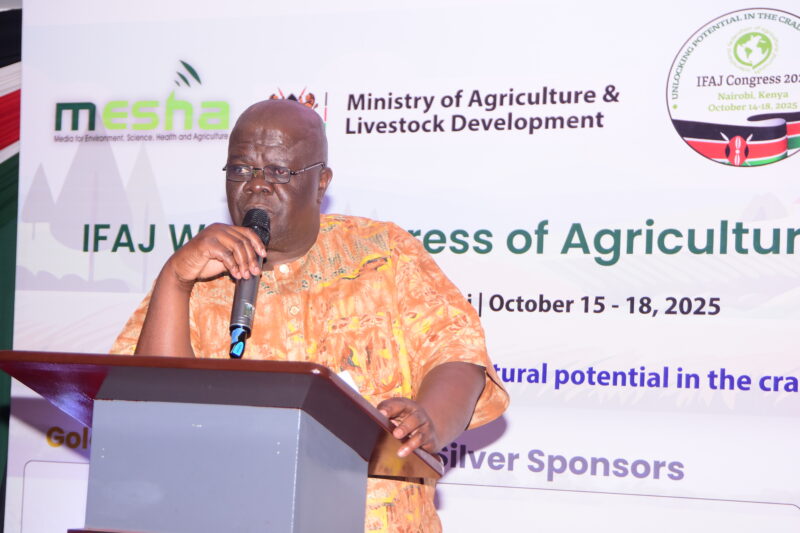
Aghan Daniel, speaking at IFAJ on behalf of Mesha. Photo: Mesha Science

Daniel added that Mesha has built a culture of nurturing journalists through training in mobile and solutions journalism. “It is a triumph for me and for Mesha as an association, as this is the first time the congress has been held in East Africa,” he said.


Related stories
  • Behind the agri headlines with IFAJ’S Steve Werblow
  • Swiss farm brings sustainability and transparency to beef sales
  • Atlas AgriSA Congress charts path to agri resilience

Women driving change in Kenyan agriculture

Traditionally, women were seen mainly as labourers on farms, but that picture is changing in Kenya. Many are now co-owning land, managing coffee cooperatives, leading agribusinesses, and adopting new technologies, said Gloria Gummerus, co-founder of Sakami Coffee in Kenya.

She said social change is clearly underway, with younger women entering agriculture as a career choice rather than a family duty.

“Their growing participation is transforming Kenya’s farming landscape into something more inclusive, professional, and innovative.”

Gloria Gummerus
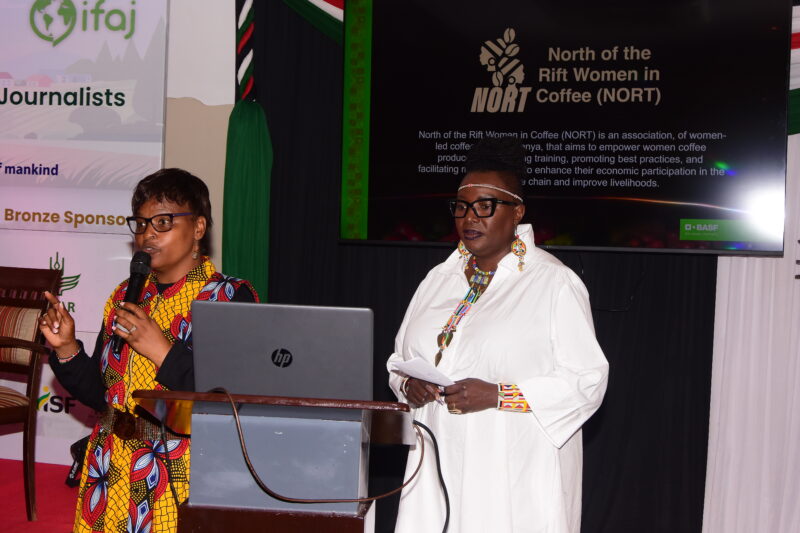
The women representing the North of the Rift Women in Coffee group at IFAJ in Nairobi, Kenya. Photo: Mesha Science

Gummerus added that there are strong women-led farmer groups such as North of the Rift Women in Coffee, along with several cooperatives focusing on improving coffee quality, sustainability, and access to finance.

“Training and mentorship programmes are empowering women with skills in agronomy, processing, Q-grading, barista work, and entrepreneurship,” she said.

Meanwhile, Jessica Ndubi, chief research scientist at the Kenya Agricultural and Livestock Research Organisation (Kalro) in Nairobi, noted that through participatory research and extension services, the organisation ensures women farmers are actively involved in innovation and decision-making.


“The organisation also supports market linkages, value addition, and agribusiness development, enabling women-led hubs to enhance productivity, profitability, and resilience in crop production systems.”

Jessica Ndubi

Ndubi added that Kalro’s research is deliberately gender-responsive, ensuring that technologies, innovations, and management practices address the diverse needs of both men and women across agricultural and livestock value chains.

“Gender analysis is done on the various value chains to identify barriers limiting women’s participation,” she said.
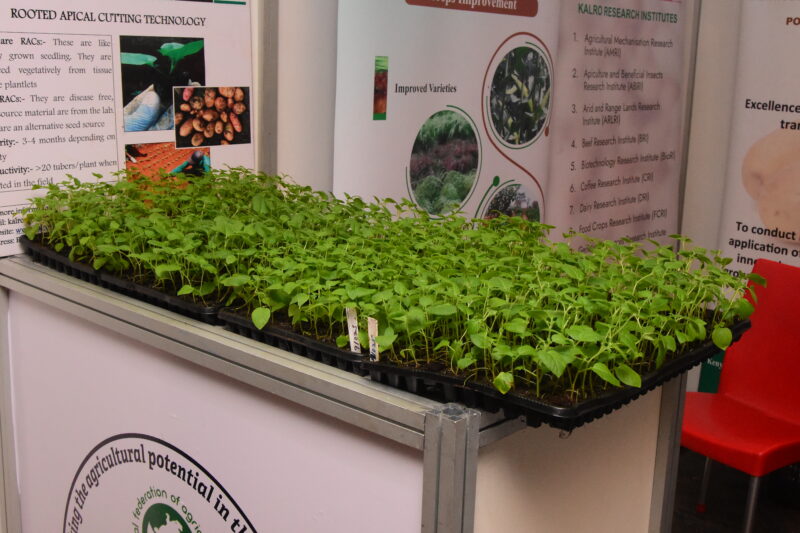
The Kalro group at the exhibition. Photo: Mesha Science

Ndubi said this gender-responsive approach strengthens access to information, resources, and markets, enabling women to adopt improved practices and benefit equitably from agricultural advancements; fostering sustainable livelihoods and inclusive growth within Kenya’s agri-food system.

Champions for gender equality in agriculture

Ndubi told Food For Mzansi that Kalru runs gender-responsive capacity building and extension programmes designed to meet women’s unique needs in agriculture.

“Training modules are designed with flexible schedules, local languages, and practical demonstrations that accommodate women’s roles and time constraints. Women farmers receive hands-on skills in improved production techniques, agribusiness, and climate adaptation.”

Extension messages are adapted for women and delivered through accessible channels such as women’s groups, local radio programmes, and mobile SMS, increasing reach and improving agricultural productivity, added Ndubi.

She also noted that Kalro mainstreams women in leadership, policy influence, and partnerships by integrating a gender equality perspective into its policies, programmes, and activities.

“It empowers women scientists, managers, and researchers through mentorship, leadership training, and career development opportunities.”

Through partnerships with government, academia, the private sector, NGOs, and development agencies, the organisation advances gender-responsive policies and programmes that empower women and drive sustainable agricultural transformation, according to Ndubi.

ALSO READ: IFAJ congress brings the world’s top agri media to Nairobi

Sign-up for the latest agricultural news delivered straight to your inbox every day with Mzansi Today!

Vateka Halile

Vateka Halile grew up in rural areas of Cofimvaba in the Eastern Cape. She was raised in a traditional family setting and found writing to be a source of comfort and escape. Vateka participated in an online citizen journalism course through Food For Mzansi, and her passion for health and medicine-related stories was born. Her dedication to community work and love for social justice and solidarity spaces is evident in her quality time with the community when she isn't working.

Tags: African Women in AgricultureCommercialising farmerInform meInternational Federation of Agricultural Journalists (IFAJ)Kenya
Smart irrigation key to getting more value from every bag of fertiliser
Advertorial

Smart irrigation key to getting more value from every bag of fertiliser

by Patricia Tembo
3rd August 2026

PARTNER CONTENT: Effective fertigation begins with effective irrigation. Netafim agronomist Louis Fourie shares how precision drip fertigation keeps costly nutrients...

Read moreDetails
Limpopo youth turns backyard broiler project into poultry business

Limpopo youth turns backyard broiler project into poultry business

3rd August 2026
ASF outbreak contained, but pig farmers urged to stay vigilant

ASF outbreak contained, but pig farmers urged to stay vigilant

3rd August 2026
This week’s agri events: 03 – 07 August

This week’s agri events: 03 – 07 August

3rd August 2026

A super El Niño looms: Africa’s five lessons in climate resilience

2nd August 2026

Bikouta bridges African flavours through handcrafted teas

Land Bank responds to debt recovery and ongoing farmer litigation

Why South Africa’s wheat industry is under investigation

New agriculture chair targets FMD, governance, oversight

Professionalism pays: How Jantjies built a thriving lucerne business

Join Food For Mzansi's WhatsApp channel for the latest updates!

JOIN NOW!
Next Post
Gogo’s herbal wisdom grows into Khula Hair Organics brand

Gogo’s herbal wisdom grows into Khula Hair Organics brand

THE NEW FACE OF SOUTH AFRICAN AGRICULTURE

With 21 global awards in the first six years of its existence, Food For Mzansi is much more than an agriculture publication. It is a movement, unashamedly saluting the unsung heroes of South African agriculture. We believe in the power of agriculture to promote nation building and social cohesion by telling stories that are often overlooked by broader society.

How grain farmers can secure cash flow and funding in uncertain seasons 

Professionalism pays: How Jantjies built a thriving lucerne business

New agriculture chair targets FMD, governance, oversight

South Africa’s child nutrition crisis demands urgent action

More than gadgets: How practical agritech boosts your bottom line

Western Cape suffers driest July on record ahead of intense El Niño

  • Awards & Global Impact
  • Our Story
  • Contact Us
  • Cookie Policy
  • Privacy Policy
  • Copyright

Contact us
Office: +27 21 879 1824
News: info@foodformzansi.co.za
Advertising: sales@foodformzansi.co.za

Contact us
Office: +27 21 879 1824
News: info@foodformzansi.co.za
Advertising: sales@foodformzansi.co.za

  • Awards & Global Impact
  • Our Story
  • Contact Us
  • Cookie Policy
  • Privacy Policy
  • Copyright

Chat Options

I'm Lerato, your AI assistant!
No Result
View All Result
  • News
  • Changemakers
  • Lifestyle
  • Farmer’s Inside Track
  • Food for Thought

Copyright © 2024 Food for Mzansi

This website uses cookies. By continuing to use this website you are giving consent to cookies being used. Visit our Privacy and Cookie Policy.