South Africa’s coastline is home to one of agriculture’s most valuable natural resources, and chances are, most people have never heard of it. Known as Ecklonia maxima, this giant kelp is harvested from the ocean and transformed into natural biostimulants that are helping farmers grow stronger, healthier crops.
During a media visit to the Kelpak Group in Muizenberg, Food For Mzansi got a closer look at why this indigenous seaweed has become such an important ally for agriculture.
Harvesting the sea sustainably
While many growers rely on seaweed biostimulants to build crop resilience and enhance root establishment, few are familiar with the complex marine operations behind giant kelp (Ecklonia maxima) harvesting along Mzansi’s Western Cape coastline.
Kelpak harvesting manager Christo van Eeden says every harvest begins at sea with precise, sustainable practices.
“Our divers hand-cut the kelp using sickles while leaving the holdfast attached to the rocks,” Van Eeden explains. “This allows the underwater forest to regenerate naturally.”
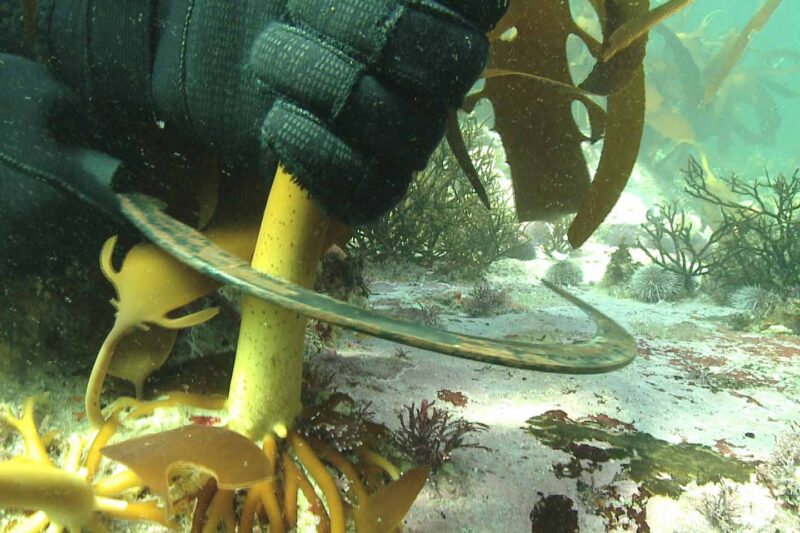
According to Van Eeden, harvesting takes place in the early morning when sea conditions are calmest. To preserve active compounds and keep wind-blown sand out of the hollow stem, divers cut precise sections above the base to keep the plant sealed.
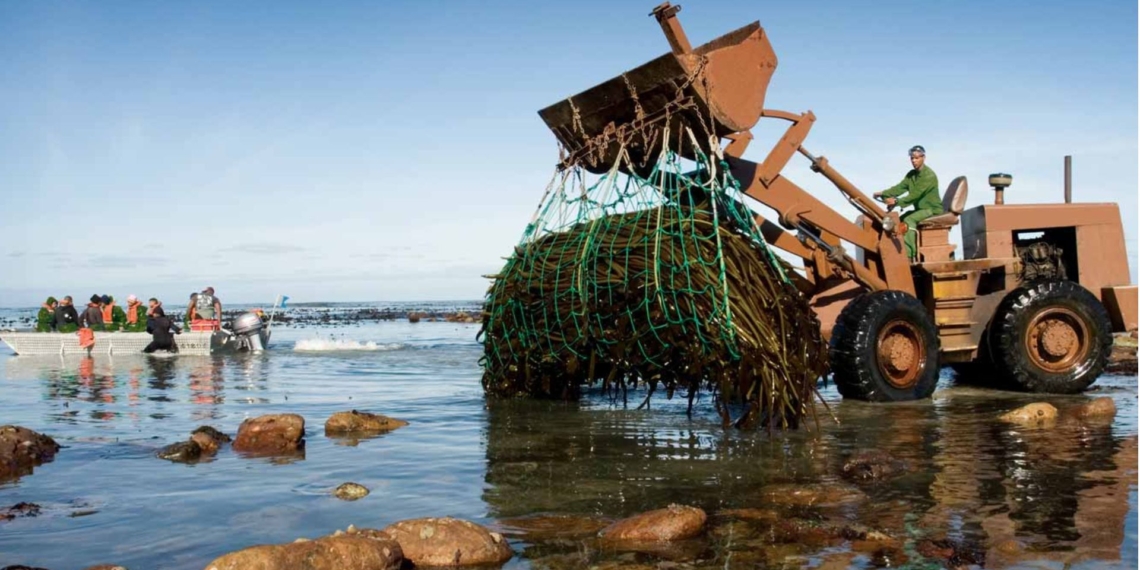
Once cut, the floating kelp is loaded onto harvest vessels. Van Eeden notes that the dense leaves are stowed at the bottom of the hull to serve as ballast, while the stems are packed in nets on top. From the shore, the yield moves directly into refrigerated storage, similar to fruit industry cold rooms, to preserve freshness before processing.
To protect long-term supply for growers, Van Eeden states that Kelpak operates on an 18-month to two-year harvest rotation and harvests only to meet real-time production needs.
“We don’t overharvest,” Van Eeden says. “We’d rather go back the next day to collect more than have raw material standing around losing freshness.”
He adds that responsible marine management ensures Mzansi farmers continue to receive reliable, high-quality agricultural input.
Related stories
- How seaweed biotechnology boosts crop yields naturally
- Seaweed for livestock diets? Yes, it’s a thing!
- Biostimulants: Helping crops beat stress and boost yield
- Crop scientist Anele Danisa bridges gap between lab and land
Why biostimulants matter
While biostimulants are becoming increasingly popular among farmers, Linda Greyling, head of technical support at Kelpak, says one of the biggest misconceptions is that they replace fertilisers.
Instead, she explains, biostimulants support the plant’s natural processes by encouraging stronger root development, helping crops absorb water and nutrients more efficiently while improving their ability to cope with environmental stress.
“Kelpak is a biostimulant that assists the plant’s natural processes. It cannot replace fertiliser,” says Greyling.
She explains that farmers apply fertiliser with a specific yield in mind, but drought, heat and other environmental pressures can reduce that potential. Biostimulants help plants better withstand those conditions and make more efficient use of the nutrients already available, adds Greyling.
“Farmers apply fertiliser to achieve a target yield, but stressful conditions take that yield away. That’s where biostimulants play a critical role.”
Linda Greyling
Greyling further notes that company trials have shown improved yields in crops treated with Kelpak, even under reduced nitrogen applications, highlighting the role stronger root systems play in improving nutrient use efficiency.

Innovation to future-ready farming
Kelpak has been harnessing the power of South Africa’s indigenous giant kelp, Ecklonia maxima, since the company was established in 1978.
According to managing director Carlo Botha, the company’s unique cold extraction technology, developed a year earlier, has enabled it to produce seaweed-based biostimulants that help strengthen root development and improve crops’ ability to cope with environmental stress.
Botha says decades of scientific research, including studies conducted through the University of KwaZulu-Natal, have helped validate the product’s effectiveness. Today, Kelpak’s seaweed technology reaches farmers around the world through its distribution partners.
As farmers face growing pressure to produce more with fewer resources, Paul Hills, head of research and development at Kelpak, believes seaweed biostimulants will play an increasingly important role in agriculture.
“We’re seeing more of the major agricultural companies positioning themselves in the biostimulant space.
“It’s not necessarily about replacing conventional fertilisers, but about offering more sustainable, environmentally friendly solutions. That’s the direction the industry is moving.”
While the company is monitoring the long-term effects of climate change on its kelp resource, Hills says no significant changes have been observed in the cold waters where Ecklonia maxima is harvested.
“Farmers still need to plant, and people still need to eat. Our job is to make sure what we’re doing today remains relevant tomorrow,” he says.

READ NEXT: