Climate change is no longer a thing of the future but realities are striking the world daily. The World Economic Forum’s white paper, “Insuring against heat: navigating risks in global warming”, indicated that only 29% of economic loss from natural disasters was insured in South Africa.
This statistic means that the majority of farmers operate their farms without insurance against the adverse weather conditions that have caused havoc in Mzansi such as drought, veld fires, winds, and heavy rains.
“Addressing the impacts of extreme heat and related climate perils will require a multi-stakeholder approach in which the insurance industry must play a central role. Insurance is the most tangible form of climate adaptation that individuals and communities can access.
“Furthermore, the little progress that has been made is heavily weighted towards upper- and middle-income countries, whereas the insurance protection gap has persisted in lower-income countries,” the report stated.
Related stories
- Fires, frost, floods: Low insurance uptake threatens farmers
- Drought insurance for smallholder farmers unveiled
- Wildfire threat rises: Farmers urged to shield farms with fire insurance
The report indicated that to mitigate adverse weather in Africa, Africa Risk Capacity (ARC), founded in 2014, is a hybrid mutual insurer that provides parametric insurance services to 33 African Union member states and farmer organisations.
“The ARC uses innovative financing mechanisms and risk-sharing arrangements to address climate risks in Africa. Its multi-jurisdictional approach enables member states to share climate-related risks, reducing the burden of natural disasters on individual governments and populations.
“Participating governments must submit contingency plans, making ARC’s parametric insurance a valuable capacity-building tool for policyholders, enhancing disaster preparedness,” the report explained.
Impact of climate-induced disasters
In his address at the World Economic Forum in Davos, Switzerland, President Cyril Ramaphosa said South Africa needs to pursue development pathways that reconcile growth with urgent climate action.
“The increasing rate of climate-induced natural disasters is affecting countries that can least afford the costs of recovery and rebuilding. As we accelerate the transition to low-carbon economies in a manner that is just and inclusive, we must recognise the damage that climate change has already wrought. And will continue to wreak.
“In light of this, South Africa has therefore made the strengthening of disaster resilience as another of the priorities of its G20 Presidency. In order to address this, special financing and insurance mechanisms must be made available to scale up funding for post-disaster reconstruction,” Ramaphosa said.
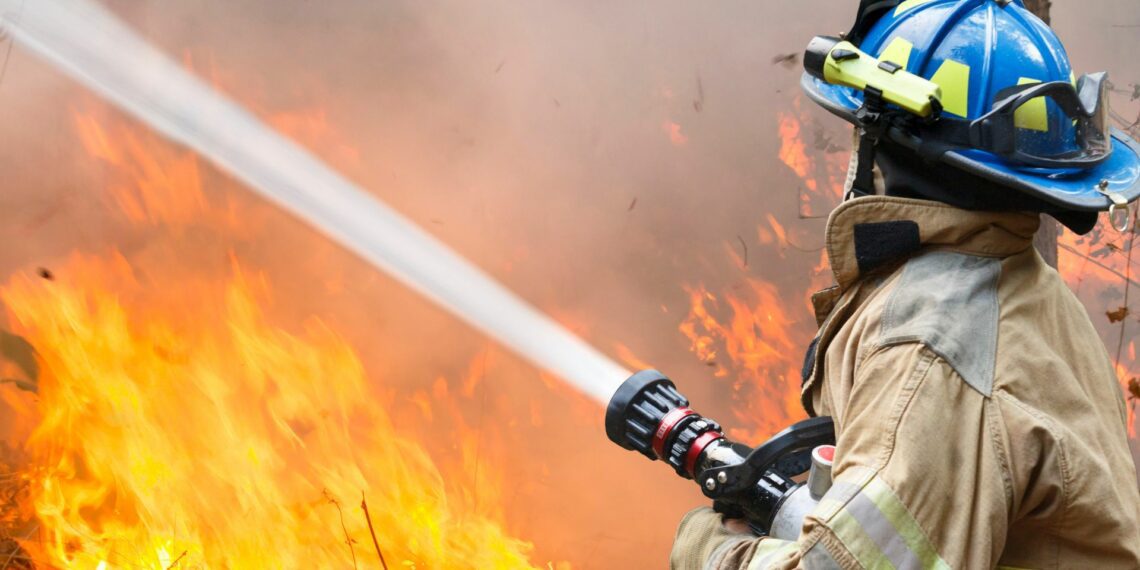
Chief executive officer of North West Umbrella Fire Protection Association (NWUFPA), Erich Stoch, said 442 832 hectares burnt down in the 2024 fire season, which is a decrease from 1 338 733 hectares. Stoch said most of this land was in rural communities with a lot of communal land farming.
Stoch said these fires impacted heavily on food security and commercial farmers play a pivotal role in ensuring national food security.
“By denying us equal access to firefighting resources, the government inadvertently jeopardises agricultural productivity and food supply chains, with dire consequences for the entire country.
“Wildfires often destroy infrastructure, disrupt businesses, and devalue properties. Marginalising certain sectors from state assistance exacerbates economic inequalities, hindering national development goals. The impacts of these disruptive socio-economic events are felt for many years and are rather difficult to accurately quantify,” he said.
Insurance is a critical need
Stoch noted that the exclusion of commercial farmers, private landowners, and other sectors from state assistance exacerbates their vulnerability to fire-related disasters.
“There is a need for government to embrace a proactive and adaptive approach to wildfire management, recognising the changing realities of climate change. We need to develop and implement comprehensive wildfire management plans that address the unique challenges faced by the region,” he said.
A crop farmer in Pretoria, Ofentse Moiloa, said it is no longer about affordability but being able to see how to accommodate insurance as part of the farming operations.
“Until you wake up with all seeds wiped away by rain or being in a situation of no rain for months, you will understand that insurance is not a luxury in farming but a critical need, otherwise climate change will force you to close your enterprises.
“So it is important that especially us people of colour understand that for us to reach the level of commercial, we need to dig deep in our pockets and secure our livelihoods. Farming is our bread and butter so we need to go out of our way to make sure it works. Part of that is taking insurance to cover our farms,” he said.
Moiloa said he took the step of covering his 108-hectare farm following months of droughts that led to him scaling down on planting his vegetables. This meant his financial projections had to change.
READ NEXT: Farming communities demand action amid violent start to new year
Sign up for Mzansi Today: Your daily take on the news and happenings from the agriculture value chain.