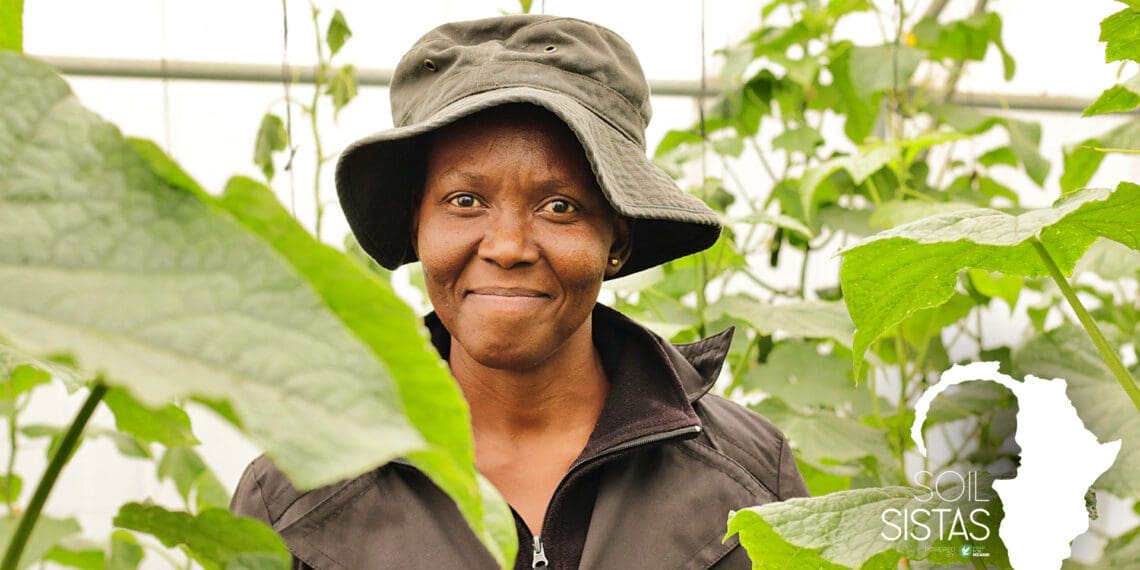
From a successful career in accounting and leaving a mark in the USA and the UK, Refilwe Mokgohloa had the determination to create a successful hydroponics cucumber business in Mzansi. Mokgohloa envisioned growing the 8.5-hectare family plot and she did. She is one of the inspiring women selected for the Corteva Women Agripreneur 2022, a year-long blended development programme at the Gordon Institute of Business Science (GIBS) Entrepreneurship Development Academy (EDA).
From an empty inherited plot to toiling the land, and eventually venturing into hydroponics, the Mokgohloa family knew that they had to do everything in their power to make a success of farming.
“My dad, [Gololo Philip Mokgohloa] inherited the farm from his parents, which was bought in 1950. My dad is one of three sons from my grandparents, and they were all given a plot. Between 1994 and 1995, they started as subsistence farmers, planting every crop you can think of – cabbage, beetroot, spinach,” says Mokgohloa, who is the oldest of three children.
But she, her brother Kobela, and her sister Mmakgomo, all had plans of their own when it came to the life they wanted.
Dreams of going big
Initially, her brother started managing three tunnels growing cucumbers, but for the farm to grow, they needed money.
“In 2008, my younger brother came in and decided to start off with three tunnels which soon became 10 and today we’re at 45 tunnels,” she says.
Mokgohloa, on the other hand, loved numbers and completed her bachelor’s degree in accounting at the University of South Africa (Unisa). In 2004, she moved to the United Kingdom to work, and in 2009, she relocated to the US to work as a financial controller and studied accounting and forensics at Florida Atlantic University.
“I came back in 2011 because my parents wanted the business to grow, and my brother could not do it by himself at that time. Though my brother was managing the three tunnels, they were looking into the future because it is an 8.5-hectare farm that had to be developed,” she says.
Restructuring and rebuilding
After her return from the US, her mother, Mmatsatsi Ellen, empowered her to think differently about the way she saw opportunities for growing the family farm.
“I come from an accounting background. My parents kept on saying we must come back and work here. It was a daunting time getting used to not having your salary. It required perseverance and I needed to see the bigger picture and they helped me see it. This is how you work for your wealth.”
“If it’s your wealth, you work for it and put effort and time into it. When I say I am going to work, I put on my gumboots and I am on the farm. Even though I don’t do the pruning, I know exactly what’s going on, but I am more focused on the books for the farm.”
She knew how she could reconstruct the business with her passions and described it as applying her accounting knowledge to make the farming world better.
Emerging into a hydroponic commercial farm
When the Mokgohloas ventured into commercial farming, they started with a small irrigating machine. They acquired the three tunnels from the department of agriculture, which they were running through a specific programme called CAPS. The foundation was laid, and the family increased the tunnels with their own money and loans.

Trying to secure funding was a challenge for the family, but her father had so much faith in the business and truly believed that they could make a difference, so he decided to invest his retirement funds.
“My father took all his money and said, ‘go and expand so that when you go and ask for more money, they know that you have also put your money into the business’.”
Today, the hydroponics farm is fully off-grid and despite all the challenges, the close-knit family keeps her going.
“Every Sunday, we have meetings. We tell them what we are doing, what we are faced with, and my parents will tell you that nothing comes easy, you must work,” she adds.
“We are now working with an automated system that sends an error regarding the irrigation or solar system to my phone. It is a sophisticated type of operation with a technical focus and we incorporate our labour into other avenues of the business,” she adds.
Corteva programme
Mokgohloa stumbled upon the Corteva Agripreneur Programme on Facebook and what struck her was the focal point being women.
Even though she had an accounting background, she believes that one never stops learning and applied for the life-changing programme. “I was thinking … let me go hear, maybe my issues are not unique, and absolutely, they are not unique. I have learnt that all business people have the same issues,” she adds.
The programme helped her find solutions to her problems and the importance of tackling them step by step to create a successful hydroponics business.
ALSO READ: This sassy #SoilSista is just a farm girl at heart
Get Stories of Change: Inspirational stories from the people that feed Mzansi.