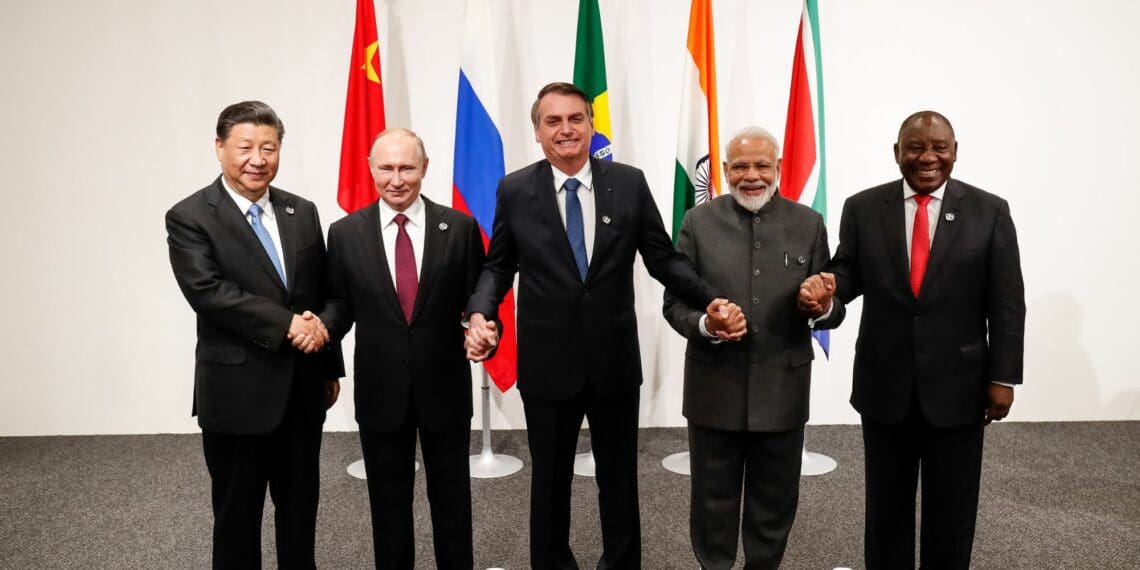

With South Africa now in the driving seat of the Brics grouping of nations, the nation’s farming hotshots are hopeful that this also presents an opportunity to advance agricultural trade.
This, after President Cyril Ramaphosa yesterday said that South Africa will use its role as the 2023 chair to advance the interest of Africa as a whole. Other African nations will be also invited to the Brics summit in South Africa later this year.
Brics is an acronym for the powerful grouping of the world’s leading emerging market economies, namely Brazil, Russia, India, China and South Africa.
Agbiz chief economist Wandile Sihlobo told Food For Mzansi that as the Brics chair, South Africa has an ideal opportunity to influence the agenda and advance the agricultural trade interests of the country.
“China and India are some of the key markets South Africa is interested in. They are growing economies, with large populations. We will be pushing our fruits, beef, and wine interests in these markets.
“South Africa’s agriculture sector is export-oriented. We already export half of what we produce in value terms. So, as we push expansion in production domestically, we will be pushing our export interests in platforms such as Brics,” he said.
‘Farmers are barely coping’
Meanwhile, farmers will be looking to government to also use its Brics positioning to curb rising input costs of fertiliser. Globally, fertiliser costs have increased by as much as 80% in the awake of Russia’s war against Ukraine.
Agri SA executive director Christo van der Rheede said he was hopeful that profitable farming would be on the Brics agenda. He said farmers were barely coping with the price of shipping, packaging, diesel and electricity costs which were the basics needed.

“We have been appealing to government to have a look at this situation because it threatens South Africa’s food security status if farmers can no longer farm profitably.
“Given our relationships within the Brics context, we should look at the landscape at which agriculture operates. For example, shipping logistics, exports and imports. Also, how can these countries assist each other in terms of better energy and fertiliser prices.”
Van der Rheede added that Brics nations should also look more closely to agricultural dumping which is the practice of exporting commodities at prices below the cost of production.
“Opening up markets for trades between various Brics partners will be of great advantage to the country’s economy and theirs as well. Agriculture needs to have a seat at the table so that we can engage with our trade partners in Brics.
“Importantly, it is [also about the development of our] farmers, providing them with the latest technologies. How do we work together to mitigate the impact of climate change on agriculture? How do we open our institutions so that young people can study and get exposure?” he asked.
Western Cape fruit exporter and managing director of Riyp Uzair Essack told Food For Mzansi that following a major shift in exporters now looking for alternative markets amid the Russia-Ukraine war, greater legislation is needed.
“Putting legislation and political aspects in place to open new markets for exporters in the country is very important. After those market are opened, there should be a conducive environment for those exporters to reach those markets and right buyers,” he said.