Drought-proof, nutrient-rich, and rooted in African heritage – sorghum is making a big comeback. Pannar’s Reggie Mchunu explains why in this article.
Once regarded as the cornerstone of African diets, sorghum is making a timely and strategic return to the fields of South Africa.
With its deep cultural roots, drought resilience and rich nutritional profile, sorghum is proving to be more than just a crop of the past. According to Reggie Mchunu, key accounts manager at Pannar, sorghum is increasingly being seen as a solution to the country’s most pressing agricultural and food security challenges.
“Looking at the climate change we are experiencing nowadays, sorghum has become a game-changer. It’s a crop that can withstand drought and can perform well under various conditions,” he shares.
Against the backdrop of erratic rainfall and rising input costs, more farmers are turning to crops that offer resilience and reliability.
Sorghum’s ability to thrive where other crops fail is at the heart of its revival. It performs remarkably well in hot, dry climates and marginal soils. These conditions are common across provinces like Limpopo, North West, the Eastern Cape and the Northern Cape.
In an era of unpredictable weather and shrinking water resources, farmers are being encouraged to diversify their production to reduce risk.
“So in areas where farmers are not able to plant maize, I think sorghum becomes the alternative. It’ll still give you yields. It will still give you the money that you need as a farmer,” says Mchunu.
A heritage crop with a health boost
As farmers begin to rediscover sorghum’s resilience, health experts are also shining a spotlight on its dietary advantages.
Beyond its environmental benefits, sorghum is enjoying renewed attention for its nutritional value. Rich in dietary fibre, antioxidants, protein and naturally gluten-free, it is being recommended by health professionals for people with diabetes or gluten intolerance.
“Doctors are recommending diets that include sorghum because it provides a lot of fibre. It’s not just going to make money, but for food security, it plays a bigger role as well.”
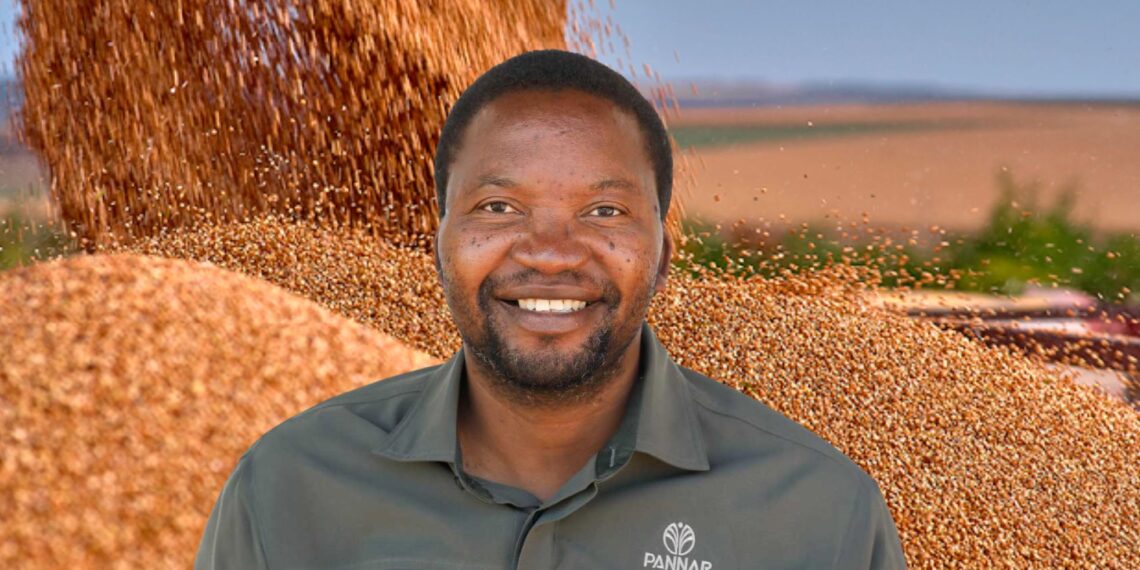
Reggie Mchunu
Historically, sorghum was a staple in African households until it was gradually displaced by maize. Now, with growing consumer awareness around healthy eating and the risks of over-reliance on a single staple grain, there is a renewed call to reintroduce this ancient crop.
“It’s been the source of starch for the longest time. If you look at our history as African people, sorghum has always been part of our dietary system,” says Mchunu.
Related stories
- Maize hybrid selection: What every farmer should know
- Farmers’ stewardship: Protecting land and technologies for future
- Podcast: Learn how plant diseases can strike in sorghum
Innovation in the field
At the same time, research and development are helping overcome some of sorghum’s historic challenges, most notably, its susceptibility to birds.
One of the major setbacks for sorghum in the past has been its vulnerability to bird damage. But breeders have been hard at work developing bird-resistant hybrids.
“We’ve got sorghums that we say are bird-resistant, which means birds tend to avoid them. As a result, you get better yields and higher yields when you plant those.”
Pannar, a key player in the sorghum value chain, has been investing in this crop since 1978, developing high-performing hybrids and supporting farmers through seed access, financial aid and education.
“It’s a programme that has been ongoing. We are in the process of saying sorghum is there. It produces the correct yield that a farmer needs to make income. So we are reviving it.”
While advances in breeding are increasing yields, access to reliable markets remains a key factor in encouraging more farmers to grow sorghum.
Despite its many benefits, sorghum has long suffered from limited market access, price instability, and an unfavourable VAT status that sets it apart from other staple grains.
“For me, the biggest issue has been markets. Farmers failing to access markets, then they choose to move away from that crop.”
But that tide is turning. Demand for sorghum is growing in both traditional and new markets.
“We get buyers who are looking for it. And unfortunately, few farmers are planting it. Thus, we are mobilising and encouraging farmers to say sorghum is the way to go.”
The bigger picture: Sorghum’s role in sustainability
As the world moves toward more sustainable food systems, sorghum’s versatility is gaining attention, extending far beyond nutrition.
Mchunu highlights that sorghum isn’t just a food crop, but it also has industrial potential. It can be used to produce ethanol, which opens up new opportunities for sustainable fuel alternatives.
“Producing sorghum actually then becomes not just a nutritional issue, but we can also have fuel out of it,” Mchunu notes.
South Africa’s Sorghum Cluster Initiative (SCI), which includes seed companies like Pannar, is working to increase annual production to 500 000 tons, boost local consumption, expand exports and lobby for VAT exemption.
Part of the strategy also involves building rural processing hubs, especially in the Eastern Cape.
A smart crop for smart farmers
As momentum builds, more producers are recognising sorghum’s practicality on the ground. For farmers, sorghum offers a low-risk, low-input crop that performs well in challenging environments. It requires less water than maize, thrives on marginal soils, and is more affordable to protect from pests and diseases.
But success depends on good practices: timely planting, soil testing, fertilisation and weed management.
“Key to that, when we produce any crop, we need to consider our soils. Taking soil samples is key… but over and above that, sorghum is an easy crop to produce. For a farmer, it makes it easy.”
As South Africa searches for solutions to climate volatility, food insecurity and rural poverty, sorghum stands out as a versatile and underutilised hero crop.
And if the momentum continues, its comeback could be just the beginning of a more resilient agricultural future.
READ NEXT: Farm smarter: How to build energy resilience and cut costs