Sunday, November 1, 2026
SUBSCRIBE
22 GLOBAL MEDIA AWARDS
Food For Mzansi
  • News
  • Changemakers
  • Lifestyle
  • Farmer’s Inside Track
  • Food for Thought
No Result
View All Result
  • News
  • Changemakers
  • Lifestyle
  • Farmer’s Inside Track
  • Food for Thought
No Result
View All Result
Food For Mzansi
No Result
View All Result
in Advertorial

The Tshabalalas can still enjoy their family’s favourite red meat

Even with foot-and-mouth disease in the news, families like the Tshabalalas in Soweto don’t need to worry. Expert oversight and vaccination campaigns mean the beef, lamb, and mutton on their plates are safe, healthy, and responsibly raised

by Ivor Price
26th March 2026
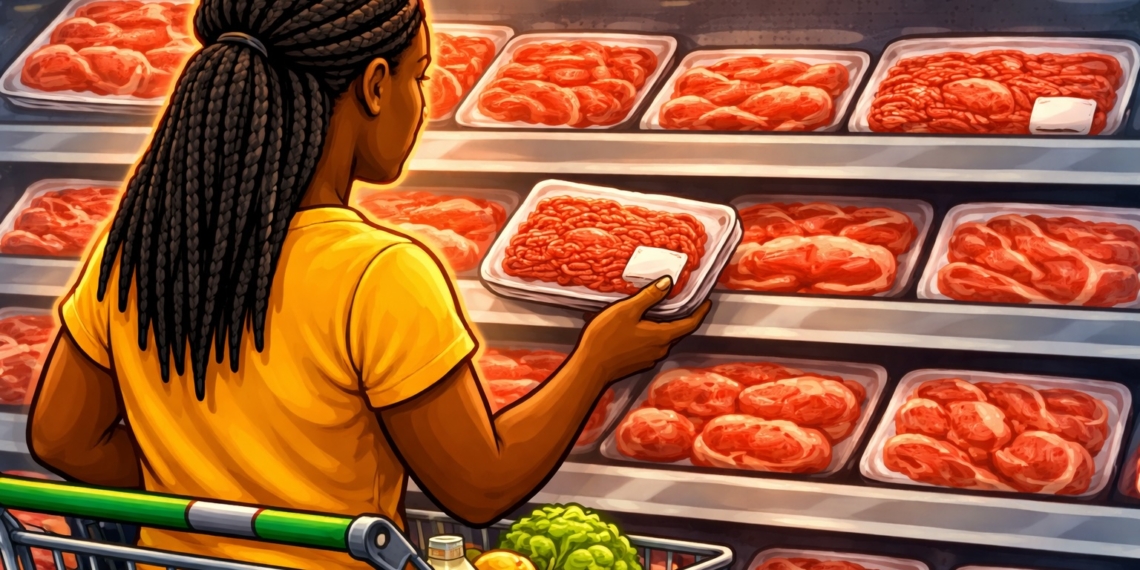
Despite the ongoing outbreak of foot-and-mouth disease among livestock, beef, lamb and other red meat sold in South African stores remains safe for human consumption. Illustration: ChatGPT

Despite the ongoing outbreak of foot-and-mouth disease among livestock, beef, lamb and other red meat sold in South African stores remains safe for human consumption. Illustration: ChatGPT

Share on FacebookShare on TwitterShare on WhatsApp

Oratile Tshabalala carefully picks through the beef and lamb pack at her local Shoprite in Dobsonville, Soweto. Red meat is a staple in her household, from affordable stewing beef for weekday meals to lamb chops on weekends and special occasions.

With news about foot-and-mouth disease (FMD) filling the radio and TV, she hesitates before placing a pack in her trolley.“I just don’t want to make my kids sick,” she says, lifting a pack of ground beef. “But I also don’t want to stop eating meat.”

The Tshabalalas don’t need to worry, though. Red meat is still safe to eat. FMD only affects animals with cloven hooves, such as cattle, sheep, goats, and pigs, and cannot spread to or affect humans. Meat sold through trusted shops and inspected by authorities is perfectly safe, healthy, and ready to enjoy at the family table.

Chief executive of the Red Meat Producers’ Organisation, Dr Frikkie Maré, highlights that FMD is not a zoonosis. This is a big scientific word that basically means the disease only affects animals, and not humans.

“The reason animals are quarantined while they have the virus and do not get slaughtered while positive is to prevent the spread of the disease to other animals,” Maré explains.

“Since it is a highly contagious virus, it can be spread if infected products are discarded in a way that allows other cloven-hoofed animals to come into contact with them. The chances of it spreading that way are very slim, but it does exist.”


Related stories
  • Meat is safe to eat despite FMD outbreak, assure experts
  • Red meat in SA: Culture, heritage, and celebration

Maré also highlighted the checks in place to ensure only healthy animals enter the food chain. Farmers submit a health declaration for all animals sent for slaughter, confirming they are fit and that all medication withdrawal periods have been observed.

“Not only due to FMD, but any animal that is unhealthy at the time of slaughter does not sound appetising for consumers,” he adds.

Vaccination and biosecurity

Meanwhile, a major vaccination drive is underway across South Africa, reaching both large commercial farms and smaller communal farms in all the provinces. Consumers are also worried about the possible effects of the vaccine on the meat of vaccinated animals. The vaccines are, however, safe and undergo approval processes before they can be imported and used. Millions of doses are being administered.

Dr Boitumelo Semete-Makokotlela, CEO of the South African Health Products Regulatory Authority (SAHPRA), says Section 21 authorisation is a process that scientifically screens and allows vaccines not registered in South Africa to be imported into the country. This enables the government, farmers and veterinarians to obtain safe, scientifically approved vaccines to protect animals against this highly contagious disease.

Dr Bothle Modisane, chief director for animal health at the department of agriculture, adds that every vaccine authorised for use is evaluated for safety, quality, and effectiveness against locally circulating strains. “Our collaboration with SAHPRA reflects the importance of partnerships in safeguarding animal health,” he said.

For families like the Tshabalalas in Soweto, these efforts mean they can continue to enjoy red meat without fear. Properly handled beef, lamb, mutton, and goat remain safe to eat, while the vaccination campaigns and strict oversight give confidence that the animals on their plates are healthy and responsibly raised.

“It feels good to know we can still enjoy our meals without worrying,” Nomsa says, placing her selection in the trolley. Even amid the FMD outbreak, South Africans can trust that red meat remains wholesome, safe, and ready for the family table.

This story is part of a special series in partnership with the Red Meat Producers’ Organisation (RPO) – a tribute to the farmers feeding our nation, one meal at a time.


READ NEXT: Fort Hare proposes SA’s second veterinary academic hospital

Sign-up for the latest agricultural news delivered straight to your inbox every day with Mzansi Today!

Ivor Price

Ivor Price is a multi-award-winning journalist and co-founder of Food For Mzansi.

Tags: FMDFood safetyInform meRed meat industryRed Meat Producers Organization (RPO)
Fruit SA: Giving transformation a seat at the strategy table
Food for Thought

Fruit SA: Giving transformation a seat at the strategy table

by Nomonde Ntloko
29th October 2026

True agricultural transformation is a continuous process, not a single event. Fruit South Africa’s Nomonde Ntloko examines the hurdles emerging...

Read moreDetails

Veggie prices plummet: Why your grocery bill might drop this week

29th October 2026

SA’s sugar industry at a crossroads: The shift to bioethanol

28th October 2026
Maleka engineers hydroponic solutions for emerging farmers

Maleka engineers hydroponic solutions for emerging farmers

28th October 2026
Agda congress: Why production alone won’t save your farm

Agda congress: Why production alone won’t save your farm

28th October 2026

Eastern Cape farmer bets on poultry and grows a diverse business

Veggie prices plummet: Why your grocery bill might drop this week

Godlimpi calls for innovative sugarcane grower financing

El Niño drought defence: Why healthy soil could save your harvest

Youth agri programme graduates the first cohort of young farmers

Join Food For Mzansi's WhatsApp channel for the latest updates!

JOIN NOW!
Next Post
Crack-A-Mac: Siblings make macadamia magic in Ballito

Crack-A-Mac: Siblings make macadamia magic in Ballito

THE NEW FACE OF SOUTH AFRICAN AGRICULTURE

With 21 global awards in the first six years of its existence, Food For Mzansi is much more than an agriculture publication. It is a movement, unashamedly saluting the unsung heroes of South African agriculture. We believe in the power of agriculture to promote nation building and social cohesion by telling stories that are often overlooked by broader society.

Climate change could force redesign of SA’s farming regions – ARC

Early heat lowers Tru-Cape cherry harvest, but brings top quality

Godlimpi calls for innovative sugarcane grower financing

Brotherly hustle: Limpopo duo takes egg business to campus

Nedbank: ‘Transformation must deliver sustainable farmers’

Municipal failure drives up production costs for poultry farmers

  • Awards & Global Impact
  • Our Story
  • Contact Us
  • Cookie Policy
  • Privacy Policy
  • Copyright

Contact us
Office: +27 21 879 1824
News: info@foodformzansi.co.za
Advertising: sales@foodformzansi.co.za

Contact us
Office: +27 21 879 1824
News: info@foodformzansi.co.za
Advertising: sales@foodformzansi.co.za

  • Awards & Global Impact
  • Our Story
  • Contact Us
  • Cookie Policy
  • Privacy Policy
  • Copyright

Chat Options

About this assistant

This feature generates automated answers summarised from Food For Mzansi articles. By using it, you are interacting with an AI system (provided by Google), not a human. AI can make mistakes. Please refer to the source articles for verification and citation purposes.

Our staff do not check or moderate Lerato’s answers in advance, but may review some later. Our journalists continue to write and edit all the articles Lerato uses as sources.

To estimate unique and returning web users, we store a random browser ID in this browser. WhatsApp users are counted by phone number. The same person using both channels may be counted twice.

I'm Lerato, your AI assistant!
No Result
View All Result
  • News
  • Changemakers
  • Lifestyle
  • Farmer’s Inside Track
  • Food for Thought

Copyright © 2026 Food for Mzansi