South Africa can no longer treat extreme weather as a temporary issue. Inmed South Africa’s Unathi Sihlahla explores how real-world crop trials build agricultural resilience.
South Africa can no longer afford to treat extreme weather as a temporary disruption to agriculture. It has become a central food-security, livelihood and economic-development challenge that must shape how we design agricultural programmes, support farmers and invest in rural communities.
For farming communities, weather is far more than a daily forecast. It determines whether crops survive, whether livestock can be reached, whether produce gets to market and whether families earn an income.
Recent heavy rainfall, flooding and cold conditions in the Eastern Cape brought this reality sharply into focus. Roads were damaged, fields became saturated, and many farmers struggled to reach livestock, crops and markets.
The rainfall brought relief to some areas that had experienced prolonged dry conditions. Yet its intensity also demonstrated that too much rain can be just as damaging as too little.
The effects extend far beyond individual farms. Hortgro’s preliminary assessment of the May 2026 storms estimated potential damage and production losses of R6.3 billion in the pome and stone fruit industry across the Eastern and Western Cape, with more than 6 700 direct agricultural jobs at risk. Orchards, farmland, dams, water infrastructure, packhouses, cold-storage facilities, roads and electricity networks were affected.
These events underline an uncomfortable truth: farmers are increasingly expected not only to produce food, but to do so while continuously adapting to unpredictable and often extreme environmental conditions.
Agricultural innovation must be tested in the real world
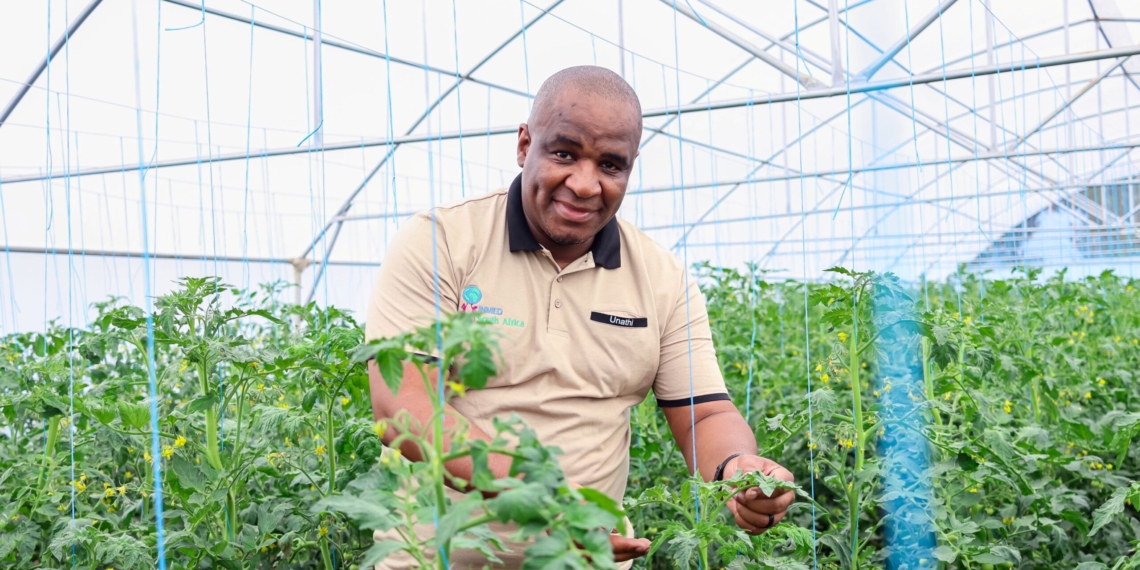
At Inmed South Africa, we have experienced some of these challenges through our saffron trial in the Eastern Cape.
Saffron is a high-value crop with the potential to help smallholder farmers diversify their income and participate in new agricultural markets. However, successful cultivation depends on carefully managed growing conditions.
Excessive rainfall and prolonged waterlogging can affect soil health, delay field activities and place stress on developing plants. Recent conditions made it difficult for our project teams to reach trial sites, delayed monitoring visits and disrupted scheduled field activities. It would be easy to describe this simply as a setback. But agricultural innovation rarely follows a predictable or uninterrupted path.
Related stories
- State of disaster: Floods and storms push farming into crisis mode
- Farmers battle floods, snow and damaged infrastructure
- Climate change: SA’s food processors are feeling the heat
- How climate-friendly farming is paying off for rural EC communities
Trials must take place in the conditions farmers actually experience, not only under ideal circumstances. Understanding how saffron performs during periods of excessive rainfall is as important as measuring its progress during favourable weather.
Every difficult season generates knowledge. It tells us more about soil preparation, drainage, crop management, site selection and the support farmers may need to manage emerging crops successfully.
The value of an agricultural trial is therefore not limited to whether a crop performs according to plan. Its value also lies in what it teaches us about risk, adaptation and the realities of introducing new livelihood opportunities into climate-vulnerable communities.
Resilience requires more than strong farmers
The response of Eastern Cape farmers has once again demonstrated the determination and ingenuity that characterise South Africa’s agricultural communities. Farmers moved livestock to safer areas, protected infrastructure where possible, navigated damaged roads and supported one another through flooding, isolation and freezing temperatures.
Their resilience is inspiring, but resilience cannot rest on farmers’ determination alone. We must be careful not to romanticise people’s ability to endure difficult conditions while failing to address the systems that leave them vulnerable. Resilient farmers also need resilient infrastructure, practical training, reliable information, suitable technologies, and access to financial and technical support.
Climate resilience must therefore be incorporated into every stage of agricultural development. This includes selecting crops and cultivars suited to local conditions, improving soil and water management, strengthening drainage systems and promoting water-efficient production methods.
It also means helping farmers diversify their crops and income sources so that a single extreme event does not destroy an entire livelihood. Infrastructure is equally important. A productive farm cannot contribute to food security or local economic development when damaged roads prevent produce from reaching markets.
Agricultural resilience must therefore be viewed as a shared responsibility involving government, development organisations, funders, researchers, industry and farming communities.
From responding to disasters to preparing for change
Extreme weather events will continue to test South Africa’s food systems. The question is whether we repeatedly respond after disaster strikes or invest in helping farmers prepare, adapt and recover more effectively.
Programmes supporting smallholder and emerging farmers should include climate-risk planning from the outset. Farmers need practical guidance on changing weather patterns, crop selection, soil management, water efficiency and disaster preparedness. They also need access to climate-smart agricultural methods that reduce dependence on increasingly unpredictable growing conditions.
At Inmed, our work in adaptive agriculture includes approaches such as aquaponics, water-efficient food production, high-value crop trials, skills development and community-based enterprise support. These models are not presented as single solutions to a complex challenge. Rather, they form part of a broader effort to give farmers more tools, knowledge and livelihood options.
The Eastern Cape saffron trial is contributing to this learning. The recent weather has tested the programme, but it has also deepened our understanding of what will be required to support future growers.
That is the nature of meaningful innovation: we test, observe, learn and adapt. The storms will pass, but climate uncertainty will remain. Our responsibility is to ensure that farmers do not face it alone.
By combining the experience of farming communities with research, climate-smart practices, reliable infrastructure and long-term partnerships, we can build agricultural systems capable not only of surviving difficult seasons, but of continuing to create food, income and opportunity.
Because when the weather changes everything, our approach to agricultural development must change too.
- The views and opinions expressed in this article are those of the author and do not necessarily reflect the views or positions of Food For Mzansi.
READ NEXT: Farmers urged to embrace uncertainty and build resilience