For many pig farmers, fear of reporting African swine fever (ASF) often drives concerns about losing animals, facing movement restrictions, or damaging their reputation. Yet animal health experts argue that delaying or hiding suspected cases poses a far greater threat, not only to individual farms but to neighbouring producers and the entire national pig industry.
With South Africa continuing to manage localised ASF outbreaks, animal health technician Kenneth Malatji and head of consumer assurance at the South African Pork Producers’ Organisation (Sappo), Dr Thandi Chiappero, say changing perceptions around disease reporting is just as vital as strengthening on-farm biosecurity.
Understanding the legal obligation behind disease reporting
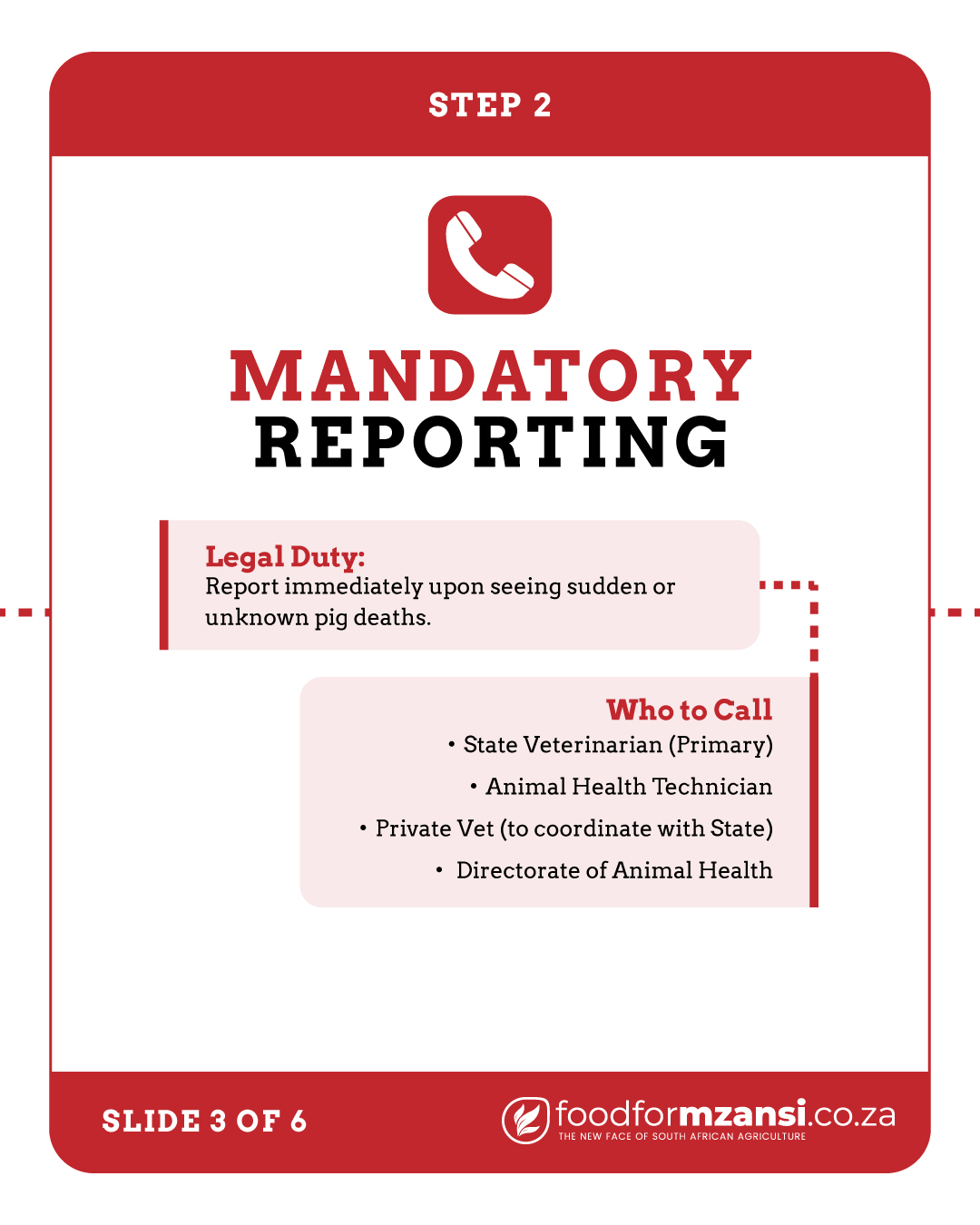
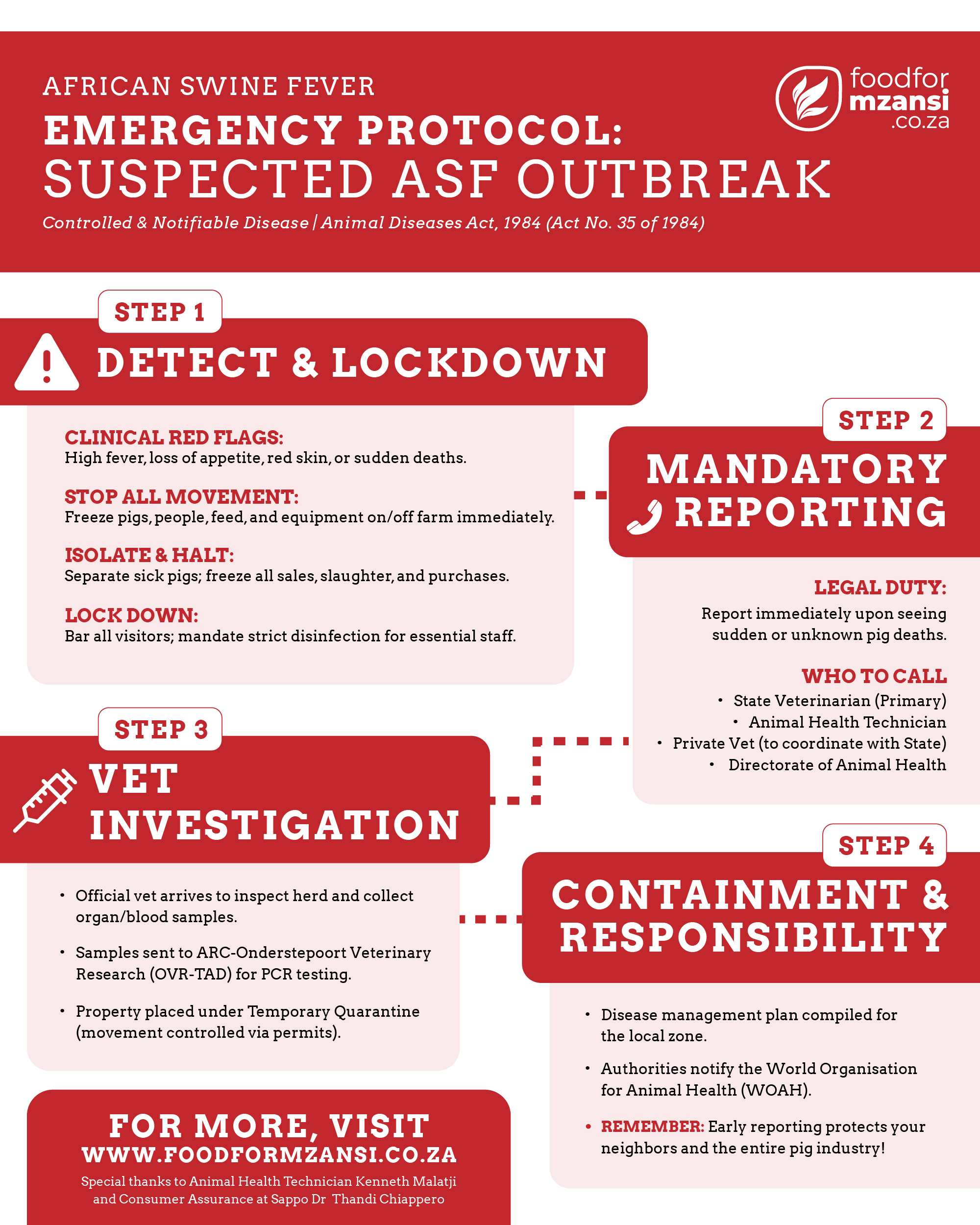
African swine fever is classified as a controlled animal disease under South Africa’s Animal Diseases Act, 1984 (Act No. 35 of 1984). This classification places a legal responsibility on every pig owner to notify veterinary authorities immediately upon suspecting an infection.
“Reporting a disease suspicion is not admitting guilt. It demonstrates responsibility and helps protect neighbouring farmers and the wider pig industry,” Malatji says.
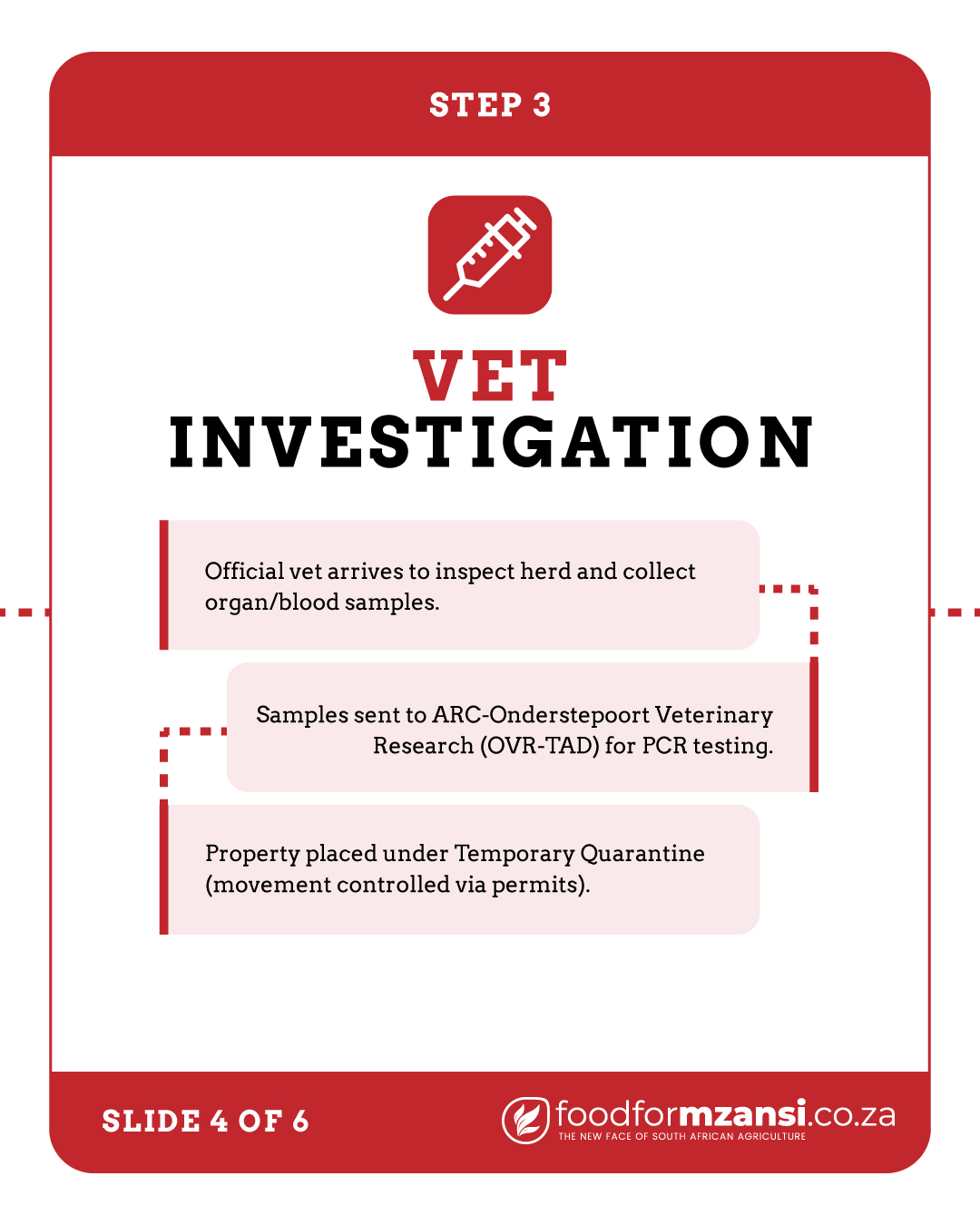
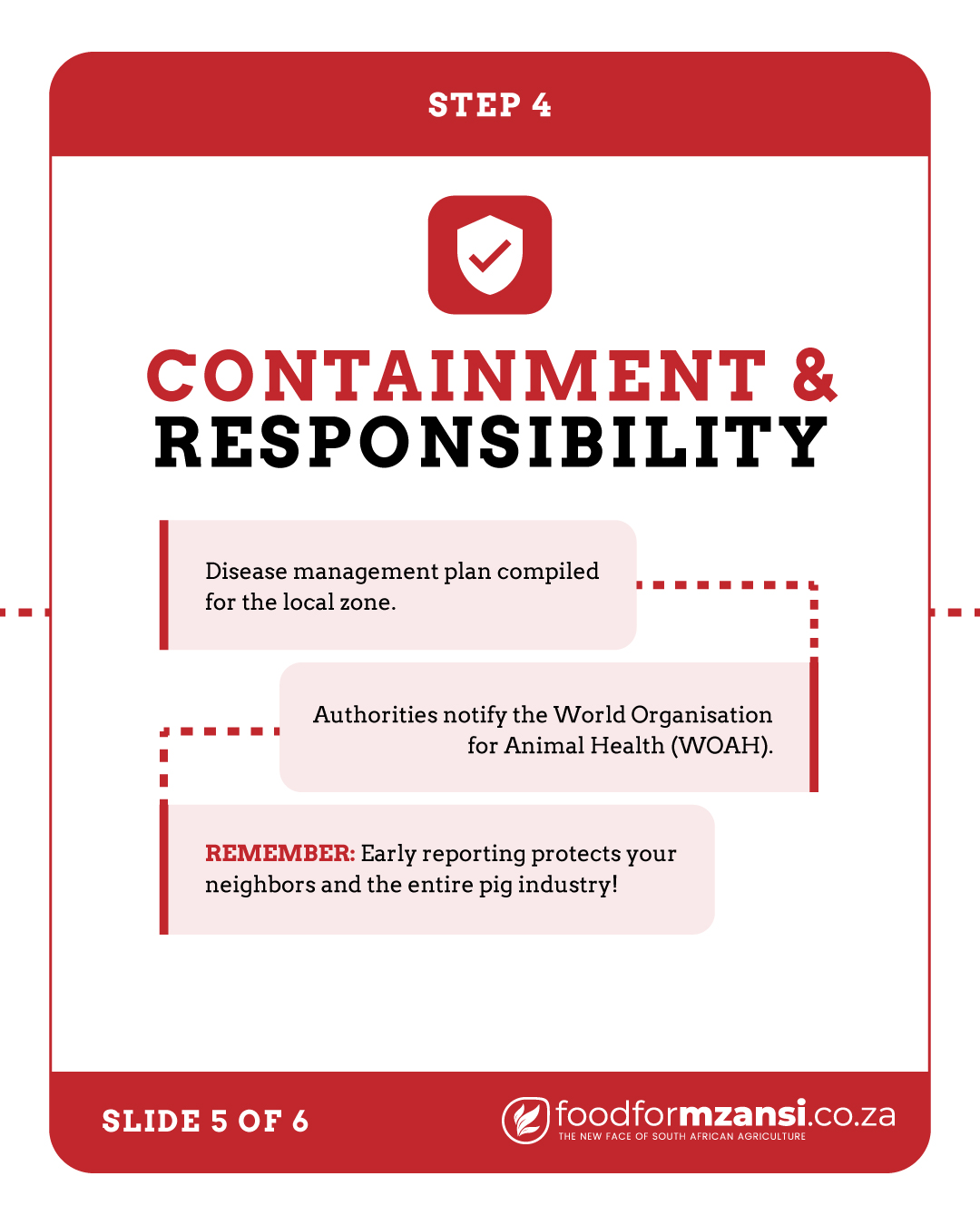
When a report is filed, state veterinary services are empowered to implement containment measures, including localised quarantines, movement controls, and targeted surveillance to prevent widespread viral transmission.
Reporting on suspicion rather than laboratory confirmation
Producers should never delay reporting while waiting for illness to worsen or lab results to return. If stock displays signs consistent with ASF, notify your nearest state veterinarian, animal health technician, or private practitioner immediately.
“It is always better for the state veterinarian to confirm that it is not ASF than for a farmer to remain silent,” Malatji emphasises.
Early notification allows authorities to rule out or contain threats before the virus metastasises across transport corridors.
Related stories
- SA pork industry builds resilience following disease outbreaks
- Biosecurity is now a make-or-break for pork producers
- ASF outbreak contained, but pig farmers urged to stay vigilant
Immediate farm-level containment measures
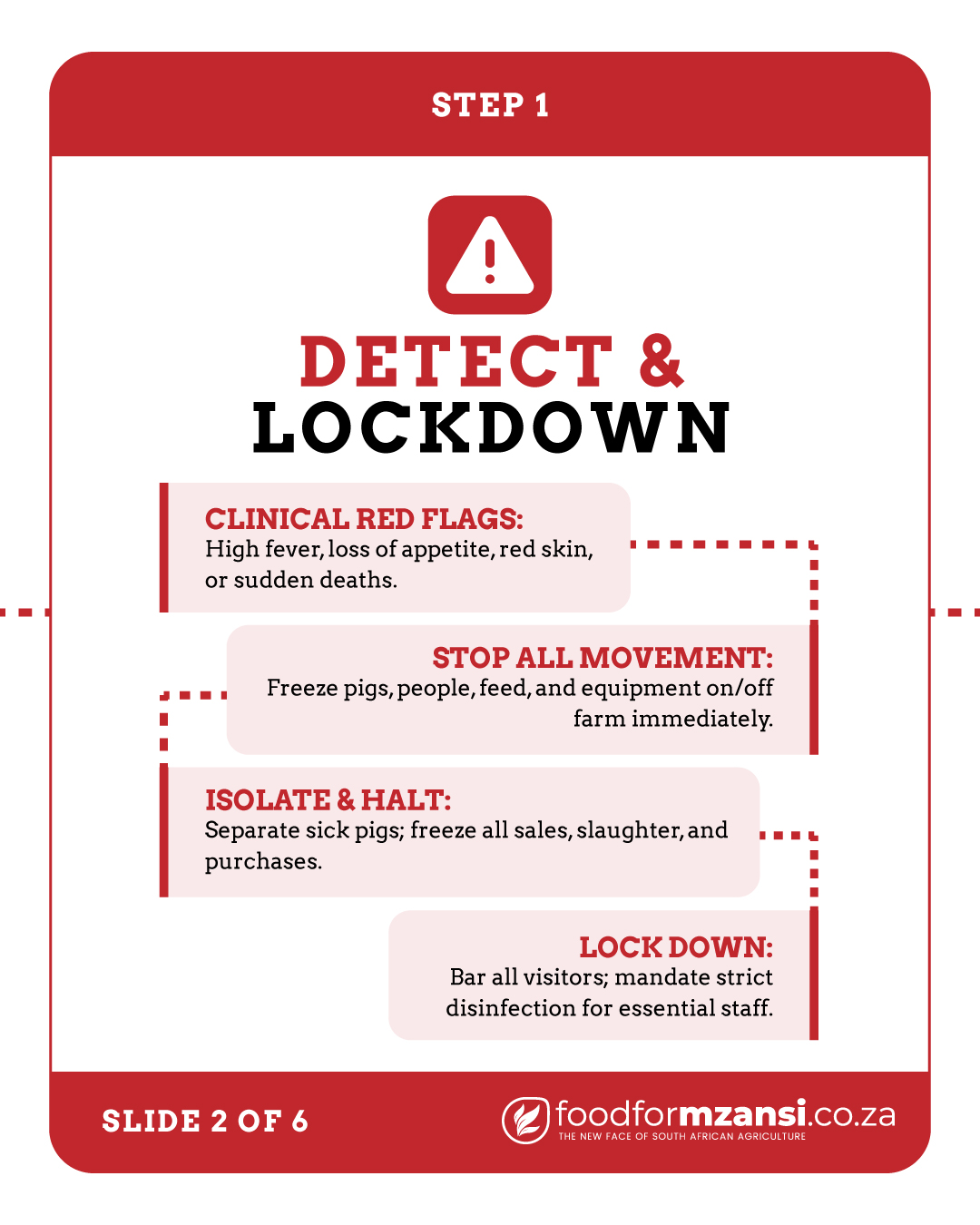
As soon as ASF is suspected on a holding, immediate operational steps must be taken before official testing is completed:
- Isolate sick animals: Separate symptomatic pigs from the main herd into a dedicated isolation facility.
- Restrict internal movement: Halt the transfer of tools, equipment, feed troughs, and personnel between individual pig houses.
- Block herd contacts: Ensure healthy pigs have zero direct or fence-line contact with isolated stock.
Halting pig and equipment movements
Uncontrolled livestock transport is the primary driver of regional ASF spikes. Chiappero stresses that movement restrictions must take effect the moment illness is identified.
“As soon as ASF is suspected, farmers should immediately report it to the local state veterinarian, separate affected pigs and stop all movement between pig houses and off the farm,” Chiappero says.
Stopping pig, vehicle, and manure movements immediately preserves the disease containment boundary, giving veterinary authorities the best chance to protect neighbouring holdings.
Protecting financial value through rapid action
Failing to report disease out of fear of financial loss often leads to complete herd mortality. Early reporting mitigates systemic economic destruction.
“The sooner these movements are stopped, the greater the chance of preserving some of the economic value of the pigs,” Chiappero explains.
Unchecked outbreaks can trigger regional quarantines that halt pork production for 12 to 18 months, compounding financial recovery times for entire farming communities.
Overcoming stigma to safeguard the pork sector
A single unreported case can devastate local supply chains. Experts emphasise that transparency protects collective agricultural livelihoods.
“An outbreak on one farm can quickly affect neighbouring farms, entire communities and even the national pig industry,” Malatji warns.
Overcoming the stigma associated with animal disease requires recognising that prompt reporting is a mark of professional stewardship rather than managerial failure.
Reinforcing core baseline biosecurity
Effective disease control relies on everyday preventative practices applied before outbreaks occur:
- Verified stock sourcing: Buy pigs exclusively from reputable, traceable suppliers with audited biosecurity protocols.
- Mandatory quarantine: Isolate newly introduced pigs for 28 days prior to herd integration.
- Species separation: Keep domestic pigs fully isolated from wild suids (Phacochoerus africanus) using secure perimeter barriers.
- Strict access logging: Maintain a visitor register and restrict entry to essential personnel.
- Dedicated workwear: Require farm-specific clothing and sanitised footwear for all workers and visitors.
- Zero untreated swill: Avoid feeding untreated kitchen waste or scraps containing pork products.
Prioritising physical cleaning over chemical application
Disinfectants are ineffective when applied directly to dirt, mud, or organic waste.
Chiappero highlights the necessity of a two-step sanitation process: “The most important step is removing all solid organic material before using disinfectants. No disinfectant can eliminate the virus from mud or faeces.”
Proper sanitation execution requires:
- Scraping and washing: Removing all manure, bedding, and organic matter using water and detergents.
- Sun drying: Allowing surfaces and equipment to dry thoroughly in direct sunlight where practical.
- Correct chemical dilution: Applying registered virucidal disinfectants at label-specified concentrations.
- Adequate contact time: Ensuring wet chemical contact for the required duration (10 to 30 minutes).
Daily herd monitoring as the first line of defence
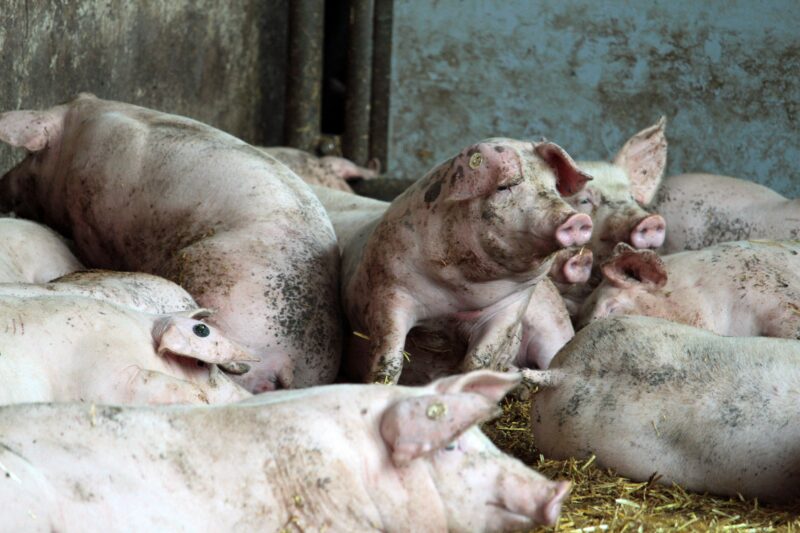
No external inspector can replace daily farm-level observation. Managers must inspect stock every day for baseline changes:
- Appetite and hydration: Drop in feed intake or water consumption.
- Physical activity: Lethargy, huddling, weakness, or staggering gait.
- Clinical symptoms: High fever, skin discolouration (reddening of ears/abdomen), vomiting, or diarrhoea.
- Unexplained mortality: Sudden deaths without prior illness.
“No veterinarian, animal health technician or government official is on your farm every day. Farmers are the first people to notice changes in their animals,” Malatji notes.
By reporting suspicious cases promptly and maintaining strict biosecurity, producers act as the primary defence protecting South Africa’s pork industry.
Don’t miss these articles from our calf-rearing series:
READ NEXT: How Tebogo beat post-harvest losses with smart agro-processing