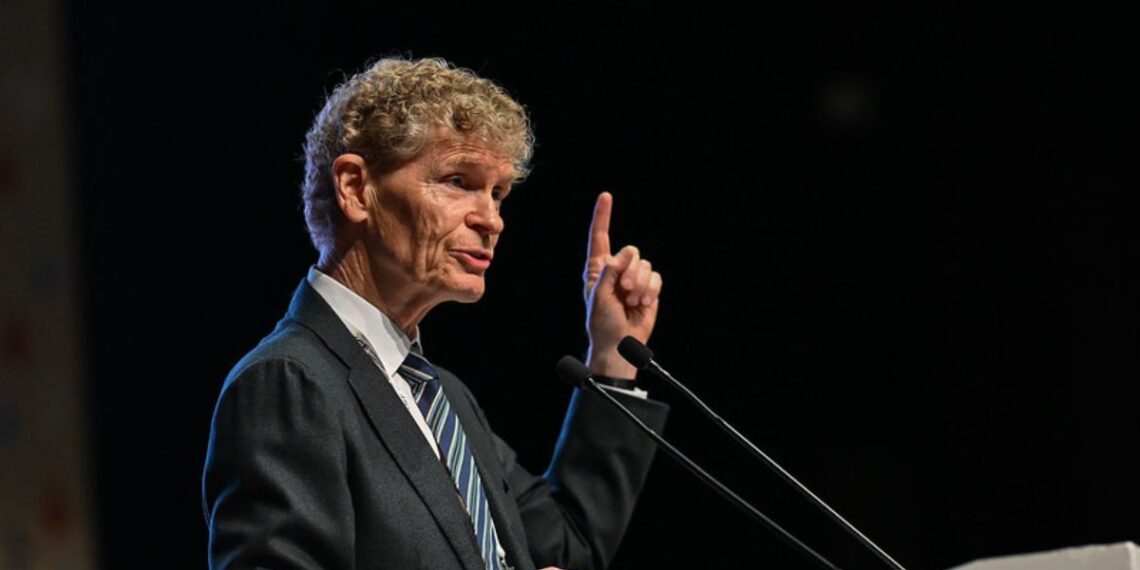
In a world teetering between climate crisis and growing food insecurity, Dr Cary Fowler stands as a figure of quiet resolve and vision. Widely known as the “father” of the Svalbard Global Seed Vault and a lifelong champion of crop diversity, his tireless work has been recognised with the 2024 World Food Prize – an honour often likened to the Nobel Prize for food and agriculture.
When Food For Mzansi caught up with him on the sidelines of the 2025 World Seed Congress in Istanbul, Turkey, it quickly became clear why so many see him not just as a scientist or diplomat, but a steward of the planet’s genetic legacy. With warm eyes and deliberate speech, he talks about seeds not merely as genetic material, but as keys to resilience – and survival.
“You can’t raise children that are healthy, bright, energetic on just a handful of different crops,” Fowler said. “You need that diversity in crops to provide the diversity in macro- and micronutrients.”
Seeds of survival in a changing climate
As climate shocks intensify across Africa, Fowler believes that the continent’s underutilised indigenous crops – like millet, teff, and cowpea – could become cornerstones of climate resilience.
“These crops are highly heat- and drought-resistant,” he says.
“You can’t say that about all the staple crops that originated in other parts of the world but are now widely grown in Africa. With investment, there’s no reason to believe they couldn’t catch up [in productivity] and play a major role in African farming systems.”
He sees untapped opportunity in these traditional crops, but says government support is essential. That means moving beyond simple calorie production to focus on nutrition security and culturally relevant foods.
“What can governments do?” he asks rhetorically. “Most have plant breeding institutes. They can devote some attention and resources to increasing productivity. They have school feeding programmes, institutional cafeterias in the Ministry of Agriculture. These facilities can buy indigenous, highly nutritious crops in bulk. That creates demand, which spills over into the marketplace. We create a virtuous cycle.”
READ NEXT: SA joins global seed talks as trade threatens food security
From seed banks to farmers’ fields
Fowler has spent decades leading some of the world’s most critical efforts to safeguard crop diversity, including heading the Global Crop Diversity Trust and chairing the international council that oversees the Arctic seed vault in Svalbard.
But, he cautions, preserving seeds is only part of the story.
“I love seed banks. That’s been my professional career. But conserving diversity alone isn’t the benefit. Using it is,” he emphasises.
He envisions a more dynamic role for gene banks – actively assembling and distributing small bundles of diverse seeds to farmers and gardeners so they can experiment and adapt.
“That’s how we bridge the gap. We promote use – not just conservation – of diversity.”
READ NEXT: Sansor: How to spot uncertified seed and why it matters
African diversity at risk
On the question of how well African crops are represented in global seed collections, Fowler doesn’t sugarcoat it.
“If we look at the 300 or so African traditional and indigenous crops, I’d say the majority have not really been very well collected. That diversity hasn’t been collected, and therefore, you have to consider that it’s threatened – and may be lost.”
His appeal to African countries is both urgent and direct: “Make sure that diversity is collected. Move it into a gene bank. Duplicate it in a place like the seed vault in Svalbard so it can be reliably conserved for the future. Then you can begin to work on it.”

Agriculture as common ground
Even in a world strained by geopolitical conflict – including current tensions in South Africa–U.S. relations – Fowler remains hopeful that agriculture could offer common ground.
“If we can’t cooperate on feeding people, what can we cooperate on?” he asks, with the quiet gravity of someone who has spent a lifetime asking big questions.
From his Southern roots in Tennessee to his current life on a small farm in New York’s Hudson Valley – where he tends rare apple varieties and heritage livestock – Fowler’s life has been about stewardship.
His legacy includes not only vaults, treaties, and institutions, but also the rescue of over 90 000 crop varieties, the safeguarding of wild relatives of major food crops, and a growing global consciousness around the fragility – and promise – of genetic diversity.
Through TED Talks, books, lectures, and the acclaimed documentary Seeds of Time, Fowler has redefined food security – not just as an issue of supply chains and science, but of justice, sovereignty, and the right to a future.
As our conversation drew to a close, he smiled humbly and said, “We have to think not just of food security as creating enough calories to fill the belly. We have to think of both food security and nutrition security.”
Thanks to Fowler, the future isn’t just clinging to a fighting chance. It is armed with seeds, strategies, and a stubborn, steadfast hope.
READ NEXT: GMO fears clash with facts, says SA seed boss in Istanbul
Sign up for Mzansi Today: Your daily take on the news and happenings from the agriculture value chain.