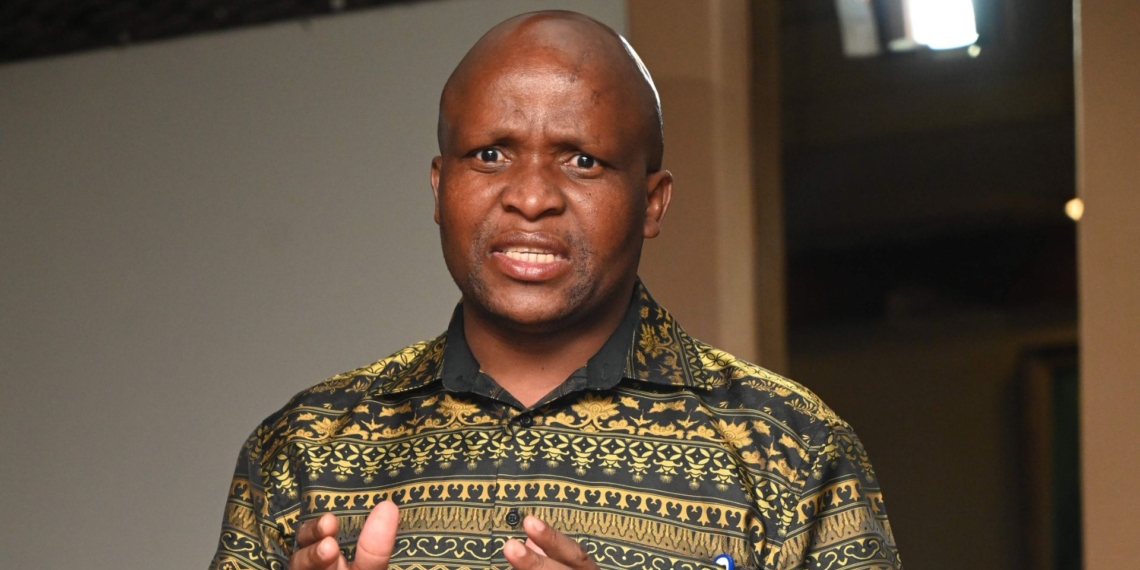
North West MEC for agriculture and rural development, Madoda Sambatha, has reaffirmed his department’s commitment to advancing agricultural education and skills development in the province.
During an exclusive interview with Food For Mzansi on the sidelines of the AgriSETA Agri-Edu Symposium in Pretoria, Sambatha addressed critical issues ranging from the modernisation of agricultural colleges to the integration of qualifications across institutions.
He highlighted innovative programmes aimed at fostering agripreneurship among graduates and strengthening partnerships with universities and commercial farmers to create sustainable pathways for young people in the agricultural sector.
Patricia Tembo: What are the major concerns concerning agricultural colleges in North West?
Madoda Sambatha: Anyone who wants to take over colleges of agriculture must take responsibility for their infrastructure. This is the most critical component that has declined over time. Take Potchefstroom, for instance, it’s a college over 100 years old. All its buildings are heritage buildings by status. When you take it, you must be ready to manage the infrastructure.
The second issue, also a national one, concerns the linkages of qualifications. A graduate from a North West agricultural college cannot gain admission or recognition at North-West University to pursue a BSc in agriculture in fewer years, despite holding a national diploma. That diploma holds no value in this context. Similarly, TVET graduates cannot transition smoothly to agricultural colleges for further qualifications.
Related stories
- ‘Agricultural colleges must take rightful place in higher education’
- AgriSETA calls for curriculum reform, skills training in agriculture
- Agri-Edu Symposium: Bridging the gap in agricultural education
Another critical issue is the decline of practical training at agricultural colleges over time. For example, students studying dairy production must learn by milking cows and processing milk into dairy products. Without production support, colleges cannot provide adequate practical training.
The difference between universities and colleges is that colleges should offer a higher component of practical learning to prepare students to become farmers. Employment should be a choice, not a necessity – farming should empower them.
With institutions like North-West University, how is the department leveraging the availability of public and private partnerships to ensure agricultural development through education is realised?
We have an excellent relationship with North-West University, formalised through a memorandum of understanding (MOU).
Our flagship agripreneurship programme involves the university in various aspects, such as practical training, research, and projects like beef massification and mushroom production.
We are also collaborating on a business plan to propose North-West University as the second institution in South Africa to establish a veterinary school. The vice-chancellor and the university council are highly cooperative.
How strong are the partnerships between the department and the commercial farmers in putting young people from colleges into internships or learnerships?
Our partnerships with organised farmer unions, individual farmers, and sector stakeholders are strong. For example, we work closely with breeders and associations such as Grain SA in the province.
Each year, we place 140 graduates on farms for two years. After this, they have the option to continue as agripreneurs. The sector has been very supportive, and these relationships are crucial for mutual benefit.
Since taking office, what has kept you busy in the portfolio and how do you see NW agriculture unfolding in the coming years?
I’m focusing on a programme called production parameters. For example, we are currently ranked third in the country for goat farming. Our goal is to become number one within two years.
Similarly, we are working to regain our top position in beef production, which was overtaken by the Free State. These efforts ensure that the agricultural sector remains competitive and resilient.
We must continuously monitor and improve performance to avoid surprises. For instance, agriculture was a major contributor to South Africa’s recent economic decline due to drought and other challenges. This highlights the importance of proactive management.
While the focus is on agricultural colleges today, agricultural high schools need greater attention although they are under the department of education. How is your department assisting those schools?
About four months ago, we held a symposium for agricultural high schools, which are performing exceptionally well. For instance, Hoërskool Wagpos in Brits is producing at a level that surpasses some agricultural colleges, even exporting their produce.
Agricultural institutions, whether schools or colleges, must lead by example. Extension officers, journalists, and others in the sector should also embody this by producing something themselves.
READ NEXT: Safer herd, better meat: A guide to dehorning cattle
Sign up for Mzansi Today: Your daily take on the news and happenings from the agriculture value chain