Wednesday, October 7, 2026
SUBSCRIBE
22 GLOBAL MEDIA AWARDS
Food For Mzansi
  • News
  • Changemakers
  • Lifestyle
  • Farmer’s Inside Track
  • Food for Thought
No Result
View All Result
  • News
  • Changemakers
  • Lifestyle
  • Farmer’s Inside Track
  • Food for Thought
No Result
View All Result
Food For Mzansi
No Result
View All Result
in News

Climate shifts demand integrated risk strategies for farmers

Recent flooding has highlighted the systemic vulnerability of South Africa’s farming infrastructure and production cycles. Building climate resilience requires more than isolated interventions; it demands strong collaboration between farmers, government, and the private sector

by Staff Reporter
19th June 2026
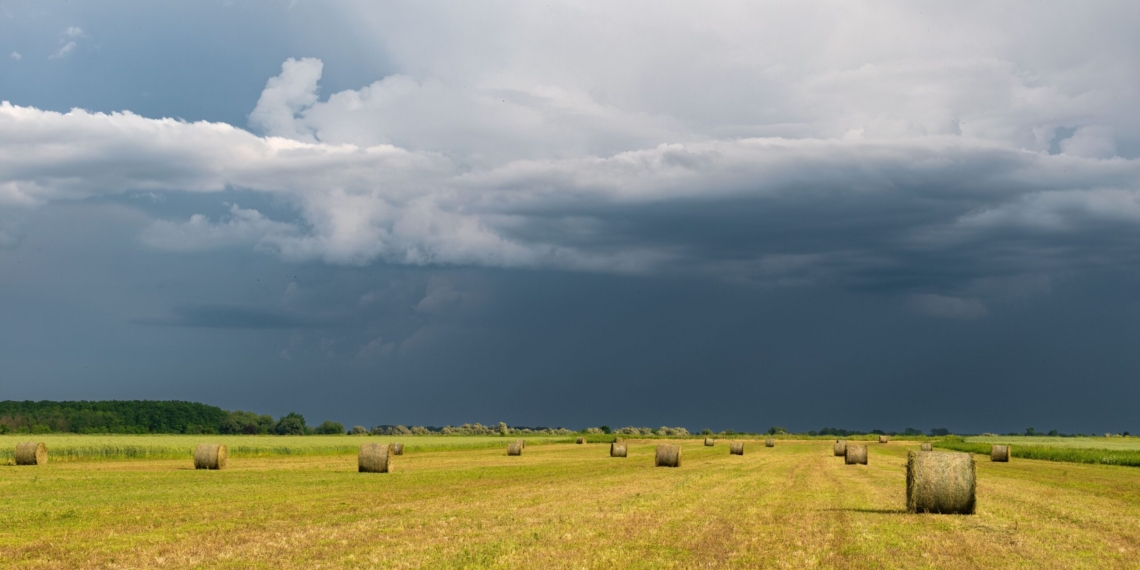
South Africa’s agricultural sector is facing a profound structural shift as intense floods and prolonged droughts replace isolated weather events. Photo: Péter Kövesi/Pexels

South Africa’s agricultural sector is facing a profound structural shift as intense floods and prolonged droughts replace isolated weather events. Photo: Péter Kövesi/Pexels

Share on FacebookShare on TwitterShare on WhatsApp

Agriculture remains one of the most important pillars of South Africa’s economy, supporting food security, rural livelihoods, and export earnings. However, the sector is increasingly operating under pressure from climate volatility.

Recent floods across parts of the country have once again exposed the vulnerability of farming infrastructure, livestock, and production cycles.

According to Caesar Balona, head of risk intelligence and engineering at Old Mutual Insure, the agriculture sector is experiencing a structural shift in risk patterns driven by climate change.

“Farmers are no longer dealing with isolated weather events. What we are seeing is a sustained increase in climate variability, more intense rainfall events, prolonged drought cycles, heat stress on crops and livestock, and infrastructure damage that compounds over time,” he said.

Integrated risk strategy builds resilience

Balona added that the flooding events have highlighted how quickly capital investment on farms can be disrupted.

“When extreme weather hits, the impact is rarely confined to a single area. It affects production, infrastructure, transport routes, livestock systems, and water management simultaneously. Recovery is therefore not linear; it is systemic, and often far more complex than anticipated.”


Related stories
  • Climate change resilience: Practical strategies for farmers
  • Collaboration and fighting climate change are key to quality seed
  • EC sheep farmers face rising climate risks to communal flocks
  • Record-breaking campaign delivers 16 million meals to fight hunger

This requires a stronger emphasis on risk intelligence, early warning systems, diversified farming practices, infrastructure maintenance, and financial preparedness, all working together as part of a broader resilience strategy.

“Our internal climate-risk modelling does also help inform, guide and enhance these initiatives, ensuring that interventions are targeted where they can have the greatest impact,” Balona said. 

He explained that resilience is not a single intervention but a combination of planning, protection, adaptation, and collaboration across multiple parts of the agricultural value chain.

Protection, preparedness, and long-term planning

Balona emphasised that the long-term sustainability of the sector will depend on coordinated action between farmers, the private sector, and the government.

“No single stakeholder can address these risks alone. Farmers bring production expertise and land stewardship. The private sector contributes risk analysis, capital support, and innovation. And the government provides infrastructure, regulation, and policy direction. When these elements are aligned, resilience becomes achievable at scale.”

He pointed out that the agricultural community is one of continuity and responsibility. “Farming is generational. It is built over decades of investment, resilience, and commitment. But climate risk does not respect that timeline.

“That is why the focus must be on protection, preparedness, and long-term thinking to ensure that farming players can withstand shocks and continue operating for the next generation.”

READ NEXT: SA livestock exports take massive hit amid ongoing FMD crisis

Sign-up for the latest agricultural news delivered straight to your inbox every day with Mzansi Today!

Staff Reporter

Researched and written by our team of writers and editors.

Tags: Agricultural insuranceFloodsFood SecurityOld Mutualrisk management
Farm for margin, not just yield, says Pannar’s Meyer
Advertorial

Farm for margin, not just yield, says Pannar’s Meyer

by Ivor Price
5th October 2026

PARTNER CONTENT: Strong yields do not guarantee strong profits when grain prices are under pressure. Pannar Seed’s Lukas Meyer says...

Read moreDetails

Rising from storm loss: Sinethemba Gebashe’s egg triumph

5th October 2026
Sustainability must pay off for smallholders, say food experts

Sustainability must pay off for smallholders, say food experts

5th October 2026
This week’s agri events: 05 – 09 October

This week’s agri events: 05 – 09 October

5th October 2026
High equipment costs and rising economic uncertainties have driven a nearly 15% drop in South African tractor sales. Photo: Stefan Thiesen/Wikimedia Commons

UCT study reveals shocking pesticide exposure in farm children

4th October 2026

‘Citrus Irrigation’ guide empowers growers amid water scarcity

R14m investment strengthens SA’s livestock disease surveillance

Beyond survivalist farming: The urgent need for a poultry revolution

Rural development in SA: Why land ownership isn’t enough

Agritourism experts urge fair distribution of SA’s tourism boom

Join Food For Mzansi's WhatsApp channel for the latest updates!

JOIN NOW!
Next Post
Fitch upgrade sparks new investment wave in SA agriculture

Fitch upgrade sparks new investment wave in SA agriculture

THE NEW FACE OF SOUTH AFRICAN AGRICULTURE

With 21 global awards in the first six years of its existence, Food For Mzansi is much more than an agriculture publication. It is a movement, unashamedly saluting the unsung heroes of South African agriculture. We believe in the power of agriculture to promote nation building and social cohesion by telling stories that are often overlooked by broader society.

Veggie prices: Rising supply could bring relief to SA shoppers

SADC Plant Nutrition Symposium tackles long-term soil health and farm viability

Agritourism experts urge fair distribution of SA’s tourism boom

R14m investment strengthens SA’s livestock disease surveillance

How SA farmers can crack retail and unlock market access

Beyond survivalist farming: The urgent need for a poultry revolution

  • Awards & Global Impact
  • Our Story
  • Contact Us
  • Cookie Policy
  • Privacy Policy
  • Copyright

Contact us
Office: +27 21 879 1824
News: info@foodformzansi.co.za
Advertising: sales@foodformzansi.co.za

Contact us
Office: +27 21 879 1824
News: info@foodformzansi.co.za
Advertising: sales@foodformzansi.co.za

  • Awards & Global Impact
  • Our Story
  • Contact Us
  • Cookie Policy
  • Privacy Policy
  • Copyright

Chat Options

I'm Lerato, your AI assistant!
No Result
View All Result
  • News
  • Changemakers
  • Lifestyle
  • Farmer’s Inside Track
  • Food for Thought

Copyright © 2024 Food for Mzansi