As the world marks Earth Day 2025, the spotlight falls on one of agriculture’s most pressing challenges: water use. With only 34% of global crop production irrigated, and 60% of that cultivated in areas facing high or extremely high water stress, the need for smarter water management has never been more urgent.
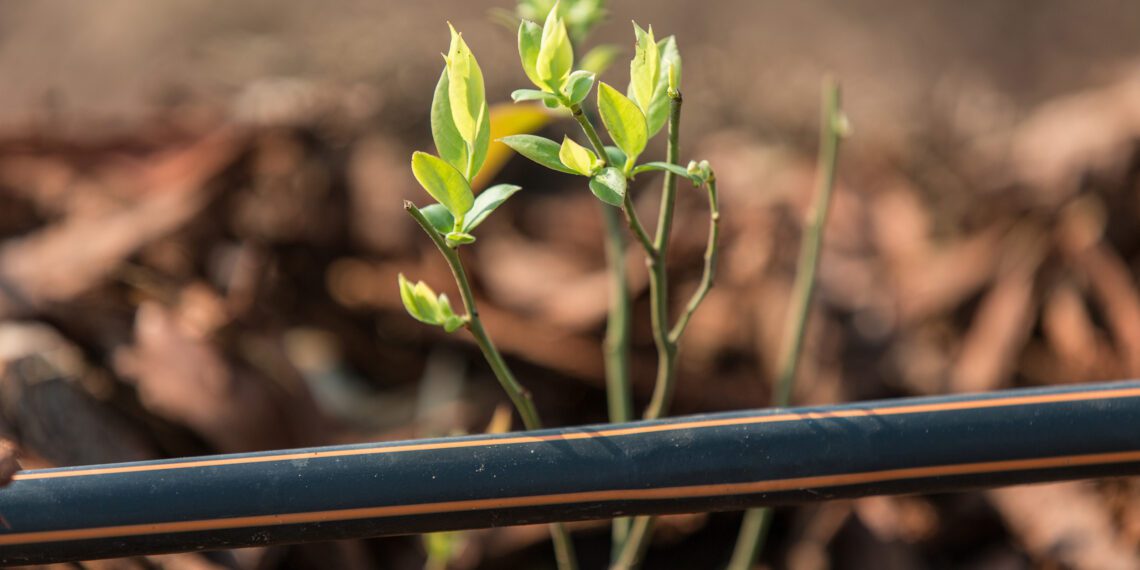
Yet, according to Aqueduct, an interactive data platform powered by the World Resources Institute, flood irrigation – an outdated and highly inefficient method – still dominates global farming. Drip irrigation, the gold standard of precision irrigation, is used on just 4% to 5% of the world’s irrigated land.
“If I imagine a world 20 years from now and see that the adoption of water-efficient precision irrigation technologies, such as drip irrigation, remains at its current percentage, I foresee a somewhat bleak picture,” says Michael Esmeraldo, managing director of Netafim Southern and East Africa.
He warns that the implications extend far beyond agriculture.
“Firstly, I believe water quality will be extremely poor and create problems for both agricultural and human welfare. If less and less water is available and we continue to use the water we have inefficiently, the type of poor water quality we see in drought spells will become the norm.”

Esmeraldo also foresees rising trade barriers for inefficient farms.
“I believe that most agricultural export entities and buyers will increasingly set highly efficient water use as a requirement for export approval. Those farmers who have not yet adopted these practices will not have access to export or high-end retail markets.”
His advice to the agricultural sector is simple: rethink everything. “We need to set aside our sometimes calcified ideas about best practices on the farm and rethink our approach to irrigation and other crop production activities.”
A shift in mindset
Adopting new technologies can be daunting. Danny Ariel of the Global Netafim Projects team points to a common behavioural pattern: humans tend to favour immediate rewards over future benefits.
“For many decision-makers, the immediate cost and effort of switching to drip irrigation outweigh the uncertain long-term benefits. This preference for a known routine over unfamiliar efficiency can stall innovation adoption,” says Ariel.
“With targeted support and a deeper appreciation of the local contexts in which farmers operate, the crucial path to widespread adoption of drip irrigation, and ultimately more sustainable agricultural practices can be significantly smoothed.”
Gerdie de Lange, marketing manager at Netafim Southern and East Africa, believes that the future of farming lies not in expanding arable land, but in becoming more efficient with what we already have.
“The focus should be on more efficient use of existing agricultural land and resources. Let’s work with what we have and continue to improve efficiency in all our practices to ensure future sustainability and growth,” she says.

Getting the basics right
Drip irrigation is often seen as too technical or complicated for many farmers, but Charl van Reenen, agronomy manager for Netafim Southern and East Africa, says this is a misconception.
“Drip irrigation does require certain management activities and might require understanding a few concepts, the perception that it is difficult and complicated is however completely skewed,” he says. The real key, according to Van Reenen, lies in understanding how water moves through the soil.
“Efficient irrigation is not about applying water in a certain way, it is about understanding how it moves through soil,” he explains.
“A tailored irrigation strategy that takes into account how water is delivered by the specific irrigation system and how water moves through the specific soil, combined with quality precision irrigation equipment, will enable farmers to produce more high-quality crops while conserving water and saving input costs.”
Van Reenen warns against two persistent misconceptions in irrigation: underestimating soil water-holding capacity and ignoring water loss beyond the root zone. “Losing water beyond the root zone is not only a disadvantage in terms of water-use efficiency but will also lead to fertiliser leaching.”
A tool against soil salinity
Irrigation strategy can also help mitigate soil degradation.
“There is a definite downward trend in soil quality on farms and we very often find increased soil salinity. Efficient irrigation can also be a tool in managing this risk,” says Van Reenen.
“Your scheduling approach may require longer irrigation from time to time to replenish the subsoil based on crop requirements and environmental conditions. The overall goal is however to keep water and nutrients within the active root zone.”
Technology such as soil probes can play a vital role.
“It provides valuable insight for the producer, showing how water moves through the soil profile and whether irrigation is exceeding the active root zone. We must give the plant only what it needs, focusing on irrigating and feeding the crop, not the soil.”
“Change happens when the pain of staying the same is greater than the pain of change,” motivational speaker Tony Robbins once said.
Esmeraldo echoes this sentiment with urgency: “Drip irrigation is a proven technology supported by proven field knowledge, do not wait too long before embracing this irrigation method in order to ensure future sustainability. You might not realise it yet, but the pain of staying the same is already greater than the pain of change, both for your farm and the environment.”
READ NEXT: Data-driven citrus farming keeps SA ahead of the curve
Sign up for Mzansi Today: Your daily take on the news and happenings from the agriculture value chain