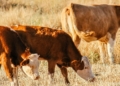
South Africa has officially begun the rollout of a long-awaited foot-and-mouth disease (FMD) vaccine, as fresh outbreaks of the highly contagious livestock disease continue across the country.
Agriculture minister John Steenhuisen announced that 900 of the first consignment of vaccines from the Botswana Vaccine Institute had arrived and would be distributed free of charge to affected areas.
“The arrival of these vaccines marks a significant step in our efforts to contain the spread of FMD, enhance biosecurity, and explore long-term solutions, including local vaccine production,” Steenhuisen said.
The vaccines were escorted by police to the Onderstepoort Biological Products (OBP) facility, where they will be dispatched to state veterinarians in hotspot provinces. The rollout will cover KwaZulu-Natal, currently the most affected, as well as new outbreak areas in Gauteng, Mpumalanga, and North West.
According to the department, the second batch of vaccines is already on order to boost this initial response. Traditional preventive vaccination areas in Limpopo and Mpumalanga will also benefit from the current consignment.
Biosecurity and long-term strategy
Steenhuisen confirmed that vaccination is a core part of the department’s current FMD containment strategy. However, he stressed the importance of developing a more comprehensive, long-term plan, including improved biosecurity and regionalisation.
Related stories
“Biosecurity is something that has to be everybody’s responsibility, from the farm-gate, to the auction house, to the abattoir, to the consumer. We all have a role to play in ensuring that South Africa becomes synonymous with the highest level of biosecurity – that we adhere to the regulations,
“Those who break the law must feel the consequences because there are grave economic consequences if the law is broken in this regard,” he said.
Steenhuisen also highlighted the legal duty of farmers under Section 11 of the Animal Diseases Act, 1984. This law obligates all animal owners and managers to take “reasonable steps” to prevent infection and the spread of diseases.
“All care is being taken by our veterinary services and abattoirs to ensure that beef and beef products from FMD-positive animals are safe for consumption.”
Minister John Steenhuisen
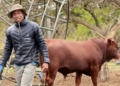
A cattle farmer from Orkney in Klersdorp in North West, Letlhogonolo Sereng, said there is a need to ensure that the vaccines reach the right people at the right time.
“I think this needs to be a coordinated approach. We as farmers also have a responsibility to make sure that we inquire, research and take initiative to make sure our livestock gets vaccinated.
“We cannot allow this to get out of control because the implication will be massive,” he said.
Vaccine challenges
However, the road ahead remains complex. According to Prof Ishmael Jaja, a veterinarian and associate professor at the University of Fort Hare, FMD is caused by the Aptovirus, which has seven distinct serotypes – none of which provide cross-protection.
“If one type of the serotype infects an animal, it does not convey immunity to the next one that may be infected with another serotype. So there will be no cross-protective effect between one serotype and another,” Jaja explained.
According to Jaja, this lack of cross-protection complicates control efforts significantly, especially when outbreaks involve multiple strains. He pointed out that traditional control measures, such as slaughter, movement control, and surveillance, have largely failed in South Africa’s context.
“Remember, there are traditional ways of controlling FMD, which in the South African context have completely failed. When you have multiple strains, it complicates control efforts.
“FMD being a controlled disease and the vaccine being a very sensitive vaccine, has to be very limited. Before a country decides to use a vaccine, they have to put experts together to make that decision,” he said.
READ NEXT: New multi-million rand wine fund backs black-owned brands
Sign up for Mzansi Today: Your daily take on the news and happenings from the agriculture value chain.