As the sixth administration draws to an end, reflection on how government projects and initiative have operated takes centre stage. One of the biggest challenges the department of agriculture, rural development and land reform (DALRRD) has faced over the years, is the poor functioning of some of the communal property associations (CPAs).
Chief executive officer of Vumelana Advisory Fund Peter Setou said for the country to realise sustainable land reform, it is important that CPAs improve capacity building and good governance. Setou said CPAs members play a critical role in promoting sustainable use of the restored land to the best of their ability.
What is not working
“The CPAs continue to grapple with several challenges, including non-compliance with their constitutions, a lack of operational policies, and procedures to guide the administration and day to day running of the affairs of the CPA. [Also] failure to hold essential annual general meetings and report back meetings to their members and failure to prepare and produce annual financial statements.

“However, such efforts are impeded by challenges such as limited resources, logistical constraints, and varying levels of readiness among CPA members. Moreover, the diverse social and economic contexts in which CPAs function further complicate capacity-building efforts,” he said.
Setou said based on the 2022/2023 annual report of the DALRRD, capacity and governance challenges within CPAs persist as a pressing concern in many parts of the country.
“Sustained support and tailored interventions are essential to effectively address the capacity challenges facing CPAs,” he said.
Setou shared that Vumelana has developed a CPA support programme designed to strengthen governance among land reform beneficiaries and within land-holding entities.
“Vumelana’s CPA support programme recognises the pivotal role of well-governed institutions in land reform, in attracting investments, creating employment, enabling communities to generate an income and contribute to the broader social and economic contexts.
“We have seen that when governance structures are strengthened within land-holding entities, CPAs can effectively manage their assets and effectively advance the objectives of land reform,” he said.
Setou noted that in the last decade, it has become evident that private investors are hesitant to partner with poorly governed CPAs. However, effective interventions aimed at improving governance and better management of CPAs increase chances for land reform beneficiaries to appeal to private investors who can partner with them to ensure productive use of land and in turn and job creation.
“Our commitment to capacity building is about ensuring that we enable communities to contribute to poverty alleviation, job creation, economic development and a sustainable land reform programme that recognises that land reform is a multi-stakeholder programme that should involve not only government and the beneficiaries of land reform,” he said.
What needs to be done
Meanwhile, Steve Sikwane, a livestock farmer in Thabazimbi, Limpopo, said the government needs to come with new legislation of how to better ensure that CPAs are well run.
“I believe we have many caser scenarios on why a new legislation on CPAs is needed. There is a lot of infighting and what is needed is a clear government legislation that will be fully enforced on to these CPAs so that they can be functional.
“We cannot be sitting with CPAs that are not working, which at the end of the day disadvantage those who are seeking jobs and the very same land that need to be nourished,” he said.
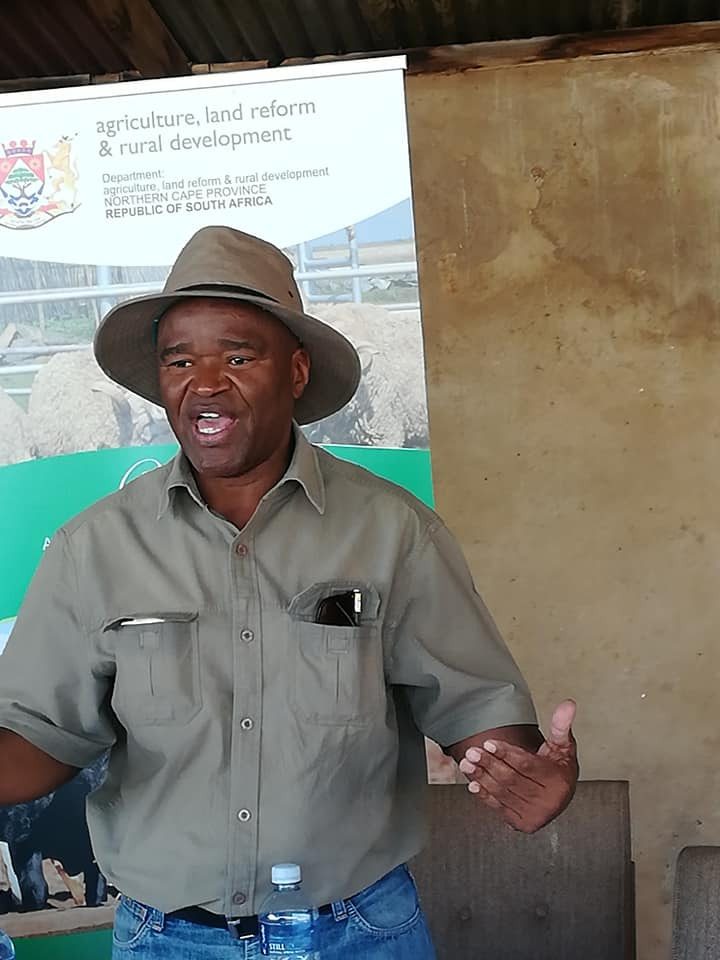
Sikwane added that it is pointless for land to come back while CPAs structures had no strong legislation that will enforce them to do the right thing.
“It is one thing to look for land but if the CPAs house is not in order, the land will still not be utilised for good,” he said.
Saamtrek Saamwerk leader Sehularo Sehularo said from organised agriculture perspective, CPAs are halting many projects that could revive economies of the areas where land has been given back.
“Our study has shown that land is being given back, however, it falls under CPA structures that are destructive and not willing to do what is good. Many of the land that has been returned, is in villages and rural communities where there is no viable economy and that is where the CPAs should be shining.
“We cannot be concerned about rural development when we ourselves are not developing it. Government need to introduce a new legislation and oversight committees that would ensure that those who got the land back and the land is under CPAs; there are deliverable mandates on such,” he said.
ALSO READ: Limpopo agri MEC lashes out at progress-halting CPAs
Sign up for Mzansi Today: Your daily take on the news and happenings from the agriculture value chain