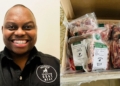
Eastern Cape farmer Inga Qeja turned a family garden into Bayi Holdings, a thriving vegetable business. His inspiring journey in this edition of Farmer Mentor shows the power of resilience, passion and purpose in agriculture.
The story of Eastern Cape farmer Inga Qeja illustrates that agriculture demands more than technical skill. It requires persistence, courage and a strong sense of purpose.
Qeja, a commercial vegetable producer and owner of Bayi Holdings in Tsolo in the Eastern Cape, describes farming as both rewarding and unforgiving.
“It’s a lonely and ruthless journey,” he says. “One moment you’re doing well, and the next moment a flood can destroy everything you’ve worked for over months. You must have character, and above all, you must love what you do.”
He stresses that passion is critical, as setbacks can quickly discourage those driven only by profit.
“If you’re in it only for the money, you’ll end up in ICU,” he jokes. “You need to love it so much that even when life throws lemons at you, you turn them into lemonade.”
Although Qeja always had an interest in agriculture, his entry into farming was unplanned. He often told himself he lacked the time and capital to pursue farming seriously, despite a long-standing desire to get involved in the sector. He briefly tried poultry farming around 2015 and 2016, which showed early success but was eventually halted due to his work commitments.
Related stories
- Eastern Cape scientist is breeding a better future for farmers
- Maize farmers tighten defences as Goss’s wilt spreads
- More than livestock: Lesedi’s legacy in the heart of the Kalahari
- Mission Masiu: A family that farms together, grows together
The turning point came in 2020 during the Covid-19 lockdown. While at home, he helped his mother harvest spinach from the family garden. Agriculture, being classified as essential, created an opportunity.
He began selling spinach locally and quickly received a large order. “A buyer asked if I could supply 300 bunches. I was shocked because we only had about 100, but we delivered what we had and got paid,” he recalls.
That moment shifted his direction entirely.
Highs and lows of running an agribusiness
Qeja identified two hectares of unused family land near a river and began expanding production. “I didn’t have the capital, but sometimes if you truly want to do something, you just start,” he says.
He gradually fenced the land and planted spinach, cabbage and other vegetables. Within months, Bayi Holdings was supplying retailers including Boxer and Spar.
Vegetables offered a relatively low-barrier entry point, allowing the business to grow into a consistent commercial supplier.
Despite early success, Qeja’s journey has included major setbacks. One of the most severe occurred when an irrigation pump failed during peak production.
The farm had planted thousands of cabbage, spinach, beetroot and butternut for December demand. When the pump broke, crops began to fail in the fields as the water supply collapsed.
Finding a replacement proved difficult as long-standing suppliers could not assist.
“In farming, people often hide their struggles because everyone wants to look successful. When I finally spoke to other farmers, one of them sold me a pump he wasn’t using,” he says. The replacement pump was larger and restored operations.
During the crisis, Qeja prioritised customer commitments. To fulfil orders, he purchased produce from other farmers and supplied it through his contracts.
“You spend years building relationships. You cannot just disappear when people need you.”
Support, partnerships, and growth
Qeja initially relied on personal savings, but external support helped expand the farm. In 2020, he secured a Covid-19 agricultural relief grant of about R50 000.
“That funding helped us buy fencing, poles, a pump and irrigation equipment,” he says. “Without it, maybe we wouldn’t be where we are today.”
He also hosted a farmers’ day event to connect rural producers with training, networks and industry partners, addressing limited access to agricultural support in his area. This strengthened relationships and later enabled access to finance for a tractor and equipment.
“A tractor helps the farm, but it also creates another income stream when you hire it out.”
Qeja draws resilience from mentors and books, especially Think and Grow Rich by Napoleon Hill. “That book changed how I think. It reminds you that sometimes people quit just a few feet away from success.”
He emphasises long-term planning, noting that clear goals help contextualise current challenges within future ambition.
Beyond building a successful farm, Qeja hopes to inspire rural communities to pursue agriculture.
“You cannot change the whole world, but you can inspire someone who might one day change it,” he says.
His vision is to create opportunities through mentorship, collaboration and events, and to be remembered for enabling others as much as himself.
READ NEXT: Maize farmers tighten defences as Goss’s wilt spreads