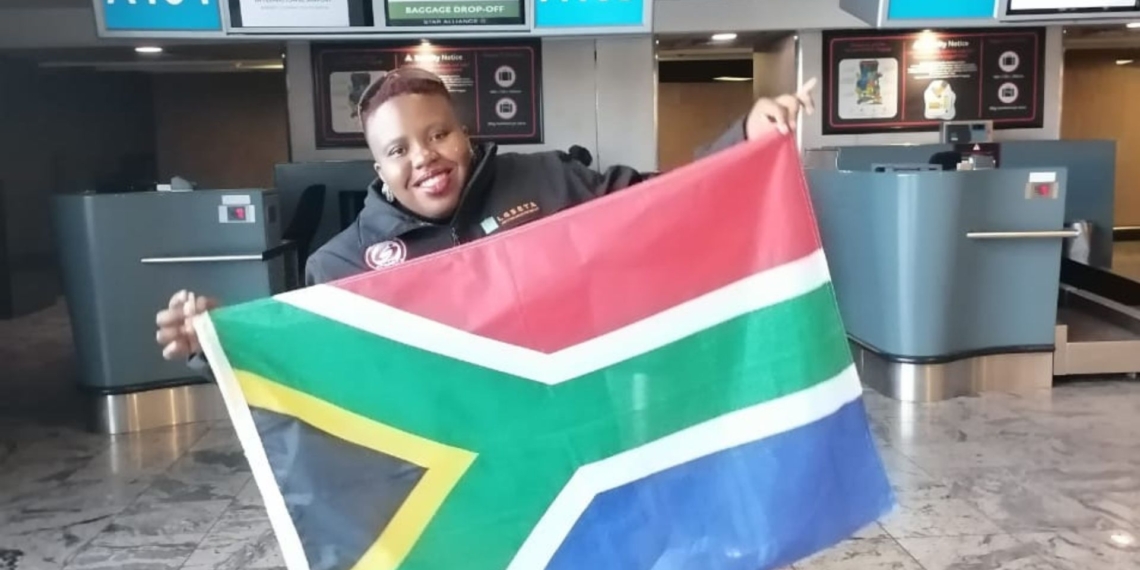
Born with scoliosis, a condition where the spine curves sideways, instead of being straight, Charity Nkalanga has never let her condition define her capabilities. Instead, she has turned her personal and professional challenges into a thriving mushroom farming venture that promises to change her community’s agricultural landscape.
“Growing up disabled was not easy but through support and self-belief, I overcame my fears and now stand confidently before thousands,” she says.
Her love for farming sprouted during childhood, inspired by her grandfather, Michael Ntshayintshayi, who farmed cabbages and tomatoes. “We survived by selling those vegetables,” she recalls.
This proud mother of three and an agricultural science educator by profession lives in the town of Malelane nestled in Mpumalanga.
After completing her B.Ed in agriculture at the University of Fort Hare in the Eastern Cape in 2019, Nkalanga began teaching at a secondary school in 2020. But her passion for hands-on farming never waned.
Turning a spare room into a growing business
In September 2023, while preparing an assignment for her students, Nkalanga stumbled upon an opportunity in mushroom farming. “I realised mushrooms are scarce in South Africa. With an unused bedroom at home, I decided to turn it into an incubation room, cropping house, and packaging house,” she explains.
Through self-taught methods, including YouTube tutorials and expert advice from mentors, Nomcebo built her mushroom production process.
She ensures meticulous hygiene. “Since mushrooms are fungi, they must be grown in clean, sterilised environments. I sterilise substrates, incubate them, and move them to the cropping house when ready.”
Mushroom farming is an intensive, daily operation. Nkalanga harvests between 1kg and 2.5kg of mushrooms daily, packaging them in 200-gram portions. However, production depends on strict temperature control and moisture.
“For mushrooms to grow, the environment must be moist. I achieve this by pouring sand on the floor and wetting it. During hot days, evaporation helps maintain the required moisture levels. Still, if the mushrooms absorb too much water, I can’t sell them, as they won’t meet quality standards,” she explains.

Quality control is paramount. “If I miss something during sterilisation or incubation, the bags could become contaminated, and I have to discard them. It’s heartbreaking, but it’s part of the process.”
Battles with demand
Nkalanga’s journey is not without hurdles. She operates manually, using drums for sterilisation. This is often a time-consuming process that limits her output. “Mushroom farming requires proper equipment like sterilisers and humidifiers to control temperature.”
Despite her small-scale operation, demand for her mushrooms is high. “A company wanted 600kg per month, restaurants in Mpumalanga also approached me, but I couldn’t meet their requirements,” she shares.
Funding, she says, is challenging as she has applied for financial assistance but is yet to receive an outcome.
Related stories
- Oyster mushrooms fuel Daniels’s dream for community growth
- Farming friends turn lockdown losses into a permaculture haven
- Self-taught poultry farmer shows how small start leads to big wins
Family, and the power of community
Nkalanga attributes much of her success to mentors like Ben Gwebu and Lethu Shabangu from the department of agriculture. “Mr Gwebu has been there since day one, motivating me even though he didn’t know much about mushroom production at first. Now, both he and Ms Shabangu are incredibly supportive.”
Nkalanga initially advertised on Facebook but realised demand often exceeds supply. To manage expectations, she paused online promotion and instead brought mushrooms to work daily.
“Some colleagues didn’t know how to cook them, so I kept the ingredients in the school kitchen and cooked them during break time. Now, they’re regular buyers.”
She has also partnered with local businesses. “There’s a lady in my area who sells cooked meals. She buys my mushrooms and offers them as an alternative to meat. Her customers love them.”
Nkalanga credits her success to her family, particularly her uncle Petrus Ntshayintshayi, her mother Helen Ntshayintshayi and grandmother Ester Ntshayintshayi.
“They’re my pillars of strength. I’ve transferred my skills to the family. My uncle knows all the processes, and my grandmother helps with harvesting and sales when I’m at work.”
Their collective effort including that of her extended family and siblings ensures that her teaching career and farming business coexist harmoniously.


Dreams of creating jobs for disabled
Nkalanga is not only a farmer but also a role model, especially for people living with disabilities. She shares how she overcame societal perceptions. “I told myself there’s nothing I can change about my condition, so I started loving myself more. Life is once, and I choose to live it fully.”
Her mission extends beyond personal success. “If given the chance to expand, I want to employ 90% of people with disabilities in my company. It’s important to show society that we are capable and have so much to offer despite our physical appearances.”
Nkalanga dreams of expanding her operation to meet growing demand. “If I had proper equipment, I could produce on a larger scale.”
For now, she supplies street vendors and individuals, maintaining a focus on quality and hygiene.
For young people considering agriculture, Nkalanga’s message is clear. “Stand up for what you believe in, even if it means going against loved ones’ opinions. I had to choose between my career and my relationship. I chose farming, and I’ve never looked back. Prioritise yourself and go after your dreams with everything you’ve got.”
Currently, Nkalanga is participating in the Chinese Culture Exchange Programme, where she is learning about cross-border e-commerce while honing her mushroom production skills.
“If I expand, I want to export my products internationally. This programme is helping me lay the foundation for that future.”
READ NEXT: Sifiso Mhlaba charts a sweet future for sugar industry
Get Stories of Change: Inspirational stories from the people that feed Mzansi