Monday, November 9, 2026
SUBSCRIBE
22 GLOBAL MEDIA AWARDS
Food For Mzansi
  • News
  • Changemakers
  • Lifestyle
  • Farmer’s Inside Track
  • Food for Thought
No Result
View All Result
  • News
  • Changemakers
  • Lifestyle
  • Farmer’s Inside Track
  • Food for Thought
No Result
View All Result
Food For Mzansi
No Result
View All Result
in Inspiration, It Takes a Village

Deaf farmer champions greater accessibility in agriculture

Farming in a hearing world presents unique challenges, but Matebogo Victoria has overcome them with determination. Her company, VoiceOut Deaf, grows high-demand crops while empowering the disabled community

by Tiisetso Manoko
4th January 2025
Malebogo Victoria on the farm she started to empower disabled people. Photo: Supplied/Food For Mzansi

Malebogo Victoria on the farm she started to empower disabled people. Photo: Supplied/Food For Mzansi

Share on FacebookShare on TwitterShare on WhatsApp

People with disabilities play a crucial role in advocating for and designing adaptive tools and technologies that make farming more inclusive. Examples include wheelchair-accessible farm equipment, voice-activated devices, and specialized tractors, which help individuals with mobility impairments carry out tasks that may otherwise be challenging.

Matebogo Victoria from Randfontein, Gauteng, is an inspiring individual who hasn’t let her disability hold her back. She began working the land with the goal of serving the deaf community and setting an example for others.

Farming deaf in a hearing world

“Being deaf in a hearing world was never easy, but in the world of agriculture, it felt like trying to navigate a field in the dead of night. Communication is everything, negotiating with suppliers, attending farmer’s markets, and even just chatting with neighbouring farmers.

“My world was often silent, filled with misunderstandings and dismissed ideas. I started a company called VoiceOut Deaf with the aim of servicing the deaf community. Compared to people with normal hearing, deaf populations face notable challenges in finding jobs,” she said.

Victoria said The VoiceOut Deaf Farming business was registered in 2017 as a private company, however, the business has been operating since 2016.
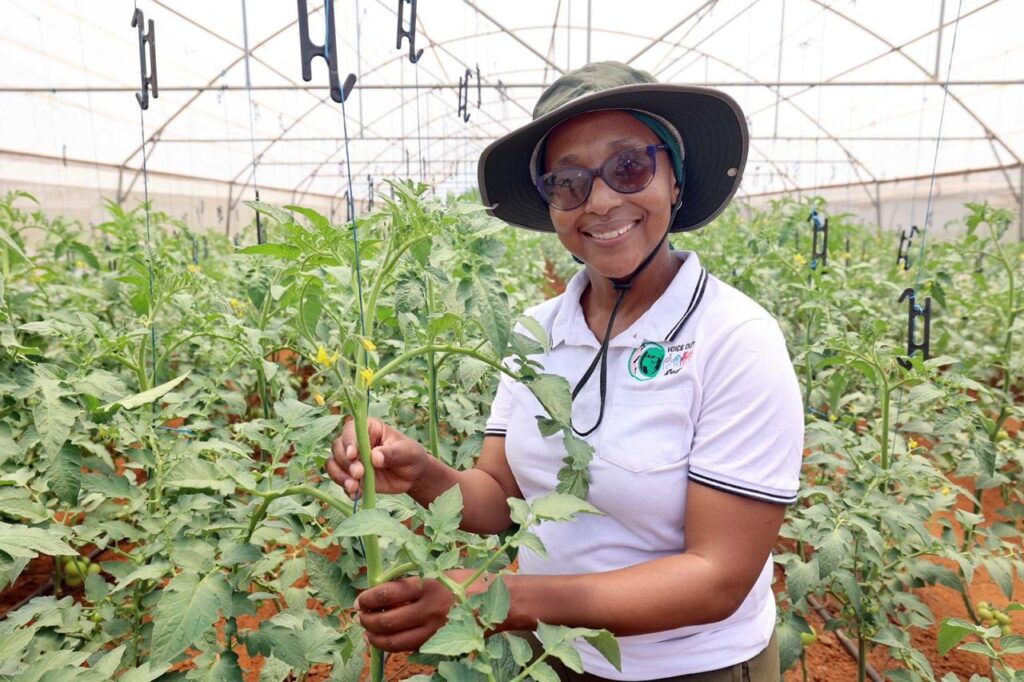
Matebogo Victoria works at her farm in Gauteng. Photo: Supplied/Food For Mzansi

“VoiceOut Deaf has chosen five plant species that have significant market demand as well being well suited for growth in the market: tomatoes, green pepper, red pepper and yellow pepper.

“VoiceOut Deaf Company hires most deaf community in the West Rand Region. The company currently supports women, youth and persons with disability employees,” she explained.


Related stories
  • Disabled farmers: ‘We want action and access, not handouts’
  • Not even disability can keep Dolly from farming
  • Toutele drives disability-inclusive agri education

Victoria said empowerment for her is critically important as she realised that the deaf community lacks basic business fundamentals. That was one of the reasons she started a deaf business development project through vegetable farming to expose the deaf to the business world instead of depending on handouts.

Challenges for the deaf community

“To get to where the business is now, I had to find a way to study further and learn more about agriculture. And it was a nightmare of trying to make sense of new agricultural terms and technology. I faced challenges like business practices that reduced access for the deaf community.

“Lack of standards related to the quality of interpreting required across a variety of settings, including educational, community, medical, and legal settings. Lack of education about how to use deaf services effectively, online training with bad network especially during Covid-19,” she said.

According to Victoria, their research findings have shown that the academic achievement of deaf and hard of hearing is lower than that of hearing communities.
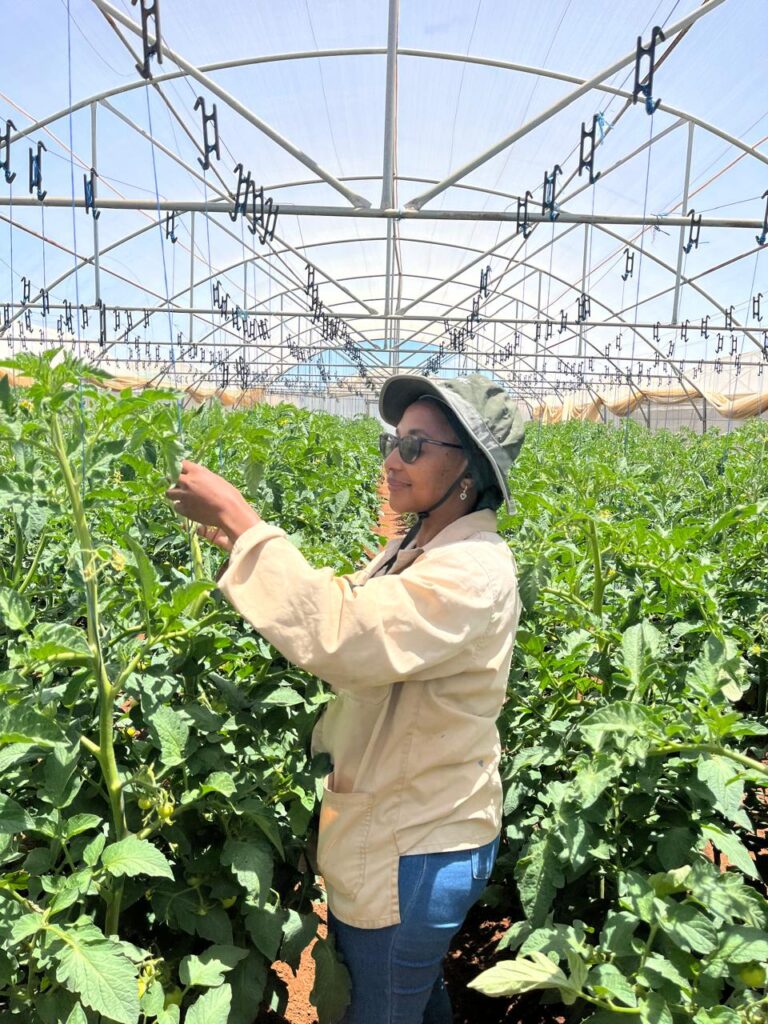
Matebogo Victoria does not believe in handouts for deaf people but rather in giving them skills. Photo: Supplied/Food For Mzansi

“My advice to any person, disabled or not, your disability only puts you on the doorstep. Every rule in business applies. One still needs to comply and understand and have knowledge of what they are doing like another industry. The biggest mistake most of the people are doing is asking for resources first instead of knowledge.

“I had to learn the hard way losing crops. I started planting without knowledge, and this is a bad way to start any business. I will encourage anyone to seek knowledge of what they want to do before starting anything, whether it is business or seeking employment,” she said.

However, Victoria said the government needs to work a little bit harder to ensure that people with disability are catered for in the agricultural sector. “What is really needed is promoting research, this can help identify, promote, and share good practice models.

“Remember that farms are not friendly for persons with disability. Most agriculture tools are not friendly to handle, they are too heavy at times. Research will be the best point to start at. This includes digital skills training,” she said.

READ NEXT: Millions lost, 65 jobless as NC poultry cooperative shuts down

Sign up for Mzansi Today: Your daily take on the news and happenings from the agriculture value chain
Tiisetso Manoko

Tiisetso Manoko is a seasoned journalist with vast experience in community media. He possesses diploma in media studies majoring in journalism, certificate in civic leadership. He loves news from all angles with particular interest in local government, agriculture and politics. He is a staunch Mamelodi Sundowns Football club supporter.

Tags: Commercialising farmerdisabled farmerGautengInform meInspire me
Protecting Bt Maize: Why farmers must maintain refuge planting
News

Protecting Bt Maize: Why farmers must maintain refuge planting

by Patricia Tembo
6th November 2026

South African maize farmers are urged to improve Bt refuge compliance as stem borers show emerging resistance. Learn how refugia...

Read moreDetails
Experts warn NC farmers of below-normal rainfall this summer

Experts warn NC farmers of below-normal rainfall this summer

6th November 2026
Commonwealth farming looks to partnerships for a stronger future

Commonwealth farming looks to partnerships for a stronger future

5th November 2026
Your Sunday lunch has a story: How red meat keeps rural SA moving

Your Sunday lunch has a story: How red meat keeps rural SA moving

5th November 2026
Fiscal gains won’t lift agriculture without logistics fixes

Life after Agoa: ‘SA’s exclusion is not the end of US trade’

5th November 2026

CropLife SA urges farmers to close critical training gaps

Stop harvest fires: Simple machine checks save millions

Experts warn NC farmers of below-normal rainfall this summer

Food For Mzansi celebrates 9 years with new #FFM magazine

80+ community gardens sell produce at Shoprite, Checkers

Join Food For Mzansi's WhatsApp channel for the latest updates!

JOIN NOW!
Next Post
White maize stocks in South Africa are at record lows, pushing prices up by 50% and sparking concerns over household food budgets. Photo: Supplied/Food For Mzansi

White maize prices rise, food costs to go up

THE NEW FACE OF SOUTH AFRICAN AGRICULTURE

With 21 global awards in the first six years of its existence, Food For Mzansi is much more than an agriculture publication. It is a movement, unashamedly saluting the unsung heroes of South African agriculture. We believe in the power of agriculture to promote nation building and social cohesion by telling stories that are often overlooked by broader society.

Stop harvest fires: Simple machine checks save millions

This week’s agri events: 09 – 13 November

Kat River crisis threatens EC farming, food security, and livelihoods

SA wool and mohair take centre stage at Commonwealth gathering

Ending Agoa access deals new blow to SA wine industry

Family roots run deep: Mkhize turns family garden into agribusiness

  • Awards & Global Impact
  • Our Story
  • Contact Us
  • Cookie Policy
  • Privacy Policy
  • Copyright

Contact us
Office: +27 21 879 1824
News: info@foodformzansi.co.za
Advertising: sales@foodformzansi.co.za

Contact us
Office: +27 21 879 1824
News: info@foodformzansi.co.za
Advertising: sales@foodformzansi.co.za

  • Awards & Global Impact
  • Our Story
  • Contact Us
  • Cookie Policy
  • Privacy Policy
  • Copyright

Chat Options

About this assistant

This feature generates automated answers summarised from Food For Mzansi articles. By using it, you are interacting with an AI system (provided by Google), not a human. AI can make mistakes. Please refer to the source articles for verification and citation purposes.

Our staff do not check or moderate Lerato’s answers in advance, but may review some later. Our journalists continue to write and edit all the articles Lerato uses as sources.

To estimate unique and returning web users, we store a random browser ID in this browser. WhatsApp users are counted by phone number. The same person using both channels may be counted twice.

I'm Lerato, your AI assistant!
No Result
View All Result
  • News
  • Changemakers
  • Lifestyle
  • Farmer’s Inside Track
  • Food for Thought

Copyright © 2026 Food for Mzansi