South African agricultural exports face a major hurdle: skyrocketing electricity tariffs. NAMC economist Buhlebemvelo Dube analyses how escalating energy costs imperil global competitiveness, farm profitability, and long-term food security.
Rising electricity tariffs are becoming an increasingly significant threat to the competitiveness of South African agriculture.
Irrigated horticultural exports depend on reliable and affordable electricity, yet tariff increases, including the 12.74% average increase approved by the National Energy Regulator of South Africa (Nersa), are raising production costs at a time when agricultural exports are already facing pressure from higher tariffs, non-tariff measures, and changing geopolitical and trade arrangements.
As electricity-intensive production systems become more common, energy policy is increasingly becoming an agricultural trade issue.
How much electricity does SA use?
South Africa consumes between 180 and 205 billion kilowatt-hours (kWh) of electricity per annum. Total electricity generated in 2024 amounted to 214 562 gigawatt-hours (GWh), representing a 1.7% decrease compared with the electricity generated in the 2021 survey (225 833 GWh) according to Stats SA.
Furthermore, coal remained the main contributor to total electricity generation, accounting for 82.7% (177 334 GWh), indicating that South Africa’s electricity supply continues to rely heavily on fossil fuels. Coal-generated electricity declined from 212 761 GWh in 2016 to 177 334 GWh in 2024, reflecting a gradual shift in the energy mix, although coal continues to dominate electricity generation. Renewable energy sources contributed 9.0% (19 408 GWh), followed by nuclear energy at 3.8% (8 226 GWh).
Between 2016 and 2024, coal recorded the largest decline in generation share (-7.1 percentage points), falling from 89.8% to 82.7%, while renewable energy recorded the largest increase (+6.9 percentage points), rising from 2.1% to 9.0%. In 2024, electricity worth at least R368 billion was distributed.
Related stories
- Electricity hikes add to SA farmers’ financial pain
- Farm smarter: How to build energy resilience and cut costs
- Energy and innovation ignite 5th Mzansi Young Farmers Indaba
- More than gadgets: How practical agritech boosts your bottom line
Implications of higher tariffs
Figure 1 illustrates South Africa’s continued reliance on coal-based electricity alongside steadily rising demand from the agricultural sector.
Among the major electricity-consuming sectors, agriculture is one of the few that has recorded sustained growth in electricity consumption over time.
This trend is likely to continue as irrigation, mechanisation and cold-chain infrastructure expand.
Consequently, recent Nersa tariff increases, as highlighted by most economists, are likely to have important implications for agricultural exports, particularly because South Africa’s export basket is increasingly concentrated in electricity-intensive horticultural products.
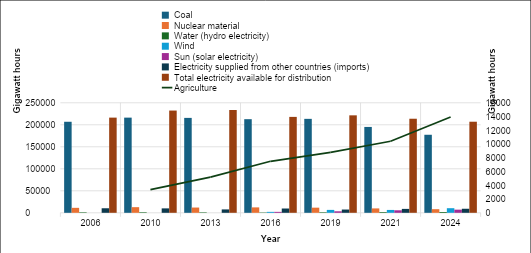
Figure 1: South Africa’s electricity dynamics. Source: Statistics South Africa (2026)
The implications become clearer when viewed alongside South Africa’s export profile.
Figure 2 shows that agricultural exports are dominated by oranges ($1.16 billion), fresh grapes ($927.7 million), mandarins ($808.5 million), maize ($721.8 million), and fresh apples ($648.6 million). Except for maize, these high-value export industries depend heavily on irrigation, refrigeration and cold-chain logistics, making reliable and affordable electricity central to maintaining export competitiveness.
Higher electricity tariffs therefore have implications not only for farm production costs but also for the competitiveness of South African exports in international markets.
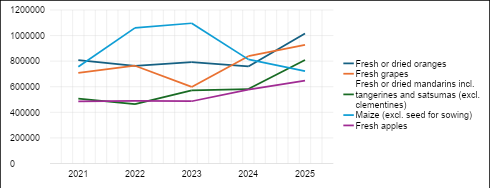
Figure 2: Top 5 agricultural exports by South Africa. Source: Trademap (2026)
The competitiveness of South African agriculture has been supported by substantial investment in irrigation systems, packhouses, cold-storage facilities and other capital-intensive infrastructure that depends on a reliable electricity supply. This helps explain why agriculture is accounting for a growing share of electricity consumption, as shown in Figure 3.
Although agriculture represents approximately 4% of electricity distributed, the sector recorded an annualised growth rate of 10.2%, highlighting the rapidly increasing demand for electricity as agricultural production becomes more technologically advanced and export-oriented.
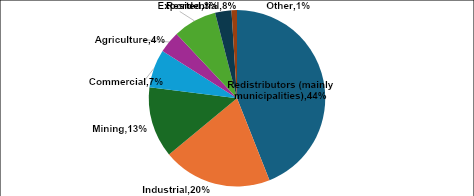
Figure 3: Electricity distributed by type of customer. Source: Statistics South Africa (2026)
These investments have underpinned strong growth in South Africa’s agricultural exports over the past decade. However, they have also increased the sector’s exposure to rising electricity costs. Further increases in electricity, together with continued volatility in domestic and global energy markets, represent a growing challenge for farm profitability, export competitiveness and, ultimately, food security.
Future outlook
As electricity becomes a larger production cost after labour for many commercial farming enterprises, particularly in irrigated agriculture, future tariff decisions will likely influence the competitiveness of South African agricultural exports.
South Africa’s electricity sector remains in transition. While recent improvements in Eskom’s operational performance are encouraging and welcomed, electricity prices continue to pose a significant challenge for electricity-intensive agricultural industries.
Ongoing governance reforms, including changes to the tariff structure, should therefore be implemented in a manner that recognises the strategic importance of export agriculture. In particular, the unbundling and reallocation of charges under the new tariff design warrant careful consideration to ensure that future tariff increases do not disproportionately affect productive sectors that depend on electricity for irrigation, storage and processing.
Further consideration should also be given to the design of capacity charges so that electricity costs more closely reflect actual consumption.
Achieving a competitive, transparent and predictable electricity pricing framework will remain important for sustaining agricultural exports, investment and long-term food security.
- The views and opinions expressed in this article are those of the author and do not necessarily reflect the views or positions of Food For Mzansi.
READ NEXT: Western Cape suffers driest July on record ahead of intense El Niño