Wednesday, September 23, 2026
SUBSCRIBE
22 GLOBAL MEDIA AWARDS
Food For Mzansi
  • News
  • Changemakers
  • Lifestyle
  • Farmer’s Inside Track
  • Food for Thought
No Result
View All Result
  • News
  • Changemakers
  • Lifestyle
  • Farmer’s Inside Track
  • Food for Thought
No Result
View All Result
Food For Mzansi
No Result
View All Result
in News

Profit meets planet: Rethinking agricultural finance in SA

Sustainability isn’t just about going green; it’s about staying in the green. Nedbank’s Herman de Kock says farmers need education, support, and better financial products to meet the dual challenge of feeding the nation while protecting natural resources

by Staff Reporter
26th June 2025
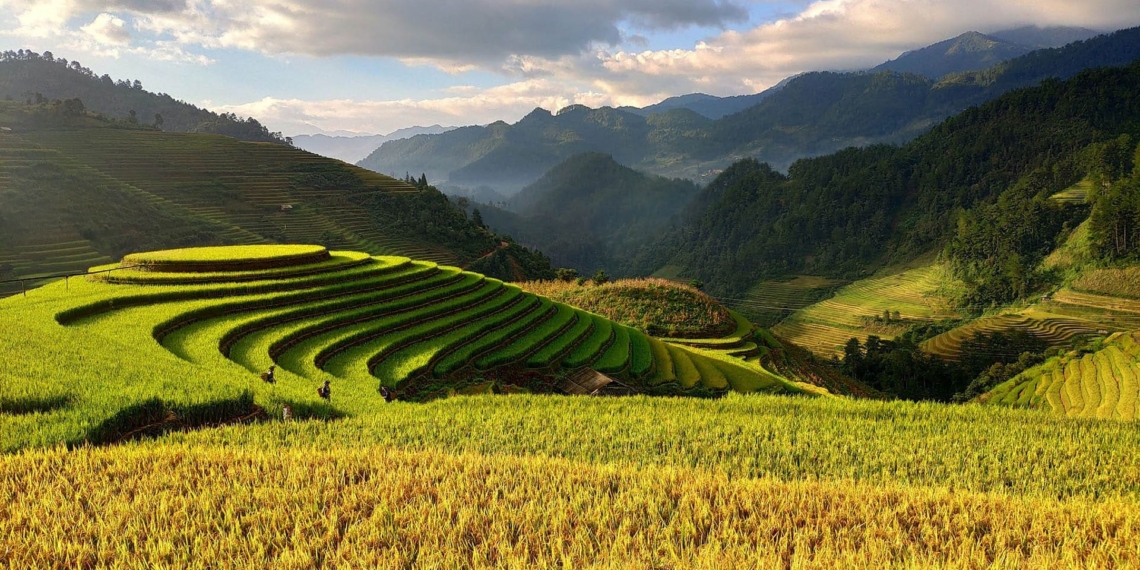
Small-scale farmers in Laos have found great reward in returning to an ancient practice. Photo: Supplied/Food For Mzansi

AgriSA’s 2026 outlook calls for reforms in land, water, and energy governance. Supplied/Food For Mzansi

Share on FacebookShare on TwitterShare on WhatsApp

In today’s agricultural environment, the industry is driven by two global obligations: feeding a growing population and protecting the planet. Executive head of mid-corporate at Nedbank, Herman de Kock, said South African farmers face the dual challenge of producing affordable food while conserving increasingly scarce natural resources.

South African farmers have long shown exceptional productivity, De Kock added, even under challenging conditions. However, their ability to sustain this performance requires more than resilience; it requires financial viability.

Sustainable farming practices

He said farmers can only implement environmentally sustainable practices if they are economically sustainable.

“It’s about understanding the finite capacity of natural resources and how we can use them, not only responsibly but also strategically to increase production. We believe the key lies in adopting a balanced and strategic approach to investing in sustainability within farming operations. Ultimately, this ensures improvements in your bottom line.

“The financial sector needs to focus on developing products that align sustainability with improved credit profiles. This includes structuring loans to be cash-flow friendly, offering lower interest rates for lower-risk, sustainable investments, and creating financing tools that support integrated, not just isolated, improvements,” he said.


Related stories
  • SA wine industry unites for growth, sustainability, and innovation
  • Exxaro, ARC, and EKIM forge sustainability alliance

De Kock noted that too often, sustainability is viewed through a narrow lens. “It’s not just about solar panels or water-saving irrigation. It’s about a holistic strategy that integrates soil health, water management, alternative energy, and governance practices.”

He said sustainability must be understood holistically by going beyond considering just the financing that enables the investment to understand the actual business impact.

“Sustainability investments take time to yield results, so you need to assess and manage the risks. It’s not only the bank’s role to support this through finance. We can offer advice and financial expertise, but especially on an industrial scale, you also need experts in this field to evaluate whether the investment brings a tangible return.

“Ultimately, your return is improved profitability, which in turn improves the bankability of your farming operation. You need to consider sustainability from this broader perspective, and directors will increasingly be held accountable for managing climate-related risks and ensuring transparency in their disclosures. Failure to do so could lead to personal liability.”

Integrating environmental, social, governance strategies

De Kock emphasised the crucial role that data and technology play in evaluating environmental, social, and governance (ESG) metrics from a financing perspective. Yet, many farmers are reluctant to share data, citing concerns over privacy, cost, and competitive risk. However, farmers are realising that rising input costs mean that understanding net profit per hectare is more important than yield alone, he added.

“It comes back to the fact that it’s everyone’s responsibility. And from a banking perspective, the focus isn’t just on financing capex. It’s also about bringing in expertise to help ensure that the investment achieves its intended outcome. That’s critical. It’s not just about the money, it’s about education, assessment, and support.

“Farmers must be equipped with the right tools, knowledge, and incentives to adapt. By integrating ESG strategies into the heart of farming and finance, South Africa can secure its food systems, protect its environment, and enhance global competitiveness,” he said.

READ NEXT: Farmers eye Starlink as a connectivity lifeline

Sign up for Mzansi Today: Your daily take on the news and happenings from the agriculture value chain.
Staff Reporter

Researched and written by our team of writers and editors.

Tags: Agricultural financeFood SecurityInform meNedbank AgricultureSustainability
Grazing shortages? Here is how Voermol protects livestock wealth
Advertorial

Grazing shortages? Here is how Voermol protects livestock wealth

by Lisakanya Venna
21st September 2026

PARTNER NEWS: From high-performance seasonal blocks to cost-effective mixing concentrates, Voermol provides livestock producers with a practical product range formulated...

Read moreDetails
Maize surplus eases feed costs, but fuel and drought threaten gains

Maize surplus eases feed costs, but fuel and drought threaten gains

21st September 2026
This week’s agri events: 21-25 September

This week’s agri events: 21-25 September

21st September 2026

Is your hemp crop too thirsty? New drone data reveals the truth

20th September 2026
South Africa’s first Cosmic Crisp apple harvest is now making its way from growers in Grabouw and Ceres in the Western Cape to selected Checkers and Checkers Hyper stores nationwide. Photo: Supplied/Checkers

Mzansi’s first Cosmic Crisp apple harvest hits Checkers shelves

19th September 2026

El Niño: Livestock farmers need financial buffers, not just forecasts

Farming bootcamp propels Unicha Dladla’s path to growth

Under siege: Women in farming demand action amid rising violence

Orange prices plunge 60% amid huge supply surge in SA

TrailTail: WC dog lover makes natural treats with local meats

Join Food For Mzansi's WhatsApp channel for the latest updates!

JOIN NOW!
Next Post
Africa demands fairer trade, stronger US partnerships

Africa demands fairer trade, stronger US partnerships

THE NEW FACE OF SOUTH AFRICAN AGRICULTURE

With 21 global awards in the first six years of its existence, Food For Mzansi is much more than an agriculture publication. It is a movement, unashamedly saluting the unsung heroes of South African agriculture. We believe in the power of agriculture to promote nation building and social cohesion by telling stories that are often overlooked by broader society.

WC marks 100 years of excellence at Langgewens Research Farm

African swine fever: Biosecurity rules every pig farmer must follow

Orange prices plunge 60% amid huge supply surge in SA

Seed to shelf: Why home-grown canola matters to SA’s food future

Landrace seeds can safeguard SA’s harvests during El Niño

EC government invests R1.4m to boost local wool farmers

  • Awards & Global Impact
  • Our Story
  • Contact Us
  • Cookie Policy
  • Privacy Policy
  • Copyright

Contact us
Office: +27 21 879 1824
News: info@foodformzansi.co.za
Advertising: sales@foodformzansi.co.za

Contact us
Office: +27 21 879 1824
News: info@foodformzansi.co.za
Advertising: sales@foodformzansi.co.za

  • Awards & Global Impact
  • Our Story
  • Contact Us
  • Cookie Policy
  • Privacy Policy
  • Copyright

Chat Options

I'm Lerato, your AI assistant!
No Result
View All Result
  • News
  • Changemakers
  • Lifestyle
  • Farmer’s Inside Track
  • Food for Thought

Copyright © 2024 Food for Mzansi

This website uses cookies. By continuing to use this website you are giving consent to cookies being used. Visit our Privacy and Cookie Policy.