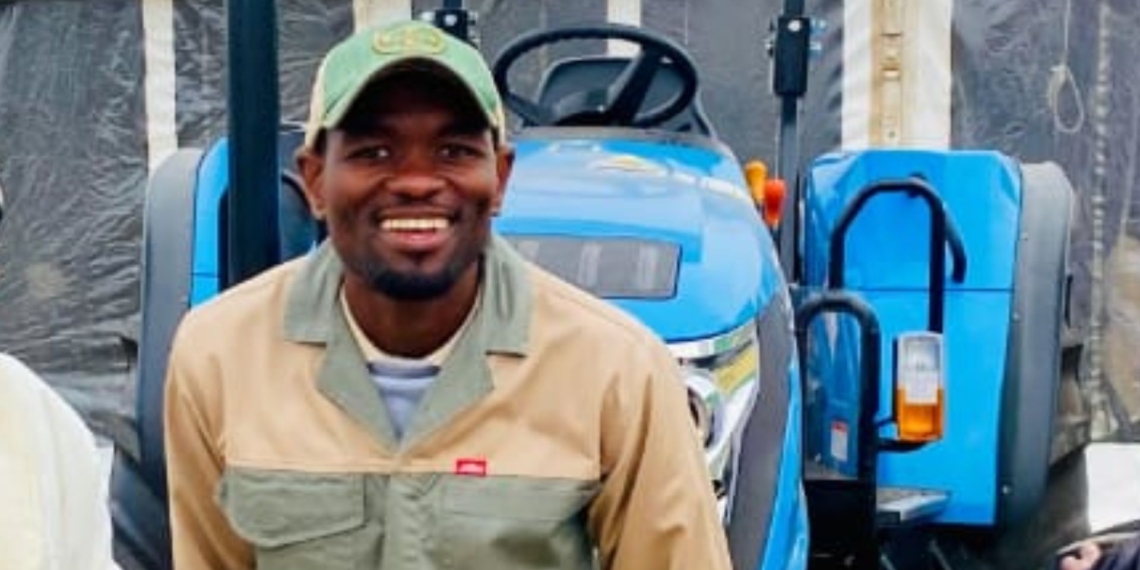
From an unemployed graduate’s leap of faith to a thriving family-run empire, horticulturist Mthuthuzeli Sontsele has turned communal land into a commercial success story.
When he resolved to pursue agriculture full-time, his conviction didn’t just alter his own career path; it drew his entire family into the soil, uniting his relatives as co-founders to build the rapidly expanding Rich Valley Cooperative.
Sontsele’s passion was quietly shaped by the rhythms of his upbringing in Mpunzi Drift Village in Bizana, Eastern Cape. Growing up, agriculture was the structural backbone of his household.
“I come from a family of farmers. My father and grandparents were all engaged in agriculture. My father raised cattle and over 50 sheep and cultivated maize, butternuts, sugar beans, and sorghum, though his farming was informal,” Sontsele reflects.
As a young boy attending Mpunzi Drift Junior Secondary School, Sontsele was pulled directly into these daily farm chores. “Although it was difficult at times to see my peers enjoying leisure while I worked, the experience instilled in me a strong connection to the land.”
Travelling on family trips to Port Shepstone and passing sprawling commercial farms left a lasting impression on the young boy, strengthening his resolve to one day pursue agriculture professionally.
Related stories
- Mother’s legacy, neighbour’s grace: Venessa Simelane’s farm story
- Flying solo: FS farmer beats hurdles to scale poultry enterprise
- Simangele turns school lease into retail-supplying agribusiness
- Limpopo youth grows grain business from social grant savings
Building a solid academic foundation
Determined to turn his childhood chores into a scientific career, Sontsele aligned his high school subjects at Mpondombini Senior Secondary School directly with agriculture.
After matriculating, he enrolled at the University of Fort Hare to study crop and horticulture. He graduated with his bachelor of science and subsequently obtained his honours degree in horticulture in 2018.
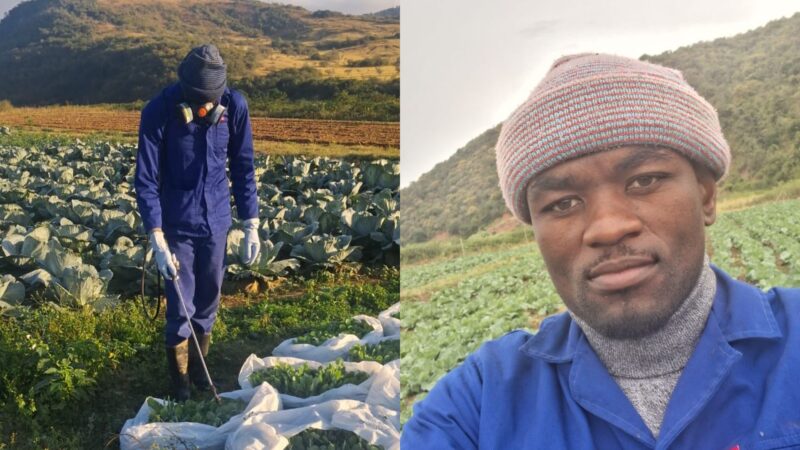
Sontsele expected to enter the agricultural sector swiftly, but with formal roles scarce, he was forced to step away from the soil temporarily to survive. He worked as a facilitator for one year and as an education assistant for two years.
Despite the detour, his farming instincts never died. In 2018, he quietly started a small, informal livestock project at home, buying just a single indigenous goat to keep his hands in the game.
Drawing the family in
The catalyst that ended his job hunt arrived in 2021 when he landed an interview with the Future Farmers Foundation. He had gone into the meeting looking for a way into the industry, but a single, profound question from the interviewer completely rewired his career plans: Would you be prepared to work the land at home if provided with funding?
“This question became a turning point. Upon returning home, I resolved to pursue farming full-time and ceased seeking formal employment,” he reflects.
However, he knew that transitioning from a single goat and a big dream to a commercial enterprise required muscle and deep operational trust. When he initially pitched the concept of starting a cooperative to the broader community, he was met with hesitation from neighbours who viewed farming as a risky gamble.
Sontsele turned to his family network, using his academic expertise and conviction to convince his relatives to put aside their own routines and join his mission. He successfully recruited five dynamic young people from his immediate circle, including his core family co-founders Mondekazi, Moyisi, Sanelisiwe, and Masibulele Sontsele, to form Rich Valley Cooperative.
They pooled their personal savings to lease three hectares of communal land and purchase their first water pump and irrigation equipment.
The power of grit and diversification
The newly formed family cooperative took a massive gamble, planting cabbage seedlings on their raw land without a single guaranteed buyer lined up.
“We began with 5 000 cabbage seedlings, despite having no confirmed market,” Sontsele explains.
But their bold leap of faith caught the right eyes. They were introduced to Nonhlanhla Boyce of Boxer Market, a dedicated business incubator for small, emerging enterprises. Boyce stepped in to mentor the young family team, officially assisting them with their formal corporate registration in 2021 and facilitating the critical business training programmes they needed to transition from a village project into a compliant retail supplier.
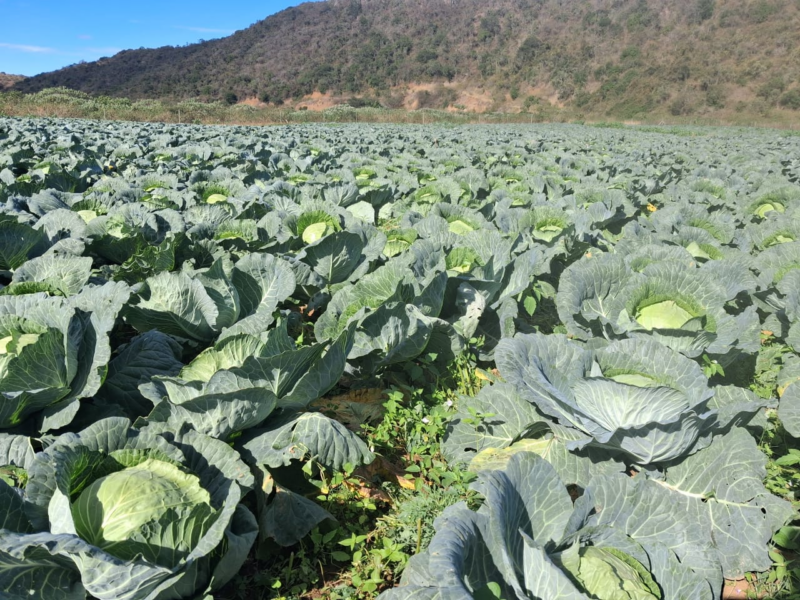
With a formal commercial route unlocked, the family expanded their footprint.
“We have also [cultivated] spinach, butternut, green peppers, potatoes, and green mealies. These are cultivated to meet both household and commercial demand,” Sontsele says.
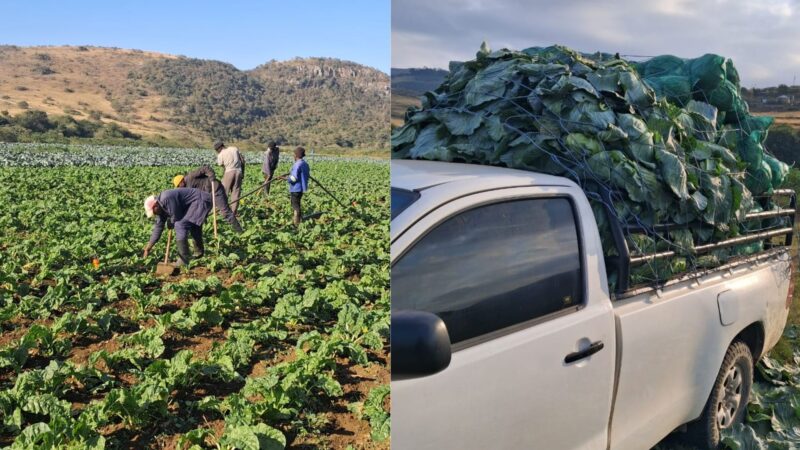
Three years of continuous, unfunded grit have completely transformed the enterprise. Today, Rich Valley Cooperative has expanded to a massive 15 hectares of communal village land.
Their cabbage production has scaled astronomically from that original batch of 5 000 to over 100 000 heads, and the family has successfully purchased their own commercial bakkie to transport their harvests directly to markets.
Parallel to crops, Sontsele’s single livestock goat from 2018 has multiplied into a thriving herd of more than 100 indigenous goats. Pigs and chickens have also been integrated into the farm layout.
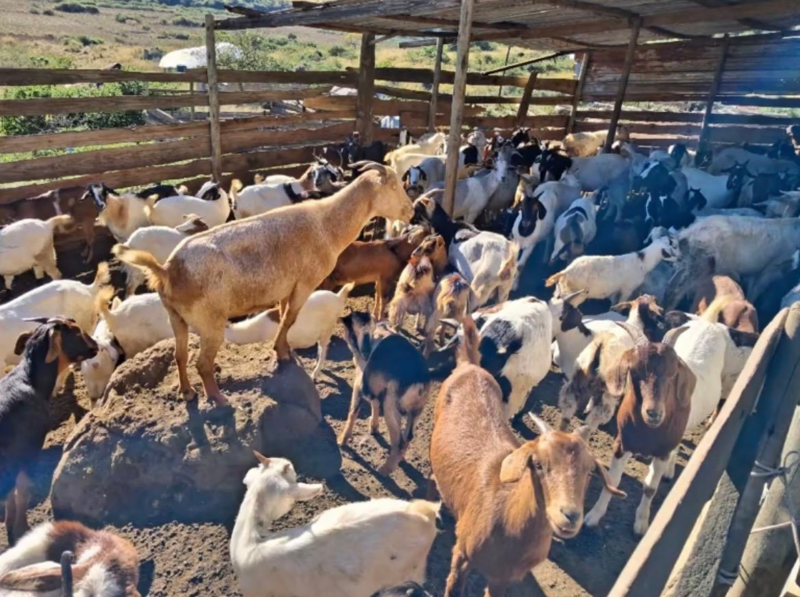
The department of agriculture stepped in to supply the cooperative with a tractor and a production tunnel, while the Alfred Nzo District Municipality integrated them into a three-year development programme that provides 40 000 cabbage plants alongside regular production inputs and heavy mechanisation support.
Weathering the future
Currently, the family business has six permanent staff members and over 20 seasonal workers from their village.
The journey, however, remains an uphill battle against nature. Sontsele notes that climate change is their primary operational hurdle.
“Unpredictable weather patterns complicate planning and decision-making regarding planting schedules and crop selection,” he explains.
Rich Valley Cooperative’s vision is to scale up production even further, expand their footprint in the local economy, and ultimately move off communal land by purchasing private property.
Sontsele believes that endurance is the ultimate secret to agricultural success. “Once you’re in it, don’t give up. It might take some time before you see your profits, but keep pushing no matter what, and also be creative.”
READ NEXT: Learners swap classrooms for farms and labs to tackle food crisis