Friday, May 8, 2026
SUBSCRIBE
21 GLOBAL MEDIA AWARDS
Food For Mzansi
  • News
  • Changemakers
  • Lifestyle
  • Farmer’s Inside Track
  • Food for Thought
No Result
View All Result
  • News
  • Changemakers
  • Lifestyle
  • Farmer’s Inside Track
  • Food for Thought
No Result
View All Result
Food For Mzansi
No Result
View All Result
in Lifestyle

Story in a jar: How to unlock flavour with fermentation

From umqombothi and amasi to atchar and kombucha, we look at the rich history and modern culinary possibilities of food fermentation. Experts discuss this preservation technique, which relies on natural yeasts and time, to transform everyday ingredients like mealies and vegetables into delicious staples

by Vateka Halile
8th October 2025
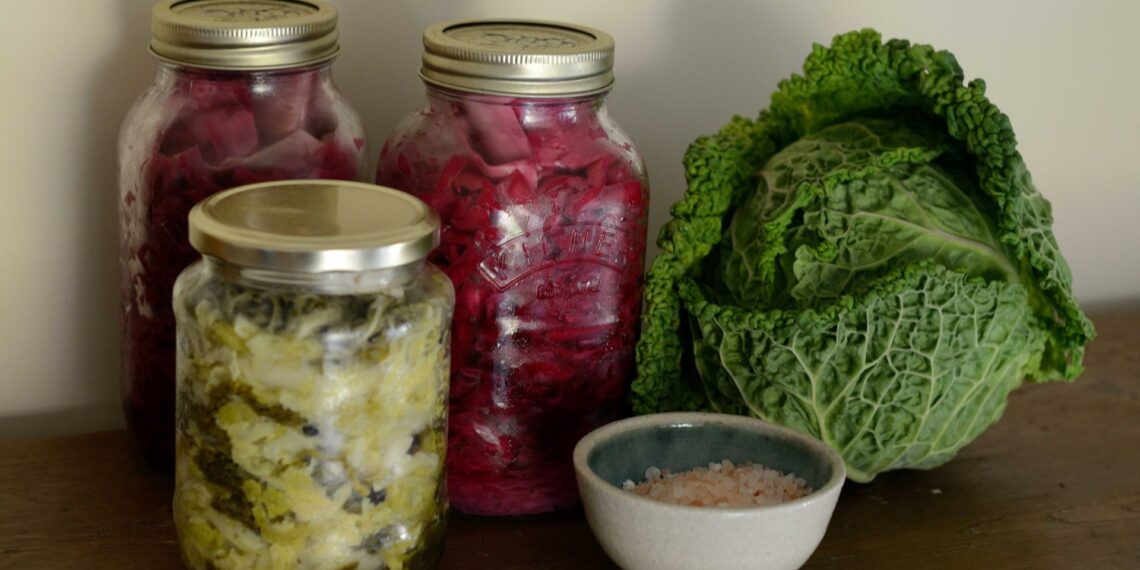
Regular consumption of fermented foods can help balance gut bacteria, which may improve digestion, reduce inflammation, and support mental well-being. Photo: Pixabay

Regular consumption of fermented foods can help balance gut bacteria, which may improve digestion, reduce inflammation, and support mental well-being. Photo: Pixabay

Share on FacebookShare on TwitterShare on WhatsApp

Food fermentation has been part of South African kitchens for generations. It was done to preserve food and create flavour, long before anyone fully understood the health benefits it carried. 

Fermentation is a story in a jar. It tells of people moving across Africa and around the world, carrying food with them as they travelled. These foods crossed villages, borders, and oceans, keeping communities fed, energised, and connected. 

Fermentation is one of the oldest techniques for food preservation, and each culture has its own unique way of doing it, says chef Asithandile Ndamase, co-founder of Thyme with the Chefs and lecturer at the Cape Town Hotel School (CPUT).

She explains that beverages like umqombothi and amarhewu are among the most common examples in Mzansi, both of which use mealies in the process.

“Mostly with fermented food items, you do not need spices. It is mostly sugar and the natural yeasts from the grain itself.”

Asithandile Ndamase

Ndamase adds that vegetables such as radishes, beetroot, and cabbage can be fermented. “You can use vinegar, sugar, water, and maybe add spices like cumin seeds and cloves.”

FARMER POLL

📢 Which bank is powering your farming journey?

Tell us which bank you use so we can better advocate for the specialised financial tools and accessible capital needed to help South African farmers overcome growth barriers and thrive!

All submissions are kept strictly confidential. 

With fruits, mangoes can be turned into chutney or atchar, while dairy can also be fermented, with milk transformed into amasi.

Chef Asithandile Ndamase is the co-founder of Thyme with the Chefs and a lecturer at the Cape Town Hotel School (CPUT). Photo: Supplied/Food For Mzansi

Related stories
  • Umqombothi: Where tradition meets nutrition
  • Podcast: Tapping into the fermentation process
  • Citron melon: The humble fruit that fed generations

Ancient practice gets new life

Fermentation offers a wide range of benefits for our health, taste buds, and culinary creativity, Tshwane-based private chef Thole Mathe says. He explains that it highlights our connection to nature, microbes, and the environment.

“Fermentation is an ancient preservation method that showcases human ingenuity and adaptability,” Mathe says. “It creates entirely new, complex, and often desirable flavours, textures, and aromas that aren’t present in the raw ingredients.

“My son Amogelang discovered he enjoyed dried fruits like guava and peaches more after fermentation. He said, ‘Dad, these fruits taste different and delicious; I can eat them anytime.’ That’s flavour enhancement.”

Thole Mathe is a private chef based in Tshwane. Photo: Supplied/Food For Mzansi

He further says that ancient people didn’t understand microbiology, but they learned through observation and trial. 

“For example, they stored milk and it turned into long-lasting, tasty yoghurt or cheese.”

 Mathe explains spices that can be used in fermentation:

  • Garlic: Common in hot sauces and vegetables
  • Mustard seeds: Add a distinctive flavour
  • Peppercorns: Provide sharp heat and aroma
  • Coriander seeds: Release more flavour over time
  • Cloves: Bring natural sweetness

Mathe notes fresh herbs and spices can lose their flavour quickly or become mushy during fermentation, making their taste unpredictable. However, dry spices are more stable, release flavour gradually, and create the right conditions for lactic acid bacteria, making them a more reliable choice for most fermentations.

Traditional mango atchar is easily made at home and the amount of chillies added can be adjusted to your liking. Photo: Supplied
Traditional mango atchar is easily made at home, and the amount of chillies added can be adjusted to your liking. Photo: Supplied/Food For Mzansi

Nature at work

Back in Rwanda, food fermentation was not a science; it was a daily practice lived by the community, says food educator and founder of Tamu by Jane, Jane Nshuti, from the Southern Suburbs, Cape Town.

“There were no fridges, but we had time, sun, and wisdom,” she says. “I remember cassava roots tucked in burlap sacks, fermenting slowly in the dark. They would soften and sour, and the sharp scent rising, not foul but promising, signalled that nature was at work.”

Jane Nshuti is a plant-based food educator based in Cape Town. Photo: Tamu by Jane

The fermented roots were dried and pounded into flour, which made cassava pap, thick, slightly tangy, and proof that good food takes time.
Fermented sorghum porridge, she adds, was made with care, love, and intention. “It warmed you from the inside out, the kind of breakfast that could carry you into the hills and back again.”

Fermentation is universal, Nshuti notes. Fish in Ghana becomes momoni, while salted fish in Congo and Rwanda develops flavour under the sun. 

“Our ancestors did not have thermometers or starter cultures. They trusted instinct and memory. Fermentation was a relationship with time, microbes, and food, no additives, no shortcuts.”

Jane Nshuti

Today, with kombucha, sourdough, miso, and kefir, Nshuti says we understand not just how, but why we ferment; for health, flavour, and tradition. 

Fermented mabele is one of the most beloved breakfast dishes in Mzansi. Photo: Supplied/Food For Mzansi

Food safety first

And, if you are looking into agro-processing, fermented products offer many possibilities, as long as you adhere to the regulations and guidelines. 

In South Africa, fermented foods are primarily regulated under the Foodstuffs, Cosmetics and Disinfectants Act, 1972 (FCD Act), which mandates that all foods be safe for human consumption. This act governs the manufacture, labeling, and sale of food, with additional specific regulations on microbiological standards and other food safety aspects for various products. 

While the FCD Act provides a framework, producers should also implement good manufacturing practices (GMP) and hazard analysis to ensure product safety. 

ALSO READ: Indigenous crops: The climate-smart superfoods we need

Sign-up for the latest agricultural news delivered straight to your inbox every day with Mzansi Today!

Vateka Halile

Vateka Halile grew up in rural areas of Cofimvaba in the Eastern Cape. She was raised in a traditional family setting and found writing to be a source of comfort and escape. Vateka participated in an online citizen journalism course through Food For Mzansi, and her passion for health and medicine-related stories was born. Her dedication to community work and love for social justice and solidarity spaces is evident in her quality time with the community when she isn't working.

Tags: Consumer interestfermentationHealth For MzansiInform meTraditional Food
SA and Brazil unite to tackle foot-and-mouth disease crisis
News

SA and Brazil unite to tackle foot-and-mouth disease crisis

by Staff Reporter
6th May 2026

Minister John Steenhuisen has secured a strategic alliance with Brazil to fast-track the eradication of foot-and-mouth disease (FMD). By learning...

Read moreDetails
Goss’s Wilt: What to look for and what to do

Goss’s Wilt: What to look for and what to do

5th May 2026
Massive fuel price hikes hit SA despite extended levy relief

Massive fuel price hikes hit SA despite extended levy relief

5th May 2026
From analytical chemistry to open farmland, Nomachule Sigcau oversees operations that connect scientific precision with everyday farming practice in the Eastern Cape. Photo: Supplied/Food For Mzansi

Mpondoland’s soil-to-pharmacy vision takes root

5th May 2026

Why KwaZulu-Natal farmers are rejecting hemp

5th May 2026

Why KwaZulu-Natal farmers are rejecting hemp

Goss’s Wilt: What to look for and what to do

Farmers battle floods, snow and damaged infrastructure

China tariff cuts boost SA farm export hopes

Simemo Nkosi grows family farm into diversified enterprise

Join Food For Mzansi's WhatsApp channel for the latest updates!

JOIN NOW!
Next Post
AWSA North

AWSA North celebrates the champions of agriculture

THE NEW FACE OF SOUTH AFRICAN AGRICULTURE

With 21 global awards in the first six years of its existence, Food For Mzansi is much more than an agriculture publication. It is a movement, unashamedly saluting the unsung heroes of South African agriculture. We believe in the power of agriculture to promote nation building and social cohesion by telling stories that are often overlooked by broader society.

Mother-daughter duo empowers 100 farmers through retail access

Farmers battle floods, snow and damaged infrastructure

New platform launched to strengthen African food policy

Baloyi’s mission: Designing ‘perfect plant babies’ for SA’s farmers

Extreme heat: A growing threat to Southern Africa’s food and health

Govt and industry unite for phase 2 of Poultry Master Plan

  • Awards & Global Impact
  • Our Story
  • Contact Us
  • Cookie Policy
  • Privacy Policy
  • Copyright

Contact us
Office: +27 21 879 1824
News: info@foodformzansi.co.za
Advertising: sales@foodformzansi.co.za

Contact us
Office: +27 21 879 1824
News: info@foodformzansi.co.za
Advertising: sales@foodformzansi.co.za

  • Awards & Global Impact
  • Our Story
  • Contact Us
  • Cookie Policy
  • Privacy Policy
  • Copyright
No Result
View All Result
  • News
  • Changemakers
  • Lifestyle
  • Farmer’s Inside Track
  • Food for Thought

Copyright © 2024 Food for Mzansi

This website uses cookies. By continuing to use this website you are giving consent to cookies being used. Visit our Privacy and Cookie Policy.