Wednesday, October 14, 2026
SUBSCRIBE
22 GLOBAL MEDIA AWARDS
Food For Mzansi
  • News
  • Changemakers
  • Lifestyle
  • Farmer’s Inside Track
  • Food for Thought
No Result
View All Result
  • News
  • Changemakers
  • Lifestyle
  • Farmer’s Inside Track
  • Food for Thought
No Result
View All Result
Food For Mzansi
No Result
View All Result
in Climate Change

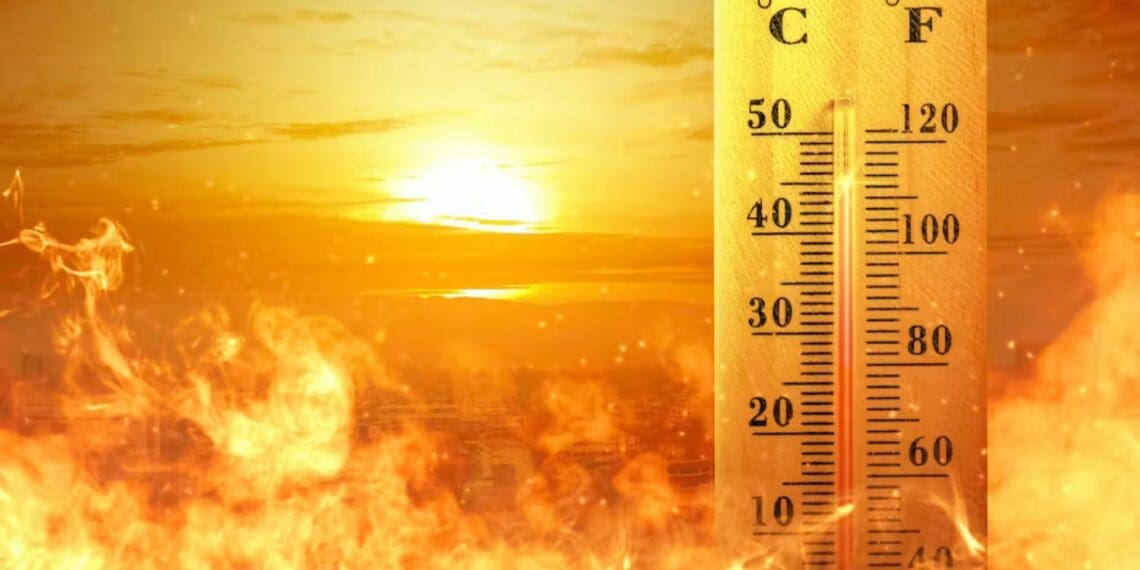
Three must-reads on surviving Africa’s scorching heat

Studies suggest that if the global rise in temperature hits the 2℃ mark, countries in the tropics will be hardest hit which includes a large chunk of Africa. We've pinpointed three articles worth reading to get through (and survive) these looming hot days

by Adejuwon Soyinka
23rd July 2023
Climate change: 'Smart farming is the only way to go' – farmers

President Cyril Ramaphosa received the Presidential Climate Commission’s five-year report, outlining South Africa’s path to a just, low-carbon, and climate-resilient future. Photo: Sourced/The Conversation

Share on FacebookShare on TwitterShare on WhatsApp

Around the world, temperature records are being broken in countries in Africa, Europe, America and Asia. The planet experienced its hottest day on record at the beginning of July 2023.

This is not totally unexpected. Scientists had warned that if the rise in global temperature was not limited to 1.5℃, the world could face a severe threat from extreme heat. As it is, the 1.5℃ target seems unattainable. A recent UN report did not see a credible pathway to achieving this goal.

In a recent article for The Conversation UK, scientists Jesus Lizana, Nicole Miranda and Radhika Khosla described how countries in the tropics would see the largest absolute increase in extreme heat if the global temperature rise moved from 1.5℃ to 2℃.

In their published research, they indicated that countries in central and sub-Saharan Africa, such as the Central African Republic, Burkina Faso, Mali, South Sudan, Chad, Cameroon, Congo, Democratic Republic of Congo and Nigeria, would be hit the hardest.

Experts writing for The Conversation Africa have also touched on these issues and how to survive them. Here, we’ve collated three of these articles.

1. Heat officer to the rescue

Increasingly threatened by dangerous temperatures, Freetown, Sierra Leone’s capital, appointed a chief heat officer earlier in the year.

The chief heat officer – the first in Africa – has the responsibility of raising awareness about extreme heat, improving responses to heat waves, and collecting, analysing and visualising heat impact data for the city, which is home to 1.2 million people.

Architect and researcher Olumuyiwa Adegun explain that Sierra Leone had to take steps because, in 2017, the Intergovernmental Panel on Climate Change ranked the West African country third, after Bangladesh and Guinea Bissau, on its list of countries most vulnerable to climate change.

READ MORE: Africa’s first heat officer is based in Freetown – 5 things that should be on her agenda

2. Knowing where and when it’s too hot in southern Africa

Heat stress is not just uncomfortable; it can be dangerous. To create a detailed picture of when and where heat stress occurs in southern Africa, a group of scientists – Sarah Roffe, Adriaan van der Walt and Jennifer Fitchett – applied a human thermal comfort index to regional data.

They found that there has been a consistent change in thermal comfort – the human body’s experience of the outdoor thermal environment – from the 1970s to today.

Their findings confirm that southern Africans are experiencing heat stress more often than in 1979.

READ MORE: Heat stress is rising in southern Africa – climate experts show where and when it’s worst

3. A vote for climate-resilient primary healthcare

Climate change events in Africa have implications not just for the environment but for people. Impacts include injuries, diseases and death.

Considering that climate events place the health systems of affected countries under strain, scientists Bob Mash and Christian Lueme Lokotola reviewed the level of preparedness of African primary healthcare systems. They found these systems were poorly prepared for the impacts of climate change.

The scientists then identified five key questions that health systems must answer in order to build more resilient primary healthcare in the face of climate change.

READ MORE: Five questions for African countries that want to build climate-resilient health systems

This article was first published on The Conversation and written by Adejuwon Soyinka.

ALSO READ: Women’s Day: Join us at our Soul To Soil brunch

Enjoy reading? Tell us why!

Sign up for Mzansi Today: Your daily take on the news and happenings from the agriculture value chain.
Adejuwon Soyinka

Tags: Climate changeConsumer interestenvironmentHelp me understand
Angelo Marman of Abitz Farming, Western Cape New Entrant to Commercial Farming of the Year, with Daneel Rossouw, head of sales for Agriculture at Nedbank Business and Commercial Banking, at Agricultural Writers SA’s !Xhariep regional awards. Photo: Supplied/Lucentlands
News

From five fish to a commercial farm: Meet the AWSA !Xhariep winners

by Staff Reporter
11th October 2026

An organic vegetable farmer who started with five tilapia, a collective citrus venture creating opportunities for transformation and a third-generation...

Read moreDetails
For every cup of Booberries sold, Checkers and BerryWorld will each donate R1 to PinkDrive to support breast-health education and screening services. Photo: Supplied/Food For Mzansi

Booberries campaign brings breast health to Checkers shelves

11th October 2026
Farmers face critical quarantine and vaccine shortages amid the ongoing foot-and-mouth disease crisis. Photo: Supplied/Food For Mzansi

Crucial management habits every livestock farmer must practice

10th October 2026
Energy shock, weather risks drive operational costs for SA farmers

Energy shock, weather risks drive operational costs for SA farmers

10th October 2026
Govt gives Land Bank money for blended finance

Hope restored as Land Bank secures R500m to end funding freeze

9th October 2026

Phelisa Ndayi brings soil science and smart tech to Mzansi farmers

NW government boosts Taung lucerne farmers with new packhouse

Palesa proves small-scale farming can feed communities, retailers

Why Free State smallholder dairy farmers are quitting the industry

Young Lady Grey farmer diversifies from broilers to shisanyama

Join Food For Mzansi's WhatsApp channel for the latest updates!

JOIN NOW!
Next Post
Podcast: Bring home the bacon with prime pig herd health

Podcast: Bring home the bacon with prime pig herd health

THE NEW FACE OF SOUTH AFRICAN AGRICULTURE

With 21 global awards in the first six years of its existence, Food For Mzansi is much more than an agriculture publication. It is a movement, unashamedly saluting the unsung heroes of South African agriculture. We believe in the power of agriculture to promote nation building and social cohesion by telling stories that are often overlooked by broader society.

What farmers should know about diarrhoea in lambs and kids

Agricultural Writers SA North honours top farmers, stakeholders

Why Free State smallholder dairy farmers are quitting the industry

SA agricultural trusts reach R2.76 billion in growth

The numbers every farmer should know

Palesa proves small-scale farming can feed communities, retailers

  • Awards & Global Impact
  • Our Story
  • Contact Us
  • Cookie Policy
  • Privacy Policy
  • Copyright

Contact us
Office: +27 21 879 1824
News: info@foodformzansi.co.za
Advertising: sales@foodformzansi.co.za

Contact us
Office: +27 21 879 1824
News: info@foodformzansi.co.za
Advertising: sales@foodformzansi.co.za

  • Awards & Global Impact
  • Our Story
  • Contact Us
  • Cookie Policy
  • Privacy Policy
  • Copyright

Chat Options

I'm Lerato, your AI assistant!
No Result
View All Result
  • News
  • Changemakers
  • Lifestyle
  • Farmer’s Inside Track
  • Food for Thought

Copyright © 2024 Food for Mzansi